
Suphrodytes figuratus
Suphrodytes figuratus
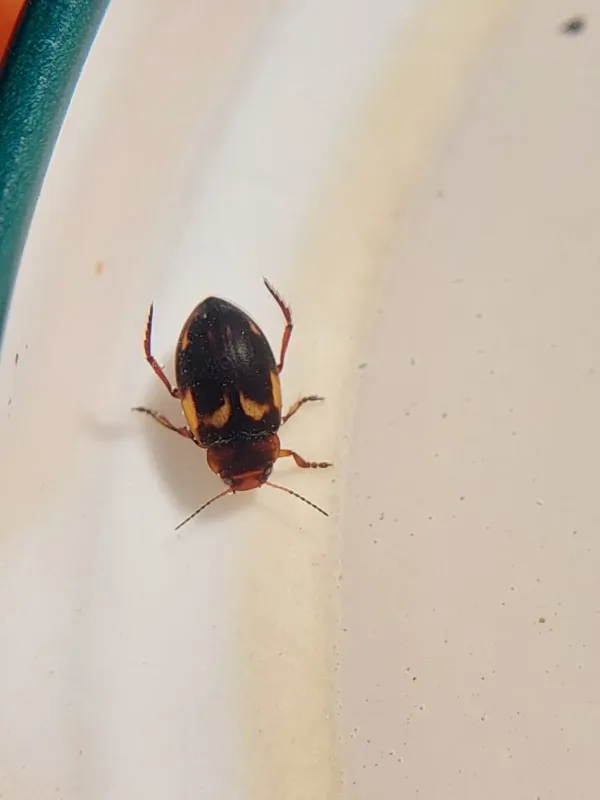
Description
How to identify
Suphrodytes figuratus is a species of diving beetle belonging to the family Dytiscidae. These beetles are characterized by their streamlined, oval bodies, which are perfectly adapted for an aquatic life in ponds, ditches, and irrigation systems.
The adult beetle typically measures around 4 to 5 millimeters in length. Its color is generally dark brown or black, featuring distinct yellowish or light-colored figurative markings on the elytra, which give the species its specific name.
Equipped with powerful hind legs covered in swimming hairs, these beetles are excellent swimmers. Their predatory mouthparts are designed to seize and consume small aquatic organisms, making them active hunters within their habitat.
The larvae are slender and predatory, possessing sharp, sickle-shaped mandibles. They are highly efficient at detecting and subduing prey, playing a significant role in the local food web of stagnant water bodies.
As strong fliers, these insects can easily migrate between different aquatic habitats. This mobility allows them to colonize new areas, such as flooded fields or nursery ponds, often establishing populations rapidly.
What it damages
The primary concern regarding Suphrodytes figuratus in agriculture involves its impact on rice paddies and aquaculture facilities. While they primarily hunt smaller invertebrates, high populations can negatively affect the development of young aquatic crops.
The larvae may cause mechanical damage to young plant stems by burrowing into tissues or grazing on the outer surfaces. This physical stress weakens the plant and stunts its growth in early developmental stages.
By creating entry points in the plant tissue, these beetles facilitate the invasion of fungal and bacterial pathogens. This can lead to secondary infections, resulting in increased mortality rates of young seedlings in the field.
In aquaculture environments, the larvae are known to prey on fish fry. This causes direct economic losses to farmers who rely on healthy stock, necessitating strict monitoring in areas where rice and fish are grown together.
The cumulative effect of these beetles, when present in large numbers, can lead to uneven crop stands and reduced yields, as the plants fail to reach their full potential due to persistent environmental and biological stress.
When it appears
The activity of Suphrodytes figuratus commences in the early spring as water temperatures rise. Adults emerge from overwintering sites, typically found in muddy bottoms or damp vegetation, to resume feeding and search for mating partners.
The breeding season peaks during late spring and early summer. During this time, females lay eggs on submerged aquatic plants, ensuring that the emerging larvae have immediate access to food sources within their environment.
Development from egg to adult is strongly correlated with water temperature. Warmer summer temperatures accelerate the metabolic rate, allowing the beetle to complete its life cycle more quickly and potentially produce multiple generations per season.
As autumn approaches and temperatures begin to drop, the beetles prepare for the winter months. They move into deeper areas or submerge themselves in the substrate to enter a period of inactivity, surviving the cold until spring.
Migration patterns are most noticeable during warm, humid nights. The adults use their flying ability to move between temporary and permanent water bodies, ensuring the species' survival across fluctuating environmental conditions.
Control measures
Effective control starts with proper water management. Regularly draining rice fields or aquaculture ponds can disrupt the beetle's life cycle, effectively reducing the survival rate of larval stages that require continuous water.
Maintaining clear irrigation channels and removing excessive aquatic vegetation significantly reduces available habitats for egg-laying and shelter, making the environment less hospitable for the beetles.
Biological control methods involve promoting natural predator populations. Encouraging the presence of native fish species and amphibian populations helps naturally suppress beetle numbers without the need for chemical intervention.
If chemical control is unavoidable, it must be performed using products specifically labeled for aquatic use to prevent harm to non-target species. Application should be timed based on population density thresholds.
Monitoring using nocturnal light traps or submerged sampling nets is recommended. This allows farmers to assess beetle activity levels and apply preventative measures before populations reach levels that cause significant crop damage.
Taxonomy
- Latin name
- Suphrodytes figuratus
- Order
- Coleoptera (beetles)
- Family
- Dytiscidae
- EPPO code
- SUPHFI
Discussion
No discussions yet — be the first.