
Suphrodytes
Suphrodytes
Description
How to identify
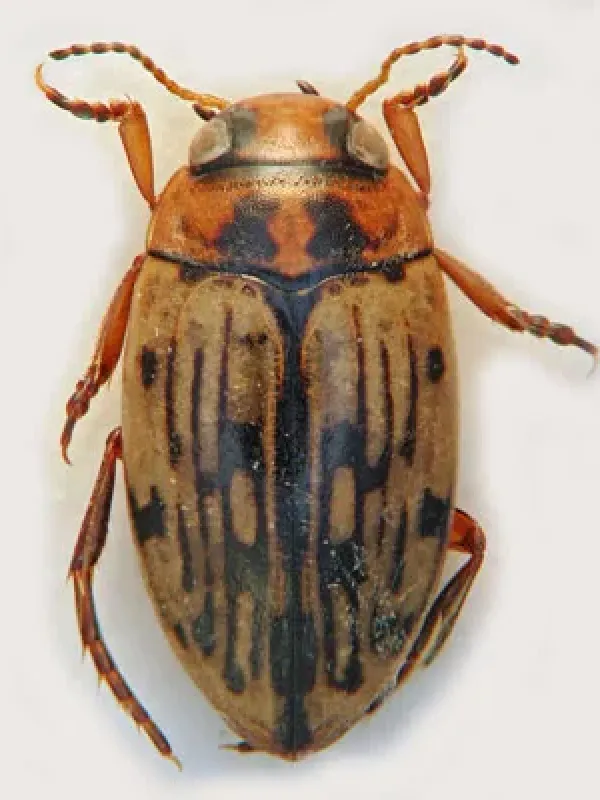
Suphrodytes is a genus of diving beetles belonging to the family Dytiscidae. These insects are well-adapted to life in freshwater environments, displaying classic morphological features of the family.
They possess an oval, streamlined body shape that reduces water resistance, allowing for agile movement through aquatic vegetation. Their coloration is generally dark, providing camouflage in murky pond bottoms.
Taxonomically, the genus is part of the larger group of predaceous diving beetles. While their identification often requires expert analysis of genital structure, they are generally recognized as small to medium-sized water insects.
Both the larvae and the adult beetles are predatory. They occupy the role of carnivores in the food web, feeding on a variety of small aquatic organisms, including larvae of other insects and small crustaceans.
The insects are equipped with specialized respiratory systems, allowing them to carry an air bubble under their elytra, enabling them to stay submerged for extended periods during their hunt.
What it damages
In an agricultural context, particularly in aquaculture and specialized water-plant nurseries, Suphrodytes can be considered a nuisance pest. Their primary impact is the depletion of the natural food supply needed by juvenile fish.
Furthermore, during their development, the larvae may feed on the soft tissues of submerged aquatic plants, causing localized damage that compromises the plant's health and structural integrity.
For commercial growers of crops like lotus or rice, these beetles can lead to reduced plant vigor. Feeding damage creates entry points for fungal or bacterial pathogens, indirectly increasing disease rates.
In high-density aquaculture systems, their presence can cause severe losses by preying directly on fish fry, significantly lowering the survival rates of the fish stock.
The economic damage is often cumulative, resulting from both the direct destruction of vegetation and the disruption of the balanced aquatic ecosystem required for efficient production.
When it appears
The activity cycle of Suphrodytes is strictly seasonal, governed by water temperature. They typically emerge from hibernation as soon as the ice melts in early spring.
The breeding season takes place during the late spring and summer months. During this time, the population density of larvae peaks, coinciding with the period of highest risk for aquatic crops and fish fry.
As autumn progresses and temperatures drop, the metabolic rates of these beetles decrease. They migrate towards the muddy bottom of the pond to undergo diapause throughout the winter.
In managed systems with temperature control or in tropical environments, their development can be more continuous, requiring year-round monitoring of the population levels.
Understanding these seasonal patterns allows producers to synchronize maintenance tasks, such as draining ponds or mechanical cleaning, with the beetle's dormant phases.
Signs of infestation
Signs of infestation include visible feeding marks on the leaves and stems of aquatic plants. These appear as small, irregular holes or necrotic tissue patches where the insects have grazed.
A decline in the density of plankton or small crustaceans, which are essential for the growth of fish larvae, often serves as a primary indicator of a booming beetle population.
Adult beetles can be detected by visual observation of the water surface. When they surface to refill their air supply, they create noticeable ripples, especially in calm, sheltered areas.
The presence of larvae can be confirmed by using a fine-mesh sweep net along the edges of the vegetation, where they are most likely to be hiding while waiting for prey.
Stunted growth or wilting of aquatic vegetation in a nursery is a strong signal that an insect pest, potentially Suphrodytes, is causing damage to the root or stem systems.
Control measures
Managing Suphrodytes requires an integrated approach that emphasizes prevention and biological balance rather than aggressive chemical intervention.
- Manual removal of dense aquatic vegetation to reduce hiding spots for larvae.
- Draining and drying of ponds in the off-season to eliminate overwintering adults and eggs.
- Using light traps to capture and monitor adult beetle populations during their peak flight activity.
- Installing physical filtration barriers at water inlets to prevent the migration of beetles from surrounding natural water bodies.
Because these pests often inhabit fish-rearing ponds, the use of conventional insecticides must be avoided to prevent accidental toxicity to the aquatic stock.
Biological controls, such as encouraging natural predators or using pathogen-based biopesticides, are preferred to maintain a sustainable and healthy production environment.
Taxonomy
- Latin name
- Suphrodytes
- Order
- Coleoptera (beetles)
- Family
- Dytiscidae
- EPPO code
- SUPHSP
Discussion
No discussions yet — be the first.