
Twelve-spotted diving beetle
Stictotarsus duodecimpustulatus
Description
How to identify
The twelve-spotted diving beetle (Stictotarsus duodecimpustulatus) is a species of predatory beetle belonging to the Dytiscidae family, well-adapted to an aquatic lifestyle.
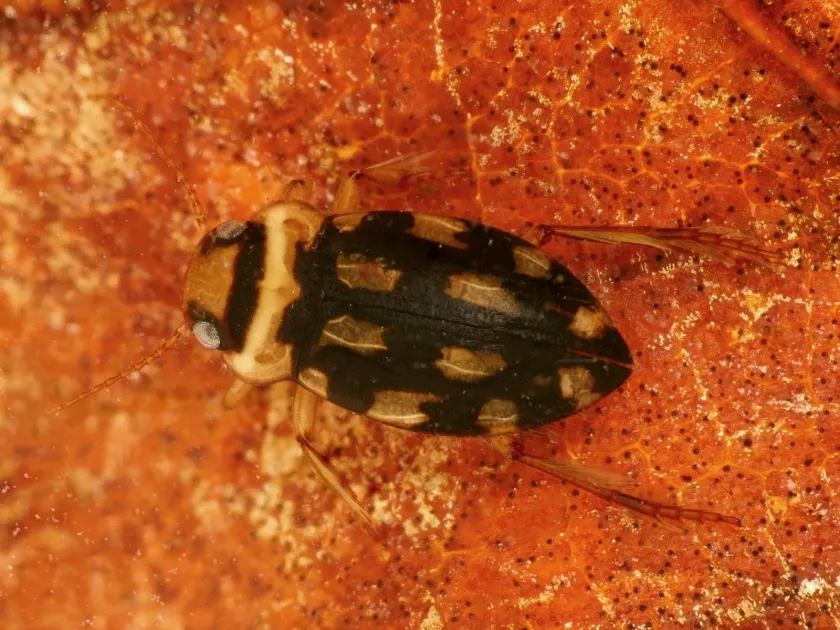
Adult beetles have a characteristic oval, streamlined body shape, typically measuring between 5 and 7 millimeters in length, optimized for swimming.
Their elytra are dark in color with a distinctive pattern of light spots, from which the common and scientific names are derived, aiding in camouflage.
The larvae are highly mobile predators with elongated bodies and powerful sickle-shaped mandibles, designed for capturing and subduing prey.
Unlike some diving beetles that prefer stagnant water, this species is frequently found in flowing streams and well-oxygenated ponds.
What it damages
This beetle is considered a nuisance and pest in aquaculture, as both larvae and adults actively prey on fish fry and fingerlings in nursery ponds.
The larvae possess an aggressive predatory nature, often consuming fish larvae larger than themselves through external digestion.
Besides directly killing young fish, they compete for food resources, reducing the availability of natural prey for the cultivated fish species.
Heavy infestations can lead to significant losses in fish production, posing a serious economic threat to small and medium-scale fish farms.
Furthermore, their presence in high numbers impacts the overall ecological balance of the pond environment, stressing the young fish population.
When it appears
The active life cycle of the beetle begins in early spring, as water temperatures rise, triggering the emergence and reproductive phase.
Peak population densities are usually observed during the summer months, which often coincide with the stocking of fry in nursery ponds.
Larval development is highly temperature-dependent, with warmer water significantly shortening the time taken to reach the pupal stage.
As autumn approaches, the activity of the adults decreases, and they prepare for overwintering, often burrowing into mud or debris.
Effective management timing must focus on the late spring to early summer period when the population is most vulnerable and active.
Control measures
The most effective strategy is the total drainage and sanitization of nursery ponds during the off-season to eliminate overwintering populations.
Installing fine-mesh screens on inlet pipes prevents adult beetles from migrating into fish ponds from surrounding natural waterways.
Manual removal using nets can be a practical solution for smaller ponds to reduce beetle populations before or during the fish-stocking season.
Managing aquatic vegetation is essential, as dense plant growth provides ideal hiding spots for both adults and larvae to ambush their prey.
Maintaining optimal water quality and stocking density can help mitigate the impact of these predators by ensuring fish are healthy and robust.
Taxonomy
- Latin name
- Stictotarsus duodecimpustulatus
- Order
- Coleoptera (beetles)
- Family
- Dytiscidae
- EPPO code
- STTSDU
Discussion
No discussions yet — be the first.