
Stictotarsus
Stictotarsus
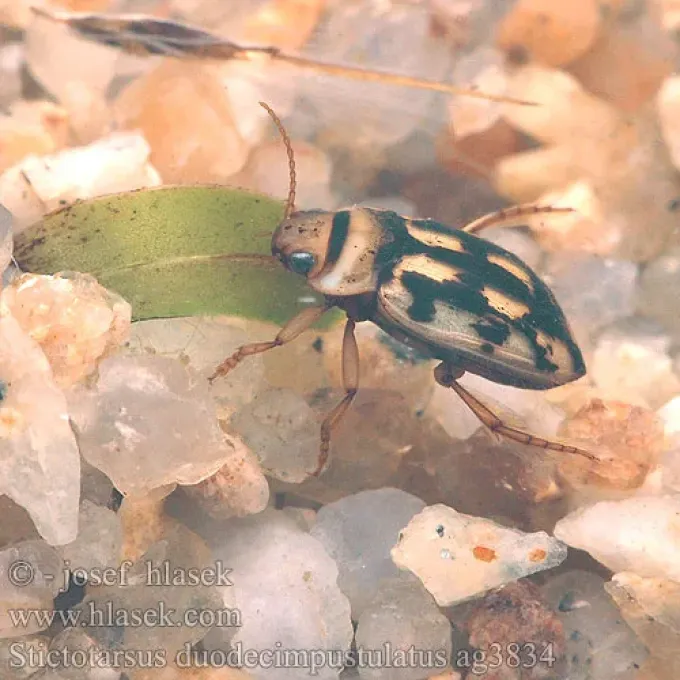
Description
How to identify
Stictotarsus is a genus of diving beetles belonging to the family Dytiscidae, order Coleoptera. These aquatic insects are well-adapted to life in freshwater environments and are known for their predatory behavior throughout their life cycle.
Adult beetles possess a streamlined body shape, which is highly efficient for swimming. They are typically dark in color, often featuring speckled or mottled patterns that provide excellent camouflage against the muddy bottoms of ponds.
The larvae are characterized by prominent, sickle-shaped mandibles. These specialized mouthparts are designed to seize and hold prey, making the larvae highly effective hunters in stagnant water habitats.
Identifying species within the genus Stictotarsus usually requires microscopic analysis of their genital structures and the surface texture of the elytra, as morphological features are quite consistent across the group.
These beetles are sensitive to environmental conditions, particularly oxygen levels, which makes their presence a potential indicator of the water quality within a specific aquatic system.
What it damages
In an agricultural and aquaculture context, Stictotarsus is recognized as a pest in fish farming. Larvae are known to prey upon fish fry and fingerlings in nursery ponds, causing significant economic loss.
High populations of these beetles can drastically reduce the survival rate of young carp and other commercial fish species during the early stages of development, when fry are most vulnerable.
Beyond the direct consumption of fish, the presence of these beetles causes stress in the fish population, which can lead to reduced feeding efficiency and stunted growth in affected fingerlings.
The beetles also disrupt the natural balance of aquatic ecosystems in irrigation reservoirs by preying upon beneficial microfauna that play a role in water clarity and pond health.
It is important to note that Stictotarsus does not damage terrestrial crops, as its biological activities are restricted to aquatic environments.
When it appears
Adult activity peaks during the spring, which corresponds with the mating season. During this time, female beetles seek suitable aquatic vegetation to deposit their eggs.
The larval stage, which poses the greatest threat to aquaculture, typically occurs in late spring and early summer, matching the peak period for fish fry stocking in many regions.
During the summer months, adult beetles demonstrate high mobility and are capable of flying between different water bodies, allowing them to colonize new ponds and reservoirs rapidly.
As temperatures decline in autumn, the beetles begin preparing for winter. They overwinter in the mud or organic debris at the bottom of ponds, remaining dormant until the following spring.
The duration of the life cycle is highly dependent on water temperature; warmer conditions accelerate development, which can lead to increased pest pressure within a single growing season.
Control measures
The most effective management strategy is the periodic draining and sterilization of fish ponds between production cycles to eradicate eggs and larvae trapped in the substrate.
Maintaining clear ponds by removing excessive aquatic vegetation is crucial, as this practice eliminates the nesting sites that the beetles use for reproduction.
Installing fine-mesh screens on water inlet pipes is a recommended preventive measure to block adult beetles from entering fish-rearing facilities from surrounding natural water sources.
Chemical insecticides are generally avoided in fish ponds due to the extreme risk they pose to the health of the fish and the overall ecosystem balance; therefore, focus is placed on biological and mechanical control.
Continuous monitoring using light traps near the ponds can help identify peak migration periods, allowing managers to take proactive steps to reduce beetle numbers before they establish large populations.
Taxonomy
- Latin name
- Stictotarsus
- Order
- Coleoptera (beetles)
- Family
- Dytiscidae
- EPPO code
- STTSSP
Discussion
No discussions yet — be the first.