
Scarodytes halensis
Scarodytes halensis
Description
How to identify
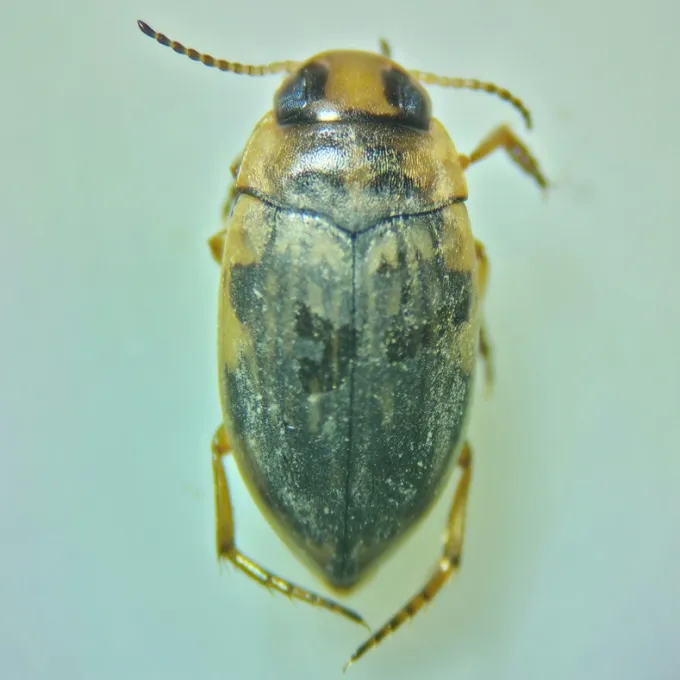
Scarodytes halensis is a small aquatic beetle belonging to the Dytiscidae family (or Hygrobiidae depending on classification). Typically, adult beetles measure between 4 and 5 millimeters in length.
The beetle possesses a streamlined, oval-shaped body designed for efficient swimming in aquatic environments. Their wing covers (elytra) are usually yellowish-brown with distinct dark markings.
These markings act as camouflage, allowing the beetles to blend seamlessly with the bottom sediment and debris of their natural habitat, such as rice paddies.
Larvae are elongated and equipped with strong mandibles, which are used to hunt and consume food. They spend the entirety of their larval stage in the water.
Adult beetles are capable of flight, enabling them to migrate between various water bodies and colonize new fields where conditions are favorable for their reproduction.
What it damages
The primary concern regarding this beetle is the damage it inflicts on rice crops, particularly during the early stages of plant growth and establishment.
Both adults and larvae act as pests, feeding on the tender tissues of young rice roots and stems submerged in water shortly after sowing or transplanting.
This feeding activity often leads to stunted growth, yellowing, and in severe cases, the complete death of the rice seedlings.
High population densities can cause significant thinning of the stand, potentially leading to crop failure or the need for expensive replanting measures.
The lesions caused by the beetles provide entry points for secondary infections, including various water-borne bacteria and fungi, further weakening the crop.
When it appears
The activity of Scarodytes halensis is heavily dependent on water temperature. They become active in the spring as soon as the water in the rice paddies warms up.
The peak period of damage occurs during the first half of the growing season, when the rice plants are in the vulnerable seedling or tillering phase.
Adults overwinter in the mud at the bottom of stagnant waters or in damp soil along the edges of the fields, emerging once environmental conditions become suitable.
Multiple generations may occur throughout the season, requiring continuous monitoring and management efforts to prevent massive outbreaks.
As water temperatures drop in the autumn, the beetles become less active and eventually enter a dormant state to survive the winter months.
Signs of infestation
One of the most obvious signs of infestation is the yellowing and wilting of young rice seedlings, which may appear patchy across the field.
Inspection of the root systems often reveals visible damage, including gnawed surfaces or missing root segments, indicating the feeding activity of the beetles.
When disturbing the water, one may notice the adult beetles swimming rapidly toward the bottom, seeking refuge in the sediment to avoid detection.
Thinning of the crop rows is another indicator that larvae or adults have been feeding on the submerged parts of the plants shortly after planting.
The presence of large numbers of predatory larvae in water samples taken from the fields serves as a strong warning sign of potential future damage.
Control measures
Effective management includes hydrotechnical measures, such as adjusting water levels or briefly draining the paddies to disrupt the life cycle of the aquatic larvae.
Cultural practices, such as maintaining clean field borders and managing aquatic weeds, help reduce the overwintering sites for the beetles.
In cases of severe infestation, the application of registered insecticides directly into the irrigation water can be an effective control method.
Encouraging rapid plant growth through optimal fertilization and seed quality can help the rice crop outgrow the most vulnerable stage before beetle damage becomes critical.
- Regular field scouting and monitoring.
- Crop rotation to break pest life cycles.
- Safe and selective insecticide application.
Taxonomy
- Latin name
- Scarodytes halensis
- Order
- Coleoptera (beetles)
- Family
- Dytiscidae
- EPPO code
- SCDTHA
Discussion
No discussions yet — be the first.