
Scarodytes
Scarodytes
Description
How to identify
Scarodytes is a genus of predatory diving beetles belonging to the Dytiscidae family. These insects are well-adapted to aquatic life and can be found in various stagnant and slow-moving water bodies.
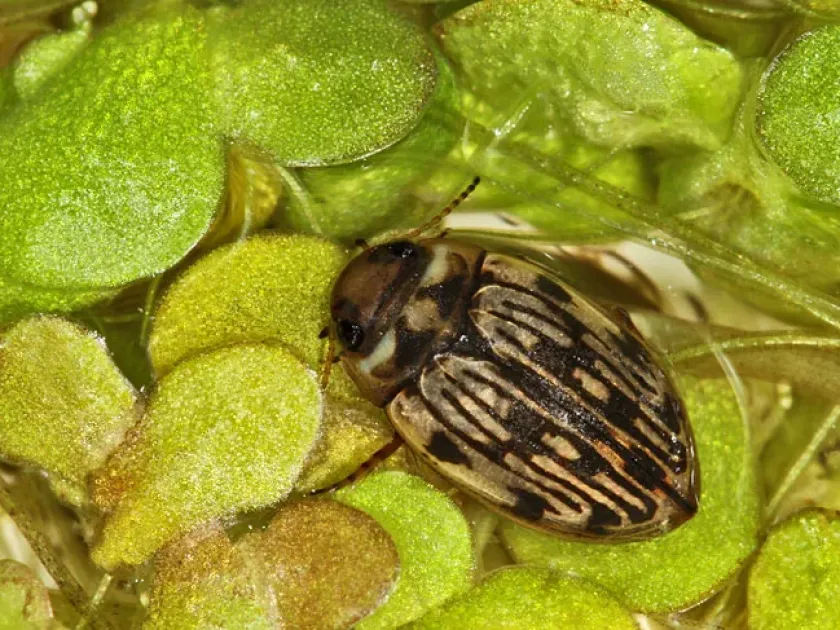
The adults are typically small with streamlined, oval-shaped bodies. Their coloration often includes dark patterns, which provide effective camouflage among aquatic vegetation and substrate.
Their larvae, known for their predatory nature, possess strong, sickle-shaped mandibles designed to grasp and consume prey. They are highly mobile in the water column despite their size.
Breathing occurs through the intake of atmospheric air, which the beetles collect at the surface and store under their elytra before diving back down to continue hunting.
Identification often requires careful examination of morphology, particularly features of the pronotum and elytra, which distinguish Scarodytes from other similar-looking genera within the diving beetle group.
What it damages
The primary concern regarding Scarodytes is their impact on aquaculture, specifically in hatcheries and nursery ponds where juvenile fish are raised for stocking.
As active predators, both the larvae and the adults can attack and consume fish fry. This predation can lead to significant economic losses for fish farmers by reducing the survival rate of young fish.
Beyond direct predation, these beetles compete with fish for food resources, such as small crustaceans and other zooplankton, which are essential for the healthy growth of fish populations.
Their presence in flooded agricultural systems, such as rice paddies, can disrupt the balance of the micro-ecosystem, potentially leading to cascading effects on other beneficial species.
They can also serve as vectors for various aquatic pathogens, moving between ponds and potentially spreading diseases that affect fish health in managed systems.
When it appears
The life cycle of Scarodytes is highly dependent on water temperature. Their activity typically begins in early spring as water temperatures rise, creating suitable conditions for development.
The peak activity and breeding periods occur throughout the summer months, during which multiple generations may be produced in favorable habitats with dense vegetation.
As autumn approaches and water temperatures drop, the metabolic rate of these beetles decreases significantly. Adults seek refuge at the bottom of the water body or bury themselves in the mud.
Winter is spent in a state of hibernation or reduced activity within the substrate, where they remain until the environment warms up again in the following spring.
Local climatic conditions play a crucial role in determining the start and end of their active season, with warmer regions exhibiting longer activity periods throughout the year.
Control measures
Effective management begins with strict sanitation of water bodies. Removing excessive aquatic plants is essential as these areas provide shelter and breeding grounds for the beetles.
Draining and liming ponds during the off-season is a highly recommended practice to eliminate overwintering populations and larvae trapped in the substrate.
Biological control, such as introducing natural predators of diving beetles or managing the fish species density, can help maintain population levels below the damage threshold.
Chemical intervention should be avoided whenever possible due to the sensitivity of the aquatic environment and the risk of affecting non-target species in the water body.
- Manual removal using fine-mesh nets in smaller pond sections.
- Regular monitoring of water quality to detect early stages of infestation.
- Physical barriers to prevent beetles from migrating between different hatchery ponds.
Taxonomy
- Latin name
- Scarodytes
- Order
- Coleoptera (beetles)
- Family
- Dytiscidae
- EPPO code
- SCDTSP
Discussion
No discussions yet — be the first.