
Rhantus suturellus
Rhantus suturellus
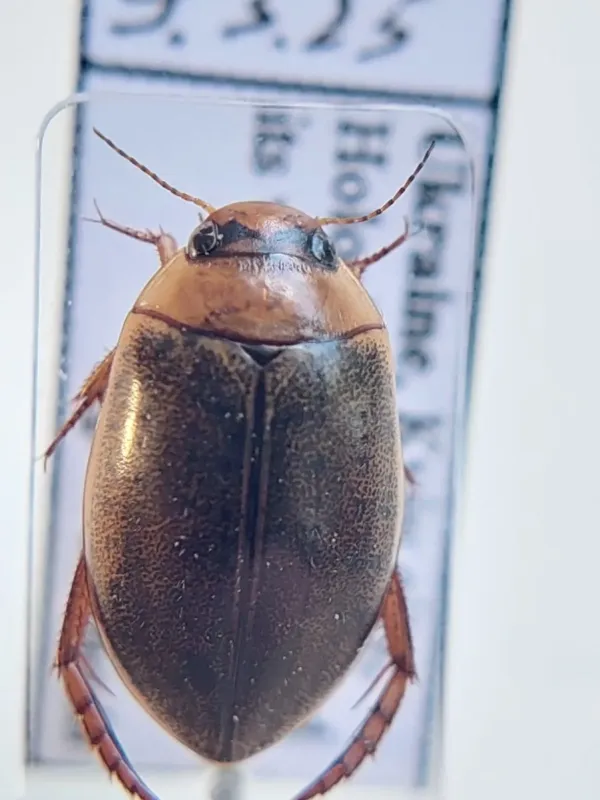
Description
How to identify
Rhantus suturellus is a species of diving beetle belonging to the family Dytiscidae within the order Coleoptera. The adult beetle is typically 10–12 mm long with a sleek, oval body optimized for swimming.
Its coloration is yellowish-brown with distinct dark markings on the elytra. A characteristic dark line along the suture of the elytra serves as the primary visual identification feature for this species.
Equipped with specialized hind legs covered in fine hairs, these beetles act as efficient oars, allowing for rapid movement in the water column when hunting prey.
The larvae are predatory with elongated bodies and prominent sickle-shaped mandibles, which they use to capture small aquatic organisms and fish fry.
Adult beetles are capable of sustained flight, facilitating rapid dispersal and colonization of new water bodies, which is a significant factor in their status as an aquatic pest.
What it damages
The primary economic impact of Rhantus suturellus occurs in aquaculture, where they pose a threat to fry in nursery ponds and fish-rearing facilities.
Both larvae and adults are highly predatory, attacking fish larvae and smaller fish, often causing mortality or severe injuries that lead to secondary infections.
These insects also compete with fish for natural resources by consuming large quantities of zooplankton, which is essential for the growth of young fish.
In neglected or semi-natural ponds, high populations of these beetles can lead to significant losses in stock, necessitating intervention from farm management.
The cumulative damage caused by persistent predation significantly reduces the overall productivity of aquaculture systems if left unchecked.
When it appears
The biological activity of Rhantus suturellus begins early in the spring as soon as water temperatures allow for emergence from hibernation sites.
Peak activity and the reproductive phase occur during late spring and early summer, when female beetles deposit eggs on submerged vegetation.
Larval development is most intense during mid-summer, coinciding with the period when fish fry are most vulnerable in commercial ponds.
As autumn approaches and temperatures drop, adults prepare for overwintering, seeking refuge in mud or dense organic debris near the water's edge.
The life cycle is tightly regulated by seasonal changes, with adults being the primary life stage that survives the winter period.
Control measures
Management strategies focus on mechanical and physical controls, as chemical applications are strictly limited in fish-bearing environments to protect the stock.
Draining and drying ponds between production cycles is the most effective method for eradicating larvae and preventing the establishment of a population.
Regular maintenance, including the removal of excessive aquatic vegetation, significantly reduces the habitat suitability for egg-laying and larval protection.
Light traps installed around the perimeter of ponds are effective in capturing adult beetles during their nocturnal flights, preventing re-infestation.
- Implementation of rigorous pond sanitation protocols.
- Monitoring beetle density during the peak summer months.
- Screening water inlets to prevent colonization from external sources.
Taxonomy
- Latin name
- Rhantus suturellus
- Order
- Coleoptera (beetles)
- Family
- Dytiscidae
- EPPO code
- RHNTSU
Discussion
No discussions yet — be the first.