
Spotted diving beetle
Platambus maculatus
Description
How to identify
The spotted diving beetle (Platambus maculatus) is a species of predatory beetle belonging to the family Dytiscidae. They are well-known for their streamlined, oval bodies adapted for an aquatic lifestyle.
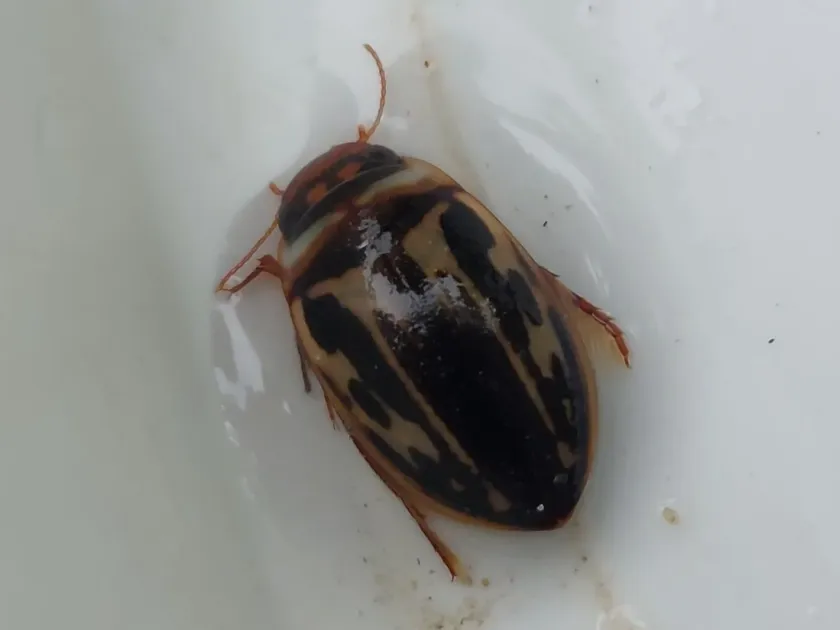
Adults typically measure between 7 and 8 millimeters in length. Their elytra are dark brown with distinctive yellow or light-colored spots, which provides camouflage against the substrate of streams.
The larvae are active hunters, possessing a long body and sharp, sickle-shaped mandibles. They are highly efficient at capturing prey within the water column.
Unlike some other Dytiscids, this species prefers clean, flowing, or standing water environments, often making them common residents in irrigation systems connected to farmlands.
Identification is confirmed by the specific pattern on their backs and their characteristic darting movement when disturbed in shallow water.
What it damages
While primarily predatory, the spotted diving beetle can pose problems for agriculture when it enters flooded fields, such as those used for rice cultivation.
Adults and larvae can damage tender crop seedlings by feeding on stems and roots while searching for organic matter in the water.
Their predatory behavior towards beneficial micro-fauna, such as crustaceans, disrupts the ecological balance of the water, which can lead to poorer water quality for crops.
Mechanical damage caused by their feeding can also open entry points for various aquatic pathogens, leading to secondary plant diseases.
In aquaculture environments, they are considered pests because their larvae compete with or even feed on fish fry, causing economic loss to the farmer.
When it appears
The activity of the spotted diving beetle is highest during the warmer months, as they are ectothermic and rely on water temperature for their metabolic processes.
Reproduction typically occurs in spring, with females depositing eggs into the tissues of aquatic plants to ensure the safety and nourishment of the offspring.
Larval development peaks during mid-summer, when the abundance of prey in irrigation canals and flooded fields allows for rapid growth and multiple molting stages.
Adult beetles overwinter by burrowing into the sediment or hiding under damp vegetation at the water's edge, allowing them to survive freezing temperatures.
The new generation of adults usually emerges from pupation sites in the soil near the water banks in late summer, ready to feed before the cooler season begins.
Signs of infestation
Evidence of infestation often includes shredded or bitten leaf margins on aquatic plants or the lower stems of submerged crops.
Sightings of adult beetles rapidly darting along the surface of irrigation ditches when the water is disturbed are a primary indicator of their presence.
Checking the roots and surrounding soil in shallow water with a fine mesh net often yields larvae, providing direct proof of a localized population.
A noticeable decline in the number of planktonic crustaceans and other small water organisms can suggest a high density of predatory larvae in the area.
Plant wilting or stunted growth in flooded fields can also be a sign of root damage caused by intense feeding activity near the base of the crop.
Control measures
Management focuses on maintaining clear irrigation channels and removing dense aquatic vegetation that provides shelter for the beetles.
Agricultural practices, such as the temporary draining of flooded fields, can significantly reduce beetle and larvae populations by disrupting their life cycle.
Encouraging natural predators, such as insectivorous birds and other larger aquatic predators, is a sustainable way to keep population numbers under control.
- Regular cleaning of irrigation ditches;
- Water level management to discourage colonization;
- Physical removal of adults in small areas.
Chemical control is generally discouraged in aquatic systems due to the potential for environmental damage, so mechanical and cultural practices remain the preferred choice.
Taxonomy
- Latin name
- Platambus maculatus
- Order
- Coleoptera (beetles)
- Family
- Dytiscidae
- EPPO code
- PLTMMA
Discussion
No discussions yet — be the first.