
Platambus
Platambus
Description
How to identify
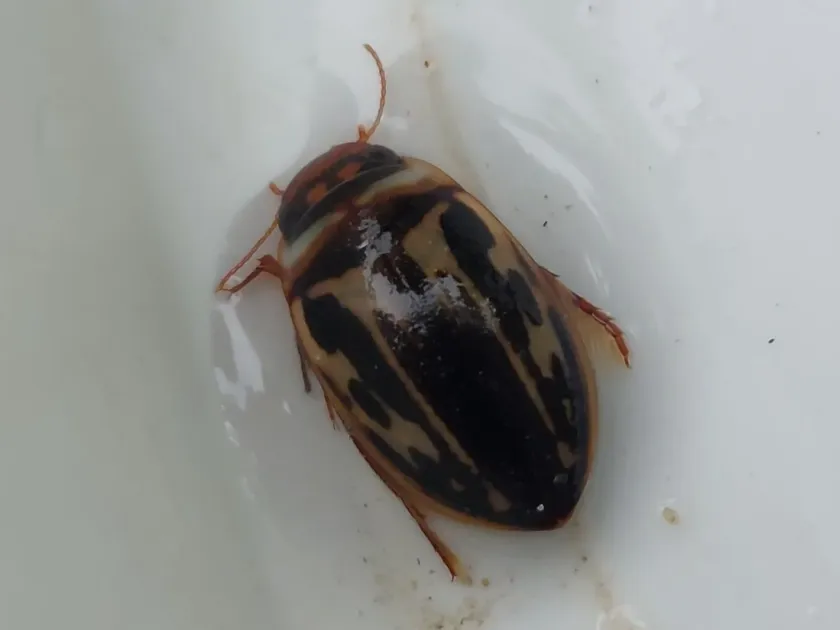
Platambus is a genus of predatory water beetles belonging to the family Dytiscidae. These insects are perfectly adapted to aquatic life, featuring a streamlined, oval-shaped body and powerful hind legs specialized for swimming through dense water environments.
The external morphology of Platambus includes smooth, dark, or patterned elytra that fit tightly against the body, protecting the respiratory air bubble stored underneath. Their larvae are slender and aggressive, equipped with sickle-shaped mandibles designed for rapid prey capture.
Taxonomically, they are part of the order Coleoptera. While they are a natural part of aquatic ecosystems, their predatory nature makes them a potential nuisance in man-made water bodies, such as fish breeding tanks or commercial nurseries.
These beetles undergo a complete life cycle, including egg, larva, pupa, and adult stages. Females lay their eggs in the tissues of aquatic plants, which provides necessary protection and moisture during the early developmental phases.
The ability to fly allows adults to migrate between ponds, irrigation canals, and flooded fields, making their distribution quite unpredictable. Identifying them correctly requires observation of both their swimming behavior and structural characteristics.
##damage##The primary economic threat posed by Platambus is within the aquaculture sector, particularly where fish larvae are raised. The larvae of this genus are voracious predators capable of hunting small fish and amphibian larvae, which causes direct stock losses.
Beyond direct predation, these insects create intense competition for natural food sources within the pond. They feed on zooplankton and small aquatic invertebrates that are vital for the healthy development of young fry, leading to reduced growth rates.
The presence of large populations can force fish to spend energy avoiding predators instead of growing, causing significant stress and increasing susceptibility to various fish diseases. This reduces the overall efficiency of fish production cycles.
Furthermore, their activity can damage the vegetation in water bodies, which is often essential for maintaining the oxygen balance and providing a substrate for the fish fry. This degradation of the habitat negatively impacts the entire pond ecosystem.
There is also the risk of these beetles acting as vectors for waterborne pathogens. By moving between different water bodies, they can spread infections that are dangerous to confined fish populations, necessitating strict veterinary management.
When it appears
Adult Platambus beetles show peak activity during the spring and early summer when rising water temperatures signal the start of the breeding season. This is when mating pairs are most active, and egg-laying processes are in full effect.
The larval stage is most prevalent mid-summer, when abundant food supplies in the water column allow for rapid growth. This period is the most critical for fish farmers, as the demand for protein sources among larvae is at its highest.
As autumn approaches, adult beetles transition toward their overwintering sites, often settling in mud or deep vegetation at the bottom of ponds. Larvae complete their final stage and pupate in the moist soil of the shoreline, safely tucked away from freezing temperatures.
The winter period is characterized by a state of diapause, where metabolic rates are significantly reduced to survive harsh conditions. With the return of warmer weather, the survivors emerge to begin the cycle once again.
Environmental stressors, such as droughts that lead to pond drainage, act as triggers for dispersal. During these times, beetles are frequently observed migrating to find new, more stable aquatic habitats, increasing the risk of re-infestation.
Control measures
Management strategies for Platambus focus primarily on physical and cultural control. Keeping the pond environment clean by removing excessive vegetation is key to depriving the beetles of breeding and egg-laying substrates.
Using fine-mesh netting at water intake points is an effective barrier against adult migration into sensitive breeding areas. Additionally, regular inspection and mechanical cleaning of the pond bottom help remove over-wintering stages from the sediment.
Biological control involves maintaining a diverse fish community where larger fish can predate on the larvae of these beetles. This creates a natural pressure that helps keep the population of the pest within acceptable thresholds without the need for chemical intervention.
Strict quarantine protocols should be followed when stocking new fish or transporting water between different locations to avoid the accidental introduction of eggs or larvae. Equipment sterilization is also a crucial step in maintaining biosecurity.
- Complete drainage and drying of ponds between production cycles to break the life cycle.
- Installation of light traps in the evening to capture and count active adult beetles.
- Monitoring water quality to ensure it does not favor insect stagnation.
- Encouraging natural aquatic predators to inhabit the pond edges.
Taxonomy
- Latin name
- Platambus
- Order
- Coleoptera (beetles)
- Family
- Dytiscidae
- EPPO code
- PLTMSP
Discussion
No discussions yet — be the first.