
Diving beetle Oreodytes
Oreodytes
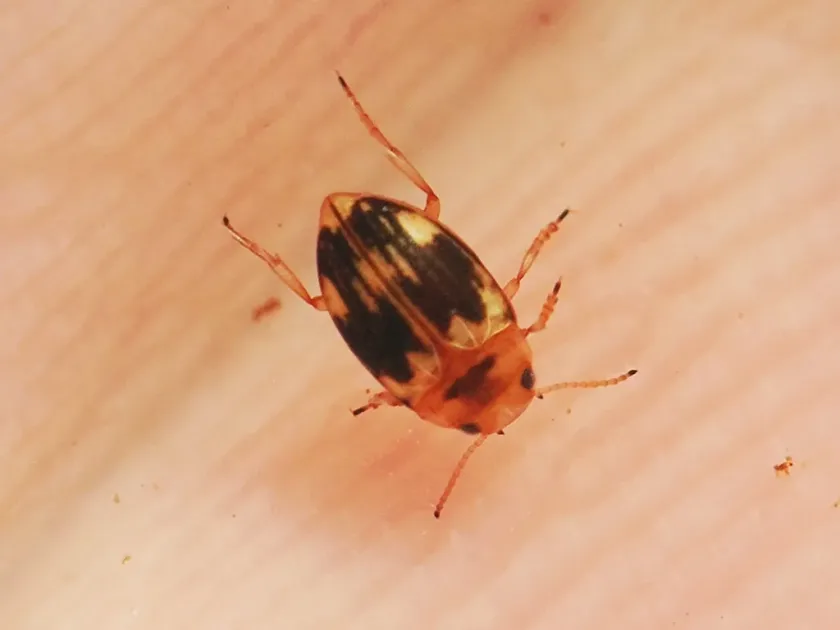
Description
How to identify
The genus Oreodytes belongs to the family Noteridae, which are closely related to predaceous diving beetles. These are small beetles with a streamlined body shape, perfectly adapted for rapid movement in an aquatic environment. Their coloration ranges from yellowish-brown to dark, often featuring a distinct pattern on the elytra.
Adult beetles typically measure between 3 and 5 millimeters in length. They possess well-developed eyes, allowing them to locate food effectively in murky water or low-light conditions. Their legs are equipped with swimming hairs, which provide efficient propulsion.
Systematically, this genus belongs to the order Coleoptera. Unlike larger diving beetles, Oreodytes species prefer flowing or standing water bodies with specific types of vegetation and substrate, which are crucial for their survival and reproductive success.
The larvae have an elongated body and powerful mouthparts adapted for predation. They go through several developmental instars before leaving the aquatic environment to pupate, with the entire lifecycle being deeply interconnected with their surrounding habitat.
Precise species identification often requires microscopic examination of the male genitalia, as many species within this genus appear visually similar. In an agronomic context, distinguishing them from other beneficial or neutral aquatic insects is essential for accurate management.
What it damages
Although Oreodytes beetles are not classic field crop pests, they pose a significant threat to hydroponic systems and aquaculture setups. They primarily damage the young shoots and roots of aquatic plants grown in closed-loop systems.
The damage is mostly caused by larvae that actively feed on plant tissues, compromising the root structure. This leads to stunted growth and reduced aesthetic quality of the crops, which is particularly detrimental in aquatic plant nurseries.
Damaged root tissues are highly susceptible to secondary infections by pathogenic fungi and bacteria. This often results in rot, which can spread rapidly and lead to total crop failure within a hydroponic installation.
In fish farming operations, the larvae can compete with juvenile fish for food resources. In certain cases, they may even attack fish larvae if the beetle population density becomes excessively high within the pond or tank.
This pest is especially dangerous for nurseries that specialize in rare or ornamental aquatic species. Due to their secretive nature, detecting the pest during early stages is difficult, which complicates timely intervention.
When it appears
The activity of adult Oreodytes begins in early spring as soon as water temperatures rise above 10 degrees Celsius. During this period, beetles begin mating and laying eggs on the submerged parts of aquatic plants.
The summer period is characterized by mass development of larvae, which are the most voracious stage. This is when hydroponic farmers typically observe a peak in plant damage, requiring intensified monitoring of the root systems.
As autumn approaches, beetle activity gradually declines, and they prepare for hibernation. Adults overwinter either in the aquatic environment, burrowing into bottom silt, or in the shoreline zone under leaf litter and plant debris.
The number of generations per year depends on the climatic zone and water temperature. In controlled hydroponic environments, reproduction can occur throughout the year if proper sanitation and water management protocols are not strictly followed.
Temperature fluctuations during summer months may stimulate the migration of beetles in search of better egg-laying conditions, facilitating the spread of the pest across different water reservoirs and production units.
Signs of infestation
The primary sign of the pest's presence is the appearance of small bite marks on roots or leaf blades submerged in water. These injuries have an irregular shape and are often surrounded by darkened, decaying tissue.
Growers may observe sudden wilting of individual plants despite adequate nutrient solution levels. Inspection of the root zone often reveals larvae hiding near the points of damage.
Adult beetles are frequently spotted floating on the water surface, especially at night. Because they exhibit positive phototaxis, they often congregate near artificial lights installed above water tanks.
The appearance of secondary infections, such as mucus or film on the roots, serves as an indirect indicator of pest activity. Larvae also leave excrement behind, which fosters the growth of harmful microorganisms.
When using mesh filters in water supply systems, one might discover dead or trapped adults. This is the simplest and most reliable method for primary monitoring of the pest's presence in a closed system.
Control measures
Effective management begins with strict quarantine measures when introducing new plant material. Disinfection of plants in safe, aquatic-appropriate saline or specialized insecticidal solutions is mandatory.
Mechanical removal of beetles using fine-mesh nets allows for quick population reduction. This method is most effective in the morning hours when the insects are less active and congregate near the water surface.
Installing light traps at night allows for the mass capture of adults. Traps should be positioned so that the beetles fall into a container filled with a soapy solution, ensuring their rapid elimination.
- Regular cleaning of filters and pump systems from organic debris.
- Maintaining water temperature to prevent reproductive outbreaks.
- Usage of safe biological control agents like entomopathogenic fungi.
- Prompt replacement of nutrient solutions upon detection of damage.
In severe cases, specialized biological products may be used. General-purpose chemical pesticides should be strictly avoided, as they can destroy beneficial microflora essential for aquatic plant growth.
Taxonomy
- Latin name
- Oreodytes
- Order
- Coleoptera (beetles)
- Family
- Dytiscidae
- EPPO code
- ORDYSP
Discussion
No discussions yet — be the first.