
Nebrioporus depressus
Nebrioporus depressus
Description
How to identify
Nebrioporus depressus is a small aquatic beetle belonging to the Dytiscidae family, which are commonly known as diving beetles.
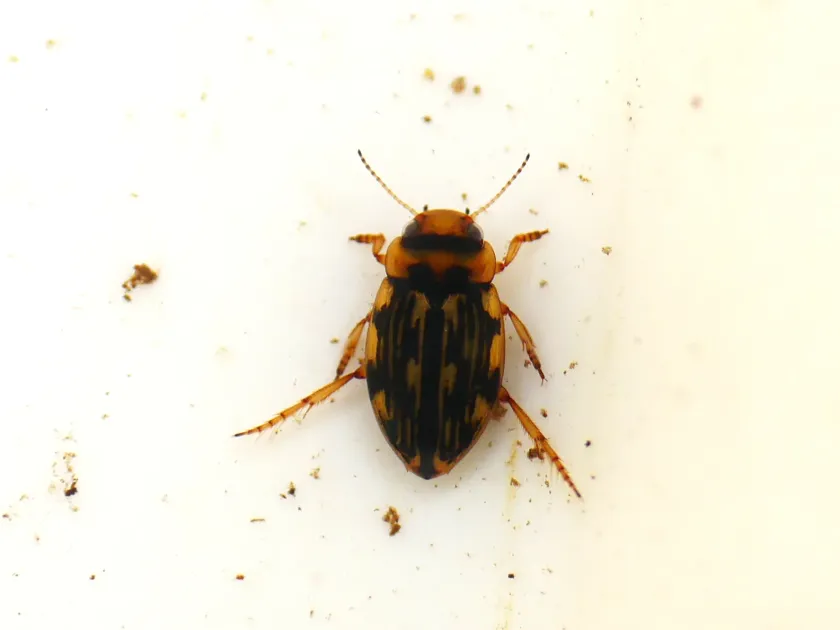
The average body length of this species ranges between 4 and 6 millimeters, characterized by a flattened, streamlined body shape adapted for swimming.
The coloration is typically dark with a distinct yellowish or brownish mottled pattern on the elytra, which helps in camouflage within the aquatic environment.
Like other diving beetles, they possess specialized hind legs fringed with hairs, acting as oars to propel them through the water column.
The larval stage is also aquatic and predatory, featuring a slender body and prominent mandibles used to capture various prey in pond environments.
What it damages
Nebrioporus depressus is not considered a pest to agricultural crops because its entire life cycle is strictly tied to water bodies.
In farming contexts, they may only be considered a minor nuisance if they inhabit irrigation reservoirs or fish-rearing ponds where they can prey on fish fry.
They feed on zooplankton and small aquatic invertebrates, which can sometimes impact the overall food chain of a managed pond ecosystem.
There is no risk of these beetles causing direct damage to crops, vegetables, or greenhouse plants as they do not consume plant tissues.
Their presence in agricultural settings is generally benign unless they interfere with mechanical water filtration systems through high population density.
When it appears
Adult beetles are most active during the spring and summer months when water temperatures are sufficient for their hunting and reproductive activities.
The life cycle involves several stages: egg, larva, pupa, and adult. The development rate is highly dependent on the water temperature and resource availability.
Females typically deposit eggs on submerged aquatic vegetation or bottom substrates during the late spring and summer periods.
Larvae develop throughout the summer, feeding aggressively on aquatic invertebrates before moving to the shore to pupate in damp soil.
Overwintering occurs either at the bottom of the pond in the silt or in nearby terrestrial habitats, where they remain dormant until the following spring.
Signs of infestation
Detection is best achieved by using an aquatic net to sweep through the vegetation along the pond edges or near the bottom sediments.
In aquaculture environments, an unexplained decrease in juvenile fish populations or a lack of zooplankton may suggest a high population of aquatic predators.
The presence of adults can be confirmed by observing their trips to the water surface to collect air, which is a common behavior of diving beetles.
If beetles are found within irrigation pump filters, it is a clear indicator that the reservoir has a well-established colony of these insects.
Microscopic indentations on aquatic plants may indicate the sites where eggs have been deposited, although these are often difficult to identify in the field.
Control measures
Control measures are usually unnecessary since this species does not pose a threat to plant cultivation or crop harvest.
In ponds where population reduction is desired, physical cleaning of the reservoir, including the removal of dense aquatic vegetation, is highly effective.
The installation of fine mesh screens on intake pipes is the most reliable way to prevent beetles from entering irrigation systems.
Biological control can be achieved by ensuring a healthy fish population in the pond, as many fish species naturally feed on beetle larvae.
Chemical intervention is strongly discouraged as it disrupts the pond ecosystem and may contaminate the water source intended for crop irrigation.
Taxonomy
- Latin name
- Nebrioporus depressus
- Order
- Coleoptera (beetles)
- Family
- Dytiscidae
- EPPO code
- DERNDE
Discussion
No discussions yet — be the first.