
Meladema coriacea
Meladema coriacea
Description
How to identify
Meladema coriacea is a large aquatic beetle belonging to the Dytiscidae family. It is a common inhabitant of various water bodies, adapted to a predatory lifestyle.
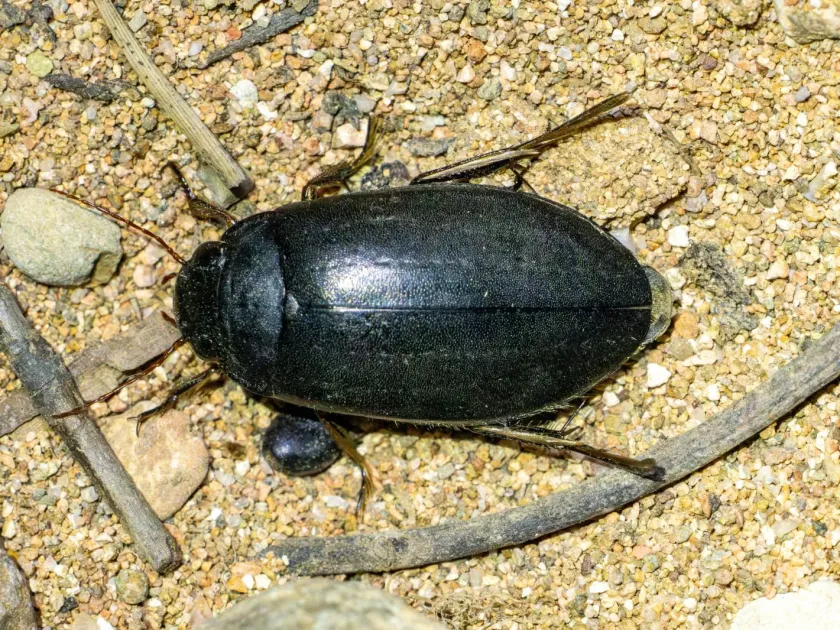
The adult beetle typically measures 20–25 mm in length and possesses an oval, streamlined body that is dark brown to black in color, helping it blend into the aquatic environment.
Its hind legs are specialized for swimming, featuring fringes of hair that act as oars for rapid movement through the water column.
The larvae are also aquatic and predatory, equipped with sharp, sickle-shaped mandibles used to capture prey and interact with their surroundings.
As holometabolous insects, they undergo a complete metamorphosis process, transitioning through egg, larval, pupal, and adult stages throughout their lifespan.
What it damages
While primarily predatory, Meladema coriacea can become a pest in aquatic farming environments and botanical nurseries where water plants are cultivated.
Damage is often indirect, as beetles and larvae navigate through dense vegetation in search of prey, causing physical harm to the stems and leaves of the plants.
Such mechanical damage can lead to compromised plant tissue, which often succumbs to secondary bacterial or fungal infections in the water.
In high-density populations, the continuous movement and feeding activities of larvae can significantly degrade the quality of aquatic crops.
The aesthetic and economic value of ornamental or edible aquatic plants can be reduced if the infestation levels are not properly managed.
When it appears
The seasonal activity of Meladema coriacea is closely linked to water temperature, with peak activity occurring during the spring and summer months.
Adults are capable of flight, allowing them to migrate between water bodies, colonizing new ponds or irrigation systems as the season progresses.
Breeding and oviposition generally occur in late spring, creating a generation of larvae that thrive in the warmer water conditions of early summer.
By autumn, as temperatures begin to drop, the activity levels of these beetles decrease significantly as they prepare for overwintering.
They typically overwinter in the mud at the bottom of ponds or among submerged leaf litter and debris along the shoreline.
Control measures
Controlling Meladema coriacea requires a focus on habitat management and reducing the suitability of the environment for the beetles' life stages.
Regular maintenance of ponds, including the removal of excessive organic matter and debris, is essential for reducing the beetle's breeding sites.
Physical barriers such as fine mesh screens can prevent adult beetles from entering areas where sensitive water crops are being grown.
Biological control methods, such as maintaining healthy populations of native fish or water birds that predate on beetles, are highly recommended.
Chemical intervention should be strictly avoided due to the significant risk posed to the delicate balance of the aquatic ecosystem and water quality.
Taxonomy
- Latin name
- Meladema coriacea
- Order
- Coleoptera (beetles)
- Family
- Dytiscidae
- EPPO code
- MLDMCO
Discussion
No discussions yet — be the first.