
Lesser diving beetle
Laccophilus minutus
Description
How to identify
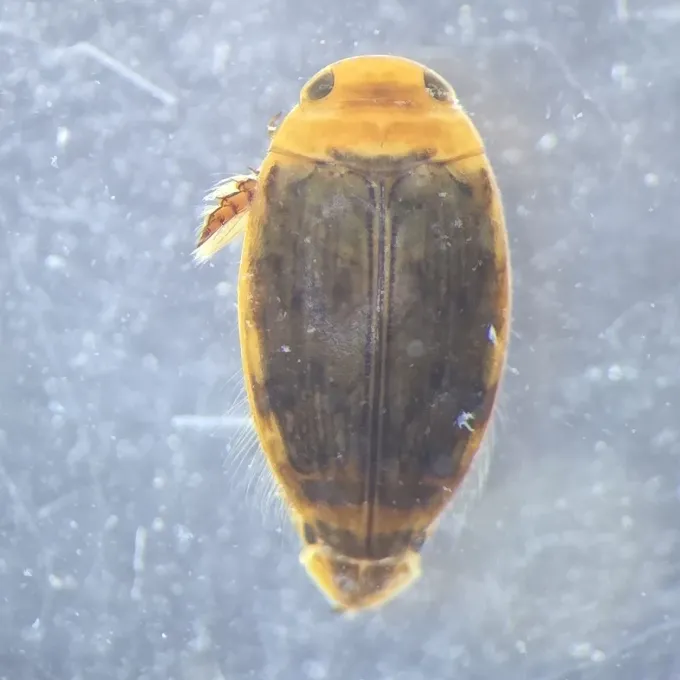
The lesser diving beetle (Laccophilus minutus) belongs to the Dytiscidae family within the order Coleoptera. This small aquatic beetle typically measures between 4 and 5 mm in length and possesses an elongated, streamlined body shape perfectly adapted for life in water.
Its coloration ranges from yellowish-brown to olive, often marked with distinctive dark spots on the elytra. The head features small antennae and well-developed eyes, which allow the beetle to navigate effectively in murky, shallow water environments.
The hind legs of the adult beetle are specialized for swimming, covered with dense hairs that act as oars. This anatomical adaptation enables the insect to move in rapid, jerky bursts, characteristic of the Laccophilus genus.
Larvae have a predatory appearance, characterized by a slender body, a distinct head equipped with powerful sickle-shaped mandibles, and long cerci at the tip of the abdomen. They are highly mobile hunters residing in benthic zones.
Identification of the species requires microscopic examination of the pronotum and elytral structure, as these small beetles are often difficult to distinguish from closely related species in the field.
What it damages
Lesser diving beetles are primarily considered pests in rice paddies and aquaculture settings. As predators, both adults and larvae feed on small invertebrates, tadpoles, and fish fry, disrupting the natural balance of the aquatic ecosystem.
In rice cultivation, while they do not feed on the plants themselves, their burrowing activity and search for prey can disturb the delicate root systems of young rice seedlings, leading to reduced plant vigor in early growth stages.
In fish hatcheries, these beetles can cause significant economic losses by preying upon juvenile fish. A single larva is capable of subduing prey comparable to its own size, making them a serious threat to fish nurseries.
High densities of these beetles can lead to a shortage of natural feed sources for cultured fish, as they compete for the same microorganisms and small invertebrates found in the water column.
Furthermore, their presence in standing water systems may facilitate the spread of waterborne pathogens, posing a secondary risk to the health of the broader aquatic environment managed for agricultural production.
When it appears
Adult activity begins in early spring as water temperatures rise in shallow, stagnant ponds and irrigation systems. This marks the onset of mating and colonization of new water bodies.
The breeding season continues throughout the spring and summer. Given the favorable water temperatures (20–25°C) common in agricultural paddies, the lifecycle is quite rapid, allowing for multiple generations per year.
As autumn approaches and water temperatures decline, the beetles seek shelter for overwintering. They typically burrow into the soft silt of the pond bottom or hide within submerged debris to survive the winter months.
In tropical and subtropical regions, activity may continue throughout the entire growing season of crops like rice, provided the irrigation infrastructure remains flooded and suitable for habitation.
The dispersal capacity of adult beetles is quite high, as they are capable of flight, allowing them to rapidly invade new agricultural plots and irrigation channels shortly after water is introduced.
Signs of infestation
The most visible sign of an infestation is the presence of small, fast-swimming beetles that dart rapidly across the surface or through the water column when disturbed by movement near the water's edge.
Larvae presence can be confirmed by sampling the benthic substrate and aquatic vegetation using a fine-mesh aquatic net. Larvae are often found clinging to submerged stems waiting for their next meal.
In aquaculture environments, a reduction in the success rate of fish fry and the appearance of physical injuries on the fins or bodies of small fish are strong indicators of a predatory beetle population.
Visual observation of surface ripples, caused by the beetles surfacing to replenish their air supply, is a clear sign of a significant adult population within a contained water body.
Excessive accumulation of organic decay in a pond often correlates with higher populations of these beetles, as such conditions support the abundance of prey species they feed upon.
Control measures
The most effective management strategy involves agricultural practices such as periodic drainage of rice paddies, which destroys larval habitats and interrupts the beetle's life cycle effectively.
Installing fine-mesh screens on irrigation intake pipes can prevent adult beetles from migrating into fish ponds and sensitive nursery areas, thereby keeping populations at manageable levels.
Biological control, such as stocking fish species that prey on aquatic insects, can help maintain beetle populations below a damage threshold without resorting to chemical interventions.
- Periodic drying and maintenance of irrigation channels.
- Removal of excess vegetation that provides cover for larvae.
- Monitoring of water quality to minimize nutrient overload.
The use of chemical insecticides should be considered a last resort in agricultural production due to the potential for harm to non-target aquatic species and the risk of environmental contamination.
Taxonomy
- Latin name
- Laccophilus minutus
- Order
- Coleoptera (beetles)
- Family
- Dytiscidae
- EPPO code
- LCCHMI
Discussion
No discussions yet — be the first.