
Laccophilus
Laccophilus
Description
How to identify
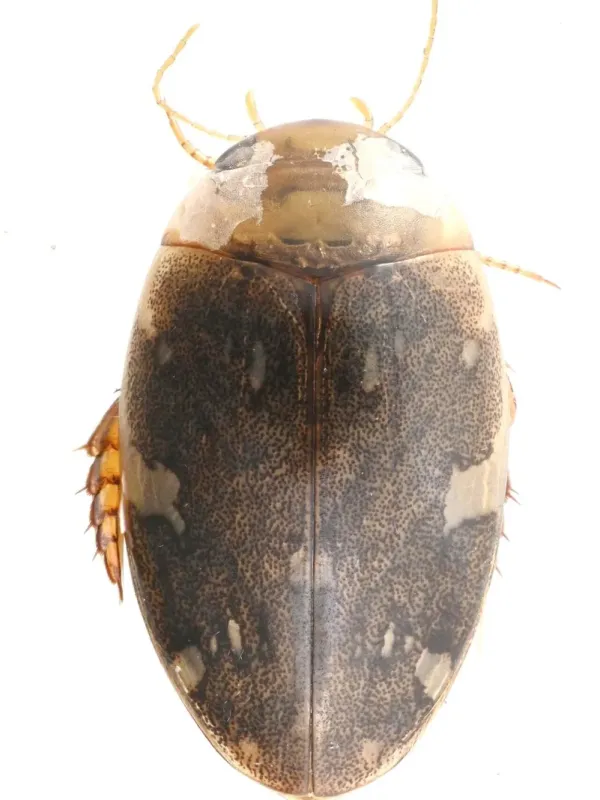
Beetles of the Laccophilus genus belong to the Dytiscidae family, order Coleoptera. These are small, streamlined insects, approximately 4–6 mm long, with a characteristic yellowish-brown color and mottled markings on their elytra.
The body of the beetle is oval and highly flattened, allowing it to move rapidly through the water column. Its hind legs are modified for swimming and are covered with dense hairs to provide efficient propulsion.
Unlike larger diving beetles, this genus is more agile and active in the coastal zones of still water bodies. Their life cycle consists of four distinct stages: egg, larva, pupa, and adult.
Laccophilus larvae are active predators equipped with sickle-shaped jaws used to inject digestive enzymes into their prey. They possess slender bodies with long cerci at the end of the abdomen.
Pupation primarily occurs in the damp soil along the shore or among dense coastal vegetation, where the larva constructs a small chamber for metamorphosis.
##damage##The primary damage caused by Laccophilus species is observed in fish farms and commercial aquatic plant cultivation, such as lotus or water chestnut fields.
Both adults and larvae can attack fish fry and consume fish eggs, which significantly reduces the overall productivity of the water body.
In aquatic agro-cultures, larvae can damage delicate plant structures by boring tunnels into stems or roots, which weakens the plants and inhibits their normal growth.
Mass reproduction of these beetles leads to an ecological imbalance in ponds, as they actively consume zooplankton, which is a vital food source for many hydrobionts.
Indirect damage occurs through the potential transmission of pathogens and fungal spores between plants when the beetles move from one area of the hydro-system to another.
When it appears
Adult activity is observed during the warmer months, starting in early spring when water temperatures reach comfortable levels for mating and reproduction.
The peak reproduction period occurs in late spring and early summer, as females deposit eggs directly into the tissues of submerged aquatic plants.
Larval development proceeds rapidly, and by mid-summer, a new generation of young adult beetles typically emerges in the ponds.
In autumn, adults prepare for hibernation, moving into the bottom silt or deep layers of coastal soil to survive lower winter temperatures.
The timing of their appearance is highly dependent on weather patterns, with prolonged spring cold snaps often delaying the emergence of the new generation.
Signs of infestation
The main sign of an infestation is the presence of characteristic damage on young aquatic plant shoots, often appearing as small, punctate holes or eaten patches.
During sunny days, visual inspection of the water surface reveals rapid movements of beetles frequently surfacing to replenish their air supply.
Empty fish eggshells or a sharp decline in fry populations within enclosed ponds, in the absence of other known predators, often indicate Laccophilus activity.
Affected plant parts begin to yellow and decay, losing their commercial value and slowing down overall development during the intensive growing season.
Using a fine-mesh net to sample the water allows for easy detection of the species, which confirms the presence of an infestation in the area.
Control measures
The most effective method of control is an agro-technical approach: regular removal of excessive coastal vegetation where the beetles lay their eggs.
In industrial-scale operations, draining the ponds during the off-season is highly recommended, as it causes the death of overwintering individuals and larvae in the silt.
Biological control methods, such as introducing natural predators like waterfowl or specialized predatory fish, help to keep beetle populations at manageable levels.
Chemical treatments in water bodies are generally discouraged due to the high risk of harming fish and destabilizing the aquatic ecosystem, favoring mechanical removal instead.
- Regular water filtration to remove larvae;
- Maintaining water purity to minimize organic buildup;
- Installing nets to prevent adult beetles from flying into new water bodies.
Taxonomy
- Latin name
- Laccophilus
- Order
- Coleoptera (beetles)
- Family
- Dytiscidae
- EPPO code
- LCCHSP
Discussion
No discussions yet — be the first.