
Dark diving beetle
Ilybius obscurus
Description
How to identify
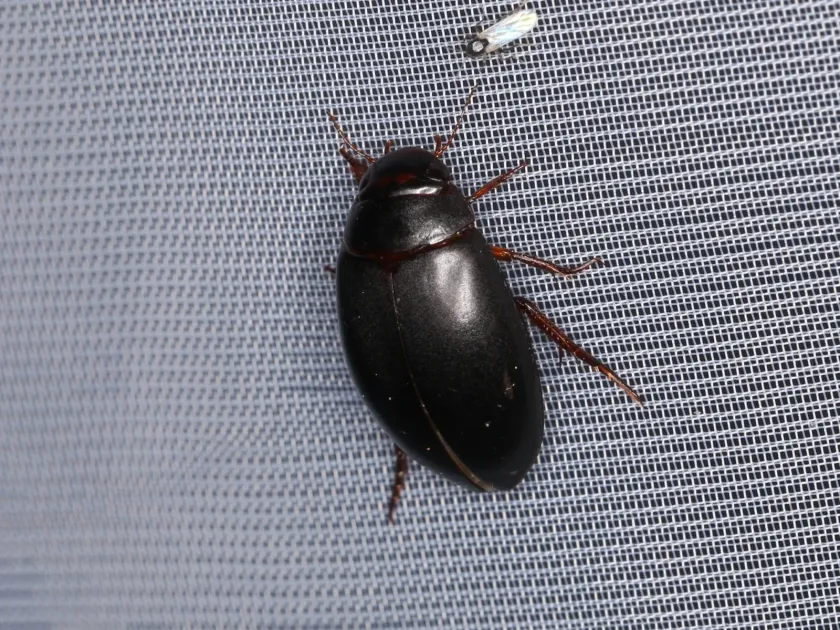
The dark diving beetle, scientifically known as Ilybius obscurus, belongs to the Dytiscidae family within the order Coleoptera. Adult beetles typically measure between 10 to 12 mm in length, featuring an oval, dark-brown or black body with a slightly metallic luster.
The larvae are characterized by a segmented, elongated body and specialized sickle-shaped mandibles. These mouthparts are evolutionarily adapted to capture, grasp, and consume prey in an aquatic environment.
This species is highly mobile and possesses fully functional wings, allowing it to fly between water bodies, colonizing irrigation systems, ponds, and rice paddies effectively.
Adults exhibit efficient swimming behaviors, utilizing their oar-like hind legs to navigate through dense vegetation and turbid water columns with significant speed.
Accurate identification of Ilybius obscurus usually involves examining the morphological structures of the pronotum and elytra, distinguishing it from other diving beetle species.
What it damages
The primary concern regarding this beetle is its predatory nature in fish-rearing facilities and rice paddies, where larvae and adults compete with fish fry for food.
In aquaculture, significant economic losses can occur when these beetles prey directly on young fry, reducing the survival rate of the fish stock.
While damage to rice plants is often indirect, high population densities can lead to the destruction of beneficial microorganisms necessary for healthy soil nutrient cycling.
In some agricultural systems, the presence of these beetles complicates the management of aquatic ecosystems, requiring additional interventions to maintain biological balance.
Direct damage to young rice seedlings is limited but may occur when the beetles physically disturb the root zone while searching for aquatic prey.
When it appears
The active life cycle of the dark diving beetle begins in early spring, as water temperatures rise, triggering the emergence of overwintering adults.
Reproductive peaks generally occur from late spring through early summer, coinciding with the rapid growth stages of various aquatic crops.
Larval development progresses through several instars, with the most predatory activity observed during the warmer months of the year.
As temperatures drop in the autumn, the beetles migrate to deeper sections of the water body or burrow into the substrate to enter a dormant state for winter.
Continuous monitoring throughout the growing season is essential, as the beetle's life cycle is closely linked to the thermal conditions of the water habitat.
Signs of infestation
A primary indicator of infestation is the unexplained decline or injury of young fish populations in controlled ponds where disease is not present.
In rice paddies, observers may notice characteristic ripples on the water surface as beetles surface briefly to replenish their air supply under their elytra.
The presence of abandoned larval exuviae attached to emergent aquatic vegetation provides evidence of recent successful metamorphosis cycles.
A noticeable decrease in zoo-plankton diversity often points to an overabundance of predatory diving beetle larvae in the irrigation network.
Mechanical disruptions to the base of young seedlings can sometimes be attributed to the burrowing activity of these beetles in the soft mud of the field.
Control measures
The most effective cultural practice for controlling this pest is the periodic drainage of rice paddies or ponds, which eliminates suitable breeding habitats.
Maintaining clean irrigation channels by removing excessive aquatic vegetation significantly reduces the available sites for egg deposition.
Biological control methods include encouraging natural predators, such as specific waterfowl or native fish species, to regulate beetle populations.
In intensive farming, the use of mesh screens on water intakes can physically prevent the migration of adult beetles from neighboring wild water sources.
When necessary, localized monitoring and the use of specialized traps can help manage beetle density without resorting to harmful chemical treatments.
Taxonomy
- Latin name
- Ilybius obscurus
- Order
- Coleoptera (beetles)
- Family
- Dytiscidae
- EPPO code
- ILYBOB
Discussion
No discussions yet — be the first.