
Hygrotus versicolor
Hygrotus versicolor
Description
How to identify
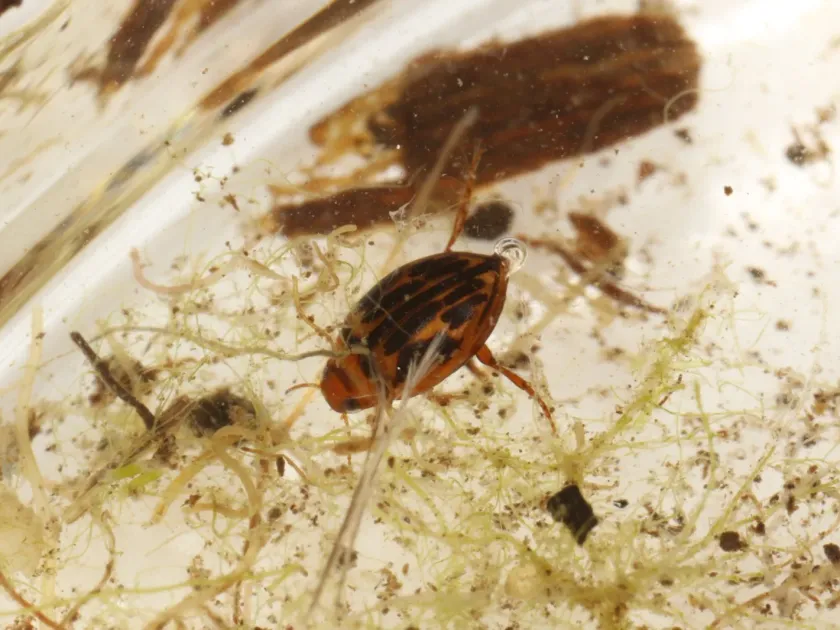
Hygrotus versicolor is a species of aquatic beetle belonging to the Dytiscidae family. Known for its small size and distinctive color pattern, this beetle is a common inhabitant of freshwater bodies.
The beetle possesses a streamlined, oval-shaped body, which is perfectly adapted for swimming. Its elytra (wing covers) display a multicolored or spotted pattern, providing excellent camouflage against the muddy or vegetation-rich bottom.
Adults typically measure between 3 and 4 millimeters in length. They are equipped with sharp vision and specialized swimming hairs on their legs, allowing them to maneuver efficiently in water environments.
The larvae are active predators with elongated bodies and specialized mouthparts. They move through the water with precision, hunting for smaller aquatic invertebrates and larvae of other insects.
The life cycle undergoes complete metamorphosis, including egg, larva, pupa, and adult stages. Adults are highly capable fliers, enabling them to colonize new aquatic habitats rapidly during the season.
What it damages
While often part of a balanced ecosystem, Hygrotus versicolor can become a nuisance in aquaculture settings, fish nurseries, or farms growing specific aquatic crops.
The primary damage is caused by their predatory nature; they can prey on valuable microscopic life or, in high densities, potentially harm fish fry by outcompeting them or feeding on them directly.
In irrigation systems, large populations of these beetles can lead to a decline in water quality, often due to their waste accumulation and the disruption of the existing balance of beneficial microorganisms.
Direct damage to aquatic plants can occur when adults scrape tissue for nutrition or create small punctures when laying eggs, which can lead to localized plant tissue necrosis.
In commercial agriculture, the presence of these beetles is often an indicator of stagnant or polluted water, signaling that the system requires maintenance to restore ecological stability.
When it appears
Activity usually peaks in the spring as soon as water temperatures begin to rise consistently. This period marks the end of their overwintering phase and the beginning of the reproductive season.
Throughout the warmer summer months, the species can complete multiple generations, with larval populations peaking in July and August when water conditions are optimal.
As the weather cools in autumn, the beetles begin to prepare for winter, typically migrating into the deeper, warmer layers of the water column or burrowing into the sediment.
The winter is spent in a state of diapause, with the beetles remaining inactive in the substrate or protected areas of the pond until the following spring.
The timing of each life stage is strictly dependent on local climate factors, water oxygen levels, and the overall availability of food sources within the habitat.
Signs of infestation
Detection is often performed by observing the water surface in the evening hours when beetles surface to replenish their air supply, often leaving visible ripples.
Using a fine-mesh aquatic net is the most effective way to identify the presence of adults, which can be distinguished by their unique mottled pattern.
Larval activity can be detected by examining the vegetation and detritus along the pond banks, where larvae hide and lie in wait for prey.
An indirect sign of infestation is a noticeable decrease in the population of smaller aquatic crustaceans and other prey species in the water body.
While direct plant damage is often subtle, yellowing or small spots on underwater plant tissues in areas of high beetle density may serve as a secondary indicator.
Control measures
The most effective strategy is habitat management: removing dense underwater vegetation significantly reduces the number of shelter sites available for both larvae and adults.
Installing fine-mesh filters at water intake points is essential to prevent adults from entering irrigation systems or private pond enclosures from external sources.
Encouraging or introducing natural fish predators that consume both adult beetles and larvae provides an effective biological control mechanism for fish farms.
Using light traps at night allows for the mechanical collection of adult beetles, which helps reduce the reproductive population without the need for chemical intervention.
Maintaining high water quality and preventing nutrient runoff is crucial, as eutrophic (nutrient-rich) water encourages the rapid proliferation of prey species that sustain the beetle population.
Taxonomy
- Latin name
- Hygrotus versicolor
- Order
- Coleoptera (beetles)
- Family
- Dytiscidae
- EPPO code
- HGYRVE
Discussion
No discussions yet — be the first.