
Hygrotus
Hygrotus
Description
How to identify
Hygrotus is a genus of beetles belonging to the family Dytiscidae (predaceous diving beetles). While primarily aquatic, these insects are proficient fliers capable of colonizing new habitats.
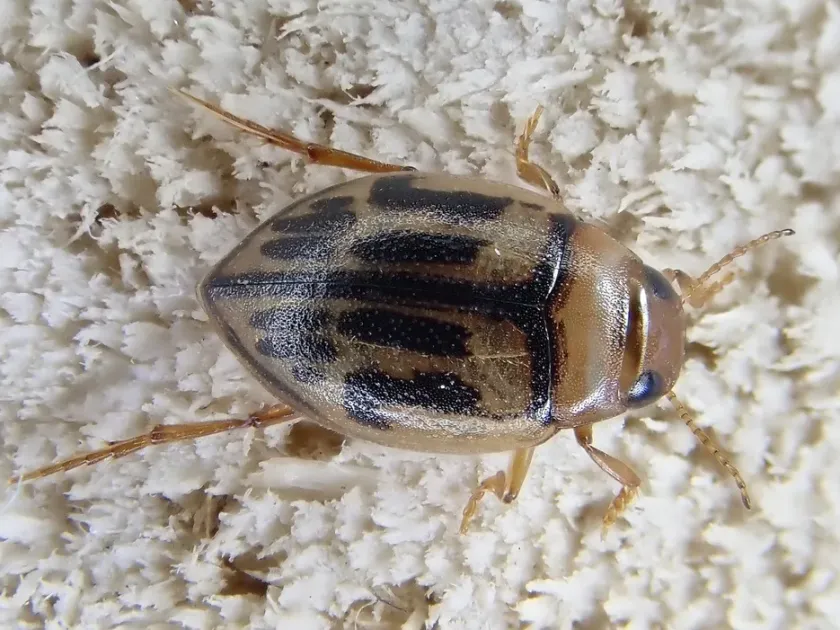
Adult beetles have a typical streamlined body shape, measuring between 3 and 5 millimeters in length. Their coloration is usually dark, often featuring distinctive yellow or brown markings on the elytra for camouflage.
The larvae are active predators with elongated bodies and specialized mouthparts adapted for grasping and consuming prey in aquatic environments or water-saturated soils.
The life cycle involves complete metamorphosis, consisting of the egg, larval, pupal, and adult stages. Females lay their eggs in the tissues of aquatic plants or within the substrate near water edges.
Overwintering occurs primarily in the adult stage. The beetles seek shelter in soil or leaf litter along banks, becoming active again when spring temperatures rise.
What it damages
Hygrotus beetles primarily cause agricultural damage in environments with poor drainage, such as paddy fields or excessively irrigated vegetable plots, where moisture levels mimic their natural habitat.
Larvae can feed on the root systems and tender stems of seedlings, leading to stunted growth, wilting, or complete plant death when infestations are high.
During the germination phase, these pests may consume the embryo and endosperm of seeds, resulting in poor stand establishment and reduced overall yield for the season.
Feeding damage at the base of the plant creates entry points for various soil-borne pathogens, leading to secondary infections such as root rot.
The cumulative effect of these injuries often manifests as uneven crop growth, which significantly complicates subsequent field management practices.
Control measures
Effective water management is the most critical factor in controlling Hygrotus populations. Proper drainage systems prevent the waterlogging that is essential for the survival of the larvae.
Cultural practices such as deep autumn plowing are recommended to disrupt the overwintering sites of adult beetles and reduce the pest pressure in the following season.
Applying insecticidal seed treatments is a viable strategy to protect germinating seeds and young seedlings from larval attack in high-risk areas.
Maintaining clear irrigation channels and managing aquatic vegetation helps reduce the attractiveness of the environment to adult beetles looking for breeding grounds.
- Regular soil moisture monitoring.
- Crop rotation to break the pest cycle.
- Targeted use of insecticides if population thresholds are exceeded.
Taxonomy
- Latin name
- Hygrotus
- Order
- Coleoptera (beetles)
- Family
- Dytiscidae
- EPPO code
- HGYRSS
Discussion
No discussions yet — be the first.