
Hydrovatus cuspidatus
Hydrovatus cuspidatus
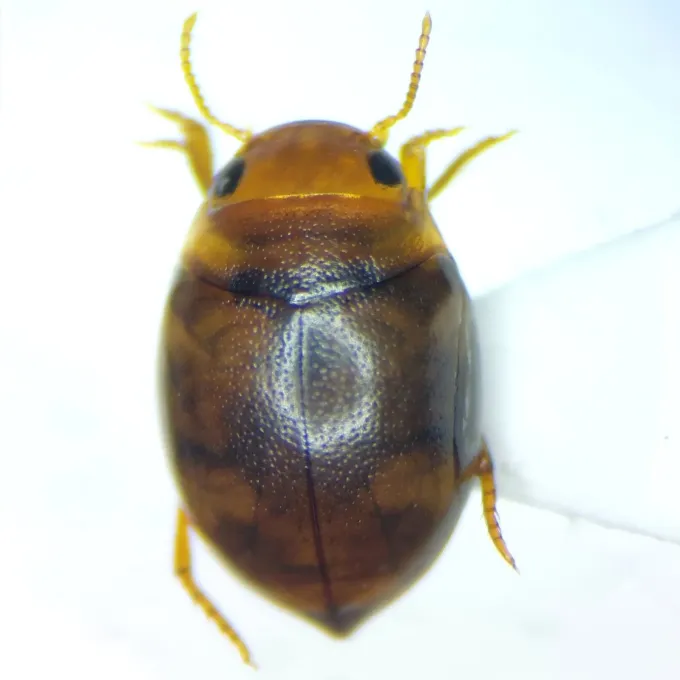
Description
How to identify
Hydrovatus cuspidatus is a small aquatic beetle belonging to the Noteridae family, commonly known as burrowing water beetles. These insects are characterized by their compact, oval, and convex bodies, typically colored in shades of brown or yellowish-brown, allowing for effective camouflage in aquatic environments.
They are primarily adapted to stagnant or slow-moving water bodies, including rice paddies, where they spend most of their life cycle. Their legs are structurally adapted for efficient swimming, allowing them to navigate through submerged vegetation and silt with ease.
The life cycle of this beetle follows complete metamorphosis, consisting of four stages: egg, larva, pupa, and adult. The larval stage is predominantly benthic, meaning they live at the bottom of the water body, often hiding within the mud or among the root systems of aquatic plants.
Adult beetles possess wings and are capable of flight, which enables them to disperse between different water sources in search of better feeding or breeding conditions. This mobility is a significant factor in their ability to colonize new agricultural areas quickly.
Field identification of Hydrovatus cuspidatus typically requires the use of specialized aquatic nets for sampling water and benthic sediment. Accurate determination is essential for distinguishing this species from other beneficial or harmless aquatic insects found in similar habitats.
What it damages
The primary agricultural threat posed by Hydrovatus cuspidatus is the damage caused to young rice seedlings during the early stages of crop development. Both larvae and adult beetles feed on the soft tissues of the plants, particularly targeting submerged stems and roots.
Such feeding damage often results in uneven crop stands, with specific patches showing inhibited growth or yellowing. In severe infestations, the cumulative damage can lead to a significant reduction in the overall plant population and subsequent loss of yield.
Beyond direct feeding, the wounds caused by the beetles provide entry points for secondary infections. These can include various fungal and bacterial pathogens that further weaken the rice plants and complicate phytosanitary management.
The damage is most pronounced when water levels are high, as the beetles can easily access the vulnerable young tissues of the seedlings. If environmental conditions favor rapid population growth, the risk to the rice crop increases significantly.
Agronomic assessments have shown that without proper monitoring, this pest can cause persistent problems in fields with poor water management. Identifying the pest early is crucial for preventing widespread damage across the plantation.
When it appears
Seasonal activity typically begins in the spring as water temperatures rise, creating favorable conditions for the beetle's development. Adults emerge from their overwintering sites as soon as rice paddies are flooded and temperatures become suitable for reproduction.
Multiple generations can occur throughout the growing season, leading to a prolonged period of potential damage. Monitoring should be most intensive during the initial flooding phase and the early growth stages of the rice crop.
These beetles overwinter in the adult stage, hiding in the soil along the banks of water bodies or within decaying organic matter. As autumn approaches and temperatures drop, they enter a period of diapause and relocate to their hibernation sites.
Environmental factors such as rainfall and sudden changes in water levels can significantly influence the population dynamics of this pest. Consistent water management is a key factor in predicting and controlling its presence in the field.
Understanding the synchronization between the beetle's life cycle and the rice cropping calendar is essential for effective pest management programs. Regular surveys are necessary to track the progression of the population through the summer.
Signs of infestation
Initial signs of an infestation include the appearance of thin or sparse spots in the rice field and the general yellowing of young shoots. Upon closer inspection, small, irregular gnawing marks can be observed on the submerged parts of the plant stems.
Confirming the presence of the pest involves taking water and sediment samples from the paddy. Finding these small, convex beetles in the samples is a clear indication that immediate intervention might be necessary.
Larval activity often manifests as increased turbidity in the water around the base of the rice plants as they burrow into the mud. Plants subjected to heavy feeding will show significantly stunted development compared to their healthy counterparts.
If the root systems of young seedlings appear damaged or severed without the presence of recognizable root rot pathogens, Hydrovatus cuspidatus activity should be suspected. This is a vital diagnostic clue for field agronomists.
By establishing a monitoring protocol, farmers can track population levels and detect if the threshold for economic damage has been surpassed, allowing for timely and targeted mitigation efforts.
Control measures
Effective control strategies focus on cultural practices such as crop rotation and the thorough removal of weeds from irrigation ditches, which serve as overwintering sites. Maintaining optimal water levels and preventing stagnant conditions can also help limit populations.
Biological control, including the use of entomopathogenic fungi or natural predators, offers an environmentally friendly alternative to chemical pesticides. These methods can effectively reduce beetle numbers while preserving the aquatic ecosystem's balance.
In cases where infestations exceed economic thresholds, the use of targeted insecticides permitted for rice cultivation may be necessary. These should be applied according to local regulations to ensure minimal impact on non-target species.
Short-term drainage of the paddy is a highly effective mechanical method to disrupt the life cycle of the beetles and larvae. This practice often forces them to migrate or exposes them to lethal desiccation, effectively reducing their presence.
Integrating multiple management techniques—such as monitoring, habitat modification, and biological control—provides the most reliable protection against Hydrovatus cuspidatus throughout the growing season.
Taxonomy
- Latin name
- Hydrovatus cuspidatus
- Order
- Coleoptera (beetles)
- Family
- Dytiscidae
- EPPO code
- HDRVCU
Discussion
No discussions yet — be the first.