
Hydroglyphus geminus
Hydroglyphus geminus
Description
How to identify
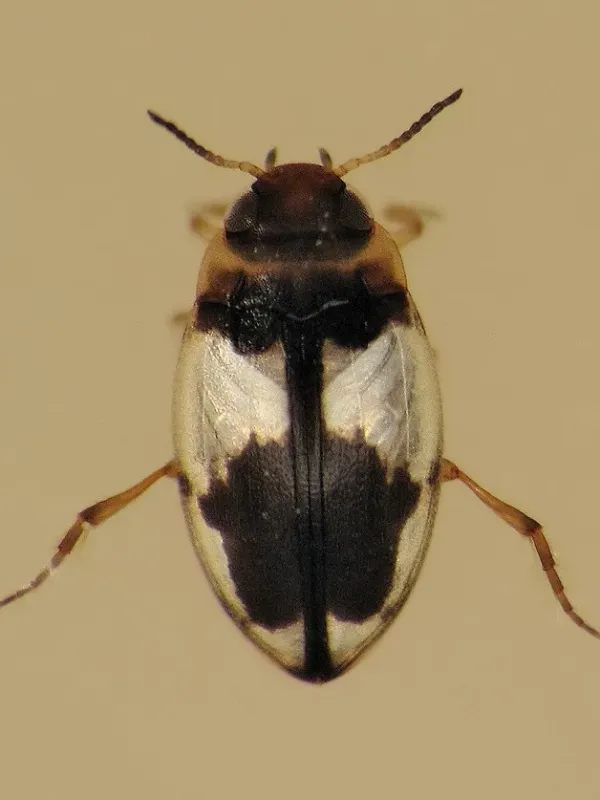
Hydroglyphus geminus is a small aquatic beetle belonging to the Dytiscidae family, order Coleoptera. These beetles are typically 2 to 3 millimeters in length.
The beetle exhibits a streamlined, oval-shaped body, which is highly adapted to life in an aquatic environment. Its dorsal side features a yellowish-brown coloration with dark patterns, providing camouflage against the muddy bottom.
Adult beetles possess fully functional wings, allowing them to migrate effectively between different water bodies, including flooded rice fields.
The larvae are exclusively aquatic and predatory, characterized by an elongated body and specialized mouthparts designed to capture prey.
Due to their small size, detecting these beetles requires the use of fine-meshed aquatic nets to sample water and bottom sediments in the rice fields.
What it damages
While primarily predatory on other aquatic organisms, the larvae can damage young rice seedlings, particularly during the early stages of crop emergence.
The damage occurs when larvae graze upon the epidermis and tender tissues of young plants submerged or partially floating in the irrigation water.
Damaged seedlings may lose turgor pressure, exhibit stunted growth, and in severe cases, die, leading to reduced plant density in the field.
The risk is highest immediately after field flooding, as the young seedlings are most vulnerable before their tissues toughen and root systems stabilize.
In high-intensity rice production areas, these beetles can contribute to significant economic loss if their population density remains unchecked.
When it appears
Activity typically begins in the spring as water temperatures rise, creating favorable conditions for mating and oviposition by the females.
Population peaks usually coincide with the early vegetative phase of rice, when flooded fields provide a vast habitat and an abundance of food sources.
The species completes multiple generations per season, allowing for rapid population recovery and continued pressure throughout the warmer months.
As the season draws to a close, adults migrate to permanent bodies of water or burrow into the substrate to hibernate over the winter.
Prolonged periods of warm water temperatures act as a catalyst for larval development, shortening the generation time and increasing potential damage.
Control measures
Effective management includes practicing proper crop rotation and maintaining irrigation systems by clearing away excessive aquatic weeds that provide refuge for the beetles.
Water level management, such as brief drainage of the rice fields during critical periods, is a highly effective way to disrupt the beetle's life cycle.
Ensuring high-quality seed and optimal planting conditions promotes rapid and uniform germination, helping the crop outgrow its most vulnerable stages.
Chemical control should be applied only when necessary, using insecticides approved for use in aquatic rice environments and adhering strictly to label rates.
- Flushing rice fields prior to planting.
- Encouraging natural predators to maintain ecological balance.
- Using light traps to monitor adult beetle activity levels.
Taxonomy
- Latin name
- Hydroglyphus geminus
- Order
- Coleoptera (beetles)
- Family
- Dytiscidae
- EPPO code
- HGLUGE
Discussion
No discussions yet — be the first.