
Hydroglyphus
Hydroglyphus
Description
How to identify
The genus Hydroglyphus consists of small aquatic beetles belonging to the family Dytiscidae (diving beetles) within the order Coleoptera. These insects are well-adapted to life in water, possessing a streamlined body shape that facilitates swift swimming and navigation.
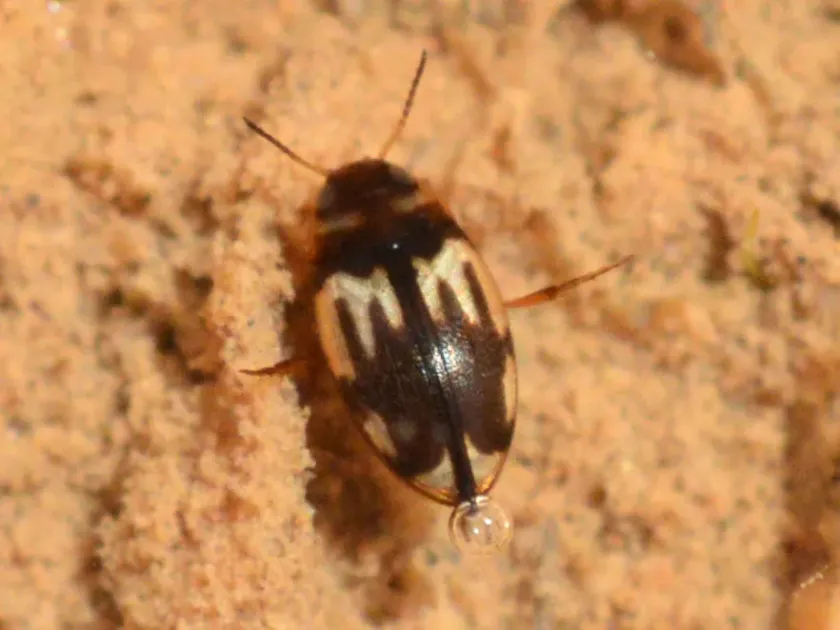
Adult beetles typically range from 3 to 5 mm in length and often display yellowish-brown coloration with dark, mottled patterns on their elytra. Their larvae are elongated with prominent mandibles, designed for predatory behavior and feeding on both animal and plant tissues.
What it damages
These beetles are recognized as pests in rice cultivation, particularly affecting the crop during the germination and early seedling stages in flooded paddies. Damage is caused by both adults and larvae feeding on the delicate plant tissues submerged in water.
Young rice plants are particularly vulnerable, as feeding can destroy the root system or the tender developing leaves. This herbivory significantly reduces plant vigor, leads to patchy stands, and can cause total failure of emerging seedlings in heavily infested areas.
When it appears
The life cycle of Hydroglyphus is strictly dependent on the presence of standing water. Activity begins as soon as rice paddies are flooded, which provides the necessary environment for mating and egg-laying on plant surfaces or substrates.
The developmental process encompasses the egg, three larval instars, pupal stage, and the adult phase. Higher water temperatures accelerate the maturation process, often leading to multiple overlapping generations throughout the irrigation season in rice-growing regions.
Signs of infestation
Visible signs of infestation include erratic holes and ragged edges on the leaves of young rice plants. Seedlings may appear wilted or stunted, and in severe cases, the water surface may contain detached plant debris resulting from the beetles' feeding activity.
When monitoring, one may observe the small beetles swimming actively near the water surface or clinging to submerged vegetation. The characteristic browning of damaged tissues as they begin to decay is a hallmark of significant beetle pressure on the crop.
Control measures
Effective management focuses on agrotechnical practices, such as controlled drainage of rice paddies during critical growth stages to disrupt the aquatic life cycle of the pest. Maintaining proper water management is often sufficient to keep populations below economic thresholds.
If chemical intervention is necessary, it is crucial to select insecticides labeled for aquatic use to prevent environmental damage to the rice field ecosystem. Integrated pest management strategies emphasize biological control agents and avoiding broad-spectrum pesticides.
Taxonomy
- Latin name
- Hydroglyphus
- Order
- Coleoptera (beetles)
- Family
- Dytiscidae
- EPPO code
- HGLUSP
Discussion
No discussions yet — be the first.