
Transverse diving beetle
Hydaticus transversalis
Description
How to identify
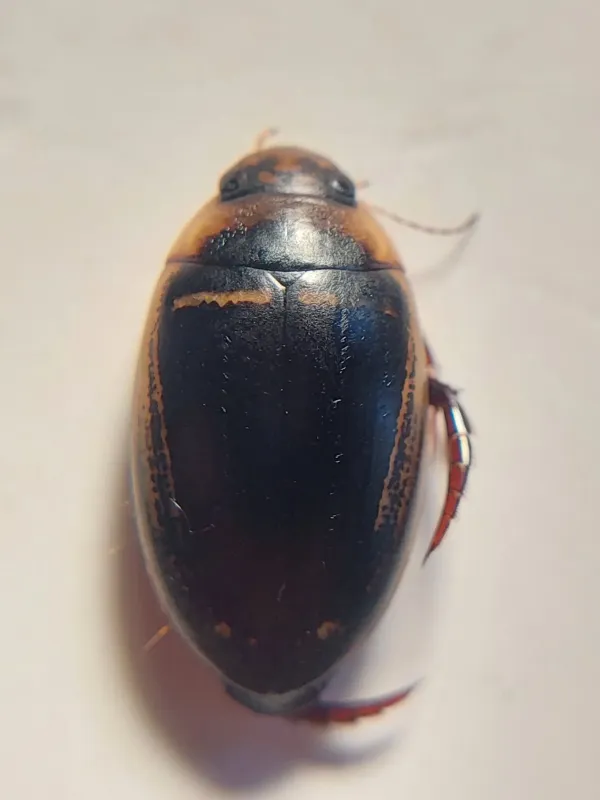
The Transverse diving beetle (Hydaticus transversalis) is a predatory aquatic insect belonging to the family Dytiscidae. These beetles are typically 10–12 mm long, featuring an elongated, oval, and streamlined body shape perfectly adapted for life in water.
The common name is derived from the distinct transverse yellow stripe across their elytra (wing covers). The coloration is generally dark with lighter markings on the head and pronotal margins. Like other members of the Dytiscidae family, they are excellent swimmers and highly agile in their environment.
The larvae are specialized predators with a slender body and prominent mandibles designed for piercing prey. They remain strictly aquatic throughout their larval development, relying on atmospheric air for respiration, which they obtain by breaking the surface of the water.
Adult beetles are capable of flight and are known to disperse between water bodies, particularly at night. They are highly attracted to artificial light sources, a trait often used by researchers to collect specimens from various locations.
The life cycle involves four stages: egg, larva, pupa, and adult. Females deposit their eggs into the tissues of aquatic plants or on submerged substrates, ensuring the safety of the next generation until they hatch into aquatic larvae.
What it damages
The Transverse diving beetle is primarily recognized as a pest in fish farming and hatchery environments. Both adults and larvae are opportunistic predators that feed on a variety of small organisms, including fish fry and aquatic invertebrates.
In aquaculture ponds, the larvae pose a significant threat to juvenile fish. They attack young fry, injecting digestive enzymes that cause tissue damage and mortality, leading to substantial economic losses for fish farmers.
In addition to direct predation, these beetles compete for resources with other beneficial aquatic organisms. Their presence in high densities can disrupt the natural food chain within a managed pond, affecting the overall growth rate and survival of the target fish population.
While they do not consume plant crops, their activity in flooded irrigation systems or hydroponic setups can be detrimental if they prey on beneficial aquatic species or if their mass presence hampers water quality monitoring.
Management of this pest is critical in high-value fisheries where even a small percentage of fry loss significantly impacts the profitability and production yield of the farm.
Control measures
The most effective management practice for Hydaticus transversalis is the periodic drainage and drying of ponds. This method effectively terminates the life cycle by removing the aquatic habitat required for larval survival.
Mechanical control involves the removal of excessive aquatic vegetation from pond edges, which serves as a vital substrate for egg-laying. By reducing nesting sites, the overall population density within the pond can be significantly curtailed.
Light traps are a proven method for intercepting and removing adult beetles as they arrive at the pond site during their nocturnal flights. This is particularly useful as a preventive measure during the early stages of pond filling.
Chemical control is generally discouraged in aquatic environments due to the high toxicity of most insecticides to fish populations and the surrounding ecosystem. Priority is placed on sustainable and biological prevention strategies.
- Periodic drainage of rearing ponds.
- Physical removal of dense aquatic weeds.
- Deployment of night-time light traps for adults.
- Screening of water intake points to prevent entry.
Taxonomy
- Latin name
- Hydaticus transversalis
- Order
- Coleoptera (beetles)
- Family
- Dytiscidae
- EPPO code
- HYCSTR
Discussion
No discussions yet — be the first.