
Predaceous diving beetle
Hydaticus
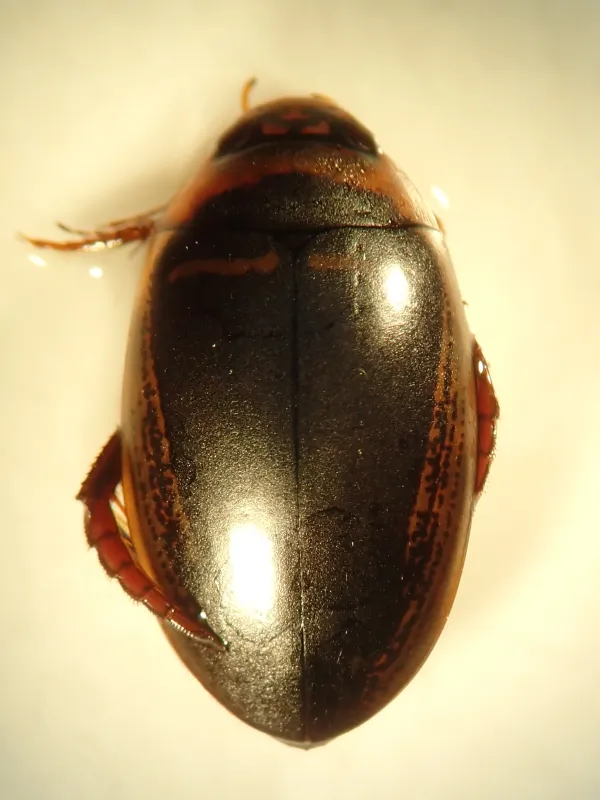
Description
How to identify
The genus Hydaticus belongs to the family Dytiscidae, order Coleoptera. These are predatory water beetles characterized by an oval, streamlined body shape optimized for efficient swimming.
Adult beetles typically measure between 10 and 16 mm in length. Their coloration is usually dark brown or black, often accompanied by distinct yellow markings on the pronotum and elytra.
The larvae, often called water tigers, possess elongated bodies and powerful sickle-shaped mandibles, which they use to grasp and immobilize their prey with great precision.
These insects breathe atmospheric air. Larvae accomplish this by surfacing and extending the tip of their abdomen, which contains spiracles, above the water level.
The lifecycle includes a complete metamorphosis. Uniquely, the pupal stage occurs on land, as the mature larvae emerge from the water to burrow into moist soil near the shoreline.
What it damages
The primary concern regarding Hydaticus involves aquaculture, where larvae prey upon fish fry, causing significant losses to fish farming operations and stock development.
In agriculture, these beetles pose a threat to aquatic crops such as rice. Larvae may damage young seedlings by gnawing at the submerged stem base, leading to plant mortality.
Adult beetles are strong fliers, which allows them to migrate rapidly between different water bodies, effectively spreading the infestation to new agricultural plots or irrigation systems.
Physical damage to the roots and crowns of aquatic plants occurs when larvae settle in the substrate, disrupting the root system and exposing the plant to secondary infections.
Heavy infestations can result in significant gaps in crop rows, forcing growers to engage in costly replanting and intensive pest management strategies throughout the growing season.
When it appears
Beetle activity commences in early spring as water temperatures rise, typically exceeding 10–12 degrees Celsius, prompting adults to emerge from their overwintering sites.
The peak mating and egg-laying period occurs during late spring and early summer, when female beetles deposit eggs on aquatic vegetation or directly into the pond bed substrate.
Larval development is concentrated during the warm summer months, coinciding with the period of maximum growth for aquatic crops and the presence of abundant prey for the larvae.
As autumn approaches and water temperatures drop, the beetles prepare for diapause, either by burying themselves in the bottom mud or migrating to nearby soil to overwinter.
In warmer climates, some activity may persist into late autumn, necessitating consistent monitoring if aquatic crops are still in the vegetative or early reproductive stages.
Signs of infestation
One of the first signs of infestation is the appearance of jagged or notched stem tissues on submerged parts of aquatic plants, indicative of larval feeding activity.
A sudden decline in fish fry populations in a contained aquaculture pond is a major indicator that a population of predatory water beetles has established itself.
Collecting samples using a standard aquatic net will reveal the presence of larvae, which are highly active and will demonstrate aggressive behavior when agitated in the net.
Visible wilting or yellowing of stems that otherwise appear healthy may indicate underlying mechanical damage to the root collar caused by the burrowing larvae.
Observing the water surface during dusk hours can reveal the presence of adult beetles surfacing for air, which confirms their continued presence in the irrigation system.
Control measures
Physical removal of dense aquatic weeds and floating debris is essential, as these provide critical shelter for both larvae and adult beetles, reducing their survival rates.
For fish farms, total pond drainage and allowing the bed to dry and freeze during the winter season effectively destroys overwintering pupae and larvae.
The installation of light traps around the perimeter of aquatic zones can significantly decrease the number of adult beetles during their nocturnal flight and dispersal phases.
- Encouraging natural predators such as certain bird species that forage in aquatic environments.
- Regular monitoring of water quality to ensure it remains unfavorable for beetle proliferation.
- Use of selective biological agents that target the beetle life stages without impacting fish health.
Maintaining clear borders around water bodies prevents larvae from easily accessing moist soil for pupation, thereby disrupting their life cycle and population growth.
Taxonomy
- Latin name
- Hydaticus
- Order
- Coleoptera (beetles)
- Family
- Dytiscidae
- EPPO code
- HYCSSP
Discussion
No discussions yet — be the first.