
Diving beetle
Graptodytes
Description
How to identify
The Graptodytes genus belongs to the family Dytiscidae, order Coleoptera. These are small aquatic beetles characterized by a streamlined body shape, adapted for life in water.
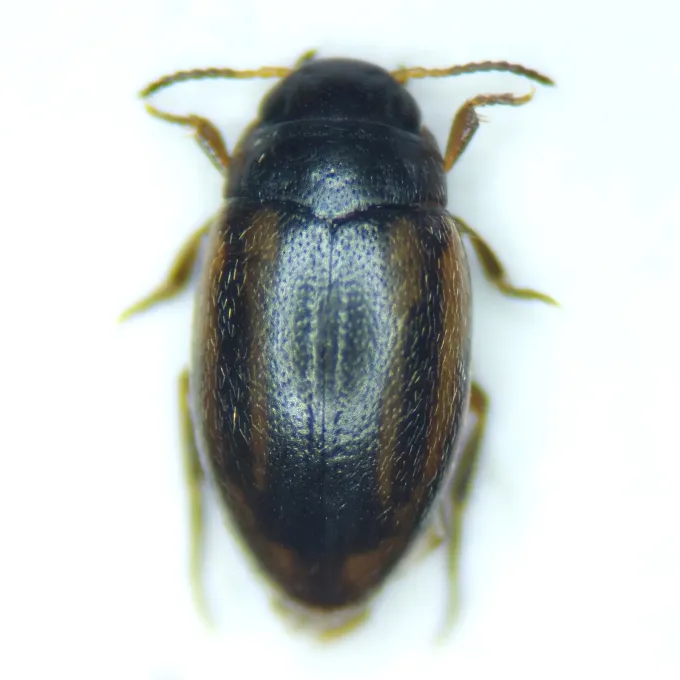
Adult specimens typically range from 2 to 3 mm in length. Their coloration is mostly dark, with yellowish or brownish markings on the elytra, which provides effective camouflage on the bottom of water bodies.
Diving beetle larvae have an elongated body and prominent jaws, designed for capturing prey. They lead a predatory lifestyle, living primarily in the water column or on submerged plant parts.
The biology of this genus is closely linked to the presence of permanent or temporary water bodies. Beetles are capable of flight, allowing them to actively colonize new territories, including artificial hydroponic systems.
Reproduction occurs by laying eggs on underwater plant parts or substrates. The entire life cycle, from egg to adult, occurs under conditions of high humidity or direct contact with water.
What it damages
Graptodytes cause the most damage in greenhouse environments when using hydroponic and aeroponic systems. Larvae can damage the root system of young plants.
With a high population density, beetles bite through the tender roots of seedlings, which leads to nutritional impairment and subsequent plant wilting.
Damage caused by larval jaws opens pathways for secondary infections, such as root rots and fungal diseases that thrive in nutrient solutions.
Adult beetles can feed on the soft tissues of stems submerged in water, reducing the overall resistance of the crop to unfavorable environmental factors.
The greatest losses are recorded in seedling nurseries, where plants lack developed mechanical tissue protection and are highly sensitive to any root damage.
When it appears
The activity of Graptodytes is directly dependent on the water temperature within technological systems. The most intensive period of life activity occurs during the spring and summer.
With year-round cultivation in greenhouses with water heating, the pest can develop continuously without a distinct diapause.
Mass emergence of adult beetles often correlates with water inflow from open sources if the water supply system lacks sufficient filtration.
Population peaks are observed when the temperature of the nutrient solution rises above 20-22 degrees Celsius, which accelerates the insect metabolism.
In open-field conditions, the developmental cycle is tied to seasonal warming, when shallow areas of water bodies that serve as reservoirs for the species heat up.
Signs of infestation
A primary sign of infestation is the sudden slowdown in plant growth rates, despite optimal parameters of the nutrient solution composition.
When inspecting the root system in hydroponic trays, characteristic incisions or signs of feeding on fine feeder roots can be identified.
The visual presence of small, rapidly swimming beetles in water reservoirs or directly in nutrient channels is direct evidence of an infestation.
An indirect sign is the rapid development of root rot foci, which arise as a consequence of micro-injuries caused by pest larvae.
At night or under low light, chaotic movement of small objects in the trays can be observed, confirming the presence of a beetle population.
Control measures
The primary control measure is the installation of mesh filters on water intake nodes to prevent adults from entering the system.
Regular disinfection of nutrient solutions using ultraviolet sterilizers is recommended, as these are lethal to larval stages.
The biological control method involves using specialized entomopathogenic fungi, which are safe for plants but lethal to aquatic insects.
Agronomic control consists of maintaining cleanliness around greenhouses, preventing water stagnation near production areas, and eliminating weeds.
Applying insecticides in hydroponic systems is complicated due to risks to product quality, so the emphasis should be placed on preventive measures and physical isolation.
Taxonomy
- Latin name
- Graptodytes
- Order
- Coleoptera (beetles)
- Family
- Dytiscidae
- EPPO code
- GRDTSP
Discussion
No discussions yet — be the first.