
Ashy diving beetle
Graphoderus cinereus
Description
How to identify
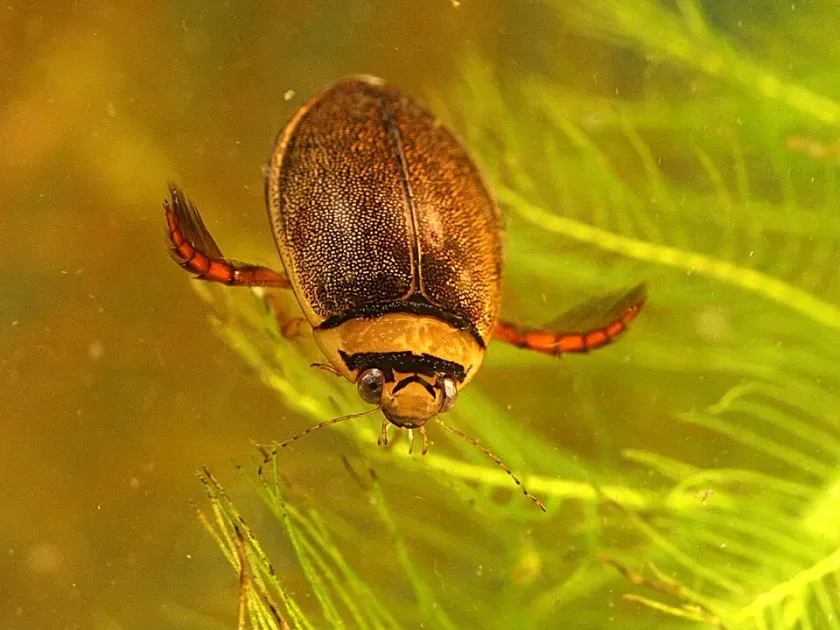
The ashy diving beetle (Graphoderus cinereus) is a member of the Dytiscidae family. Adults reach 13–15 mm in length and feature a characteristic streamlined, oval body shape.
The wing cases (elytra) are greyish-yellow or ash-colored with numerous dark specks, which provides excellent camouflage against the muddy pond floor.
Like all diving beetles, this species has evolved hind legs that function like oars, covered in long hairs for efficient swimming in aquatic environments.
The larvae are predatory creatures with prominent sickle-shaped mandibles, which they use to capture prey and inject digestive enzymes.
These beetles prefer stagnant or slow-moving water bodies with dense aquatic vegetation, which provides essential cover for hunting and reproduction.
What it damages
In aquaculture and fish farming, the ashy diving beetle is considered a significant pest, especially in hatchery and rearing ponds.
The primary damage is caused by the larvae, which are highly voracious and can significantly reduce the populations of fish fry in a short period.
Adult beetles also participate in hunting, potentially attacking small fish and damaging fish spawn, leading to direct economic losses for farmers.
Because they are capable of flight, these beetles can easily colonize new fish ponds, making management a continuous process throughout the season.
High population densities can lead to substantial mortality rates among young fish, impacting the overall efficiency and profitability of fish production.
When it appears
The life cycle of this beetle is highly seasonal, with adults typically overwintering in the bottom sediment or under debris in pond margins.
During the spring, as water temperatures rise, the beetles become active, feeding and mating before laying eggs on submerged aquatic plants.
The summer months are characterized by the development of the larvae, which coincides with the presence of vulnerable fish fry in the rearing ponds.
In late summer or early autumn, the larvae pupate in the soil around the pond edge, emerging as new adults to complete the life cycle before winter.
The success of the generation depends heavily on water temperature and the availability of shelter, both of which are common in managed fish ponds.
Control measures
Effective control starts with comprehensive pond management, including draining and drying the pond bed during the off-season to eliminate overwintering populations.
Regular maintenance of the pond environment, particularly the removal of excessive aquatic weeds, is crucial for reducing hiding places for the larvae.
Biological controls, such as introducing fish species that feed on aquatic insects, can help maintain the beetle population at manageable levels.
Mechanical barriers, such as fine-mesh screens on inlet pipes, can prevent the migration of adult beetles from natural water sources into commercial ponds.
Avoiding over-enrichment of pond water reduces plant growth, thereby creating a less hospitable environment for both larval development and egg-laying.
Taxonomy
- Latin name
- Graphoderus cinereus
- Order
- Coleoptera (beetles)
- Family
- Dytiscidae
- EPPO code
- GPDRCI
Discussion
No discussions yet — be the first.