
Eretes sticticus
Eretes stiticus
Description
How to identify
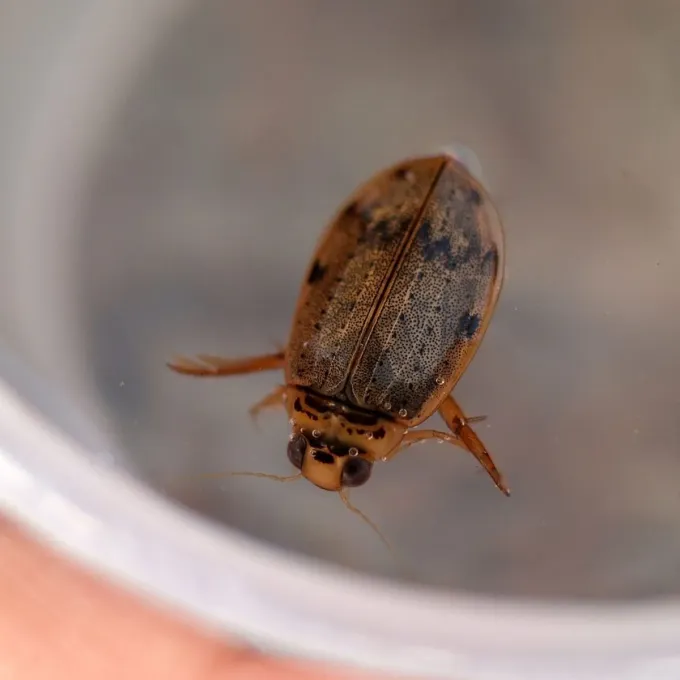
Eretes sticticus is a species of beetle in the family Dytiscidae, order Coleoptera. It is a highly adapted water beetle with a streamlined body shape designed for rapid movement in aquatic environments.
Adult beetles typically measure 12–15 mm in length. Their coloration ranges from yellowish-brown to dark brown, often featuring distinct dark spots that provide effective camouflage against the muddy bottoms of water bodies.
The larvae are predatory, possessing an elongated body and powerful, sickle-shaped mandibles designed for grasping and piercing prey in the water column.
These beetles are capable of flight, allowing them to migrate easily between different water bodies, including flooded rice fields, ponds, and irrigation networks.
The species has a broad distribution in tropical and temperate regions, frequently thriving in temporary pools and man-made agricultural wetlands.
What it damages
The main impact of Eretes sticticus is observed in rice and aquaculture sectors. The larvae are aggressive predators and often attack fish fry kept in flooded agricultural fields.
In rice paddies, the presence of these beetles can lead to the destruction of beneficial entomofauna, which helps regulate other crop pests, thereby disrupting the ecological balance of the agroecosystem.
Direct damage to rice plants is less common but can occur when larval populations are high, as they may occasionally feed on young roots or emerging shoots due to a lack of preferred prey.
Mass reproduction in irrigation canals can significantly decrease the population of commercial fish stocks, which is particularly critical in integrated rice-fish farming systems.
High population densities necessitate active monitoring to prevent economic loss in agricultural businesses involved in aquaculture and paddy cultivation.
When it appears
The period of peak activity for Eretes sticticus coincides with the warm season when water temperatures in stagnant pools are optimal for egg and larval development.
In the spring, during the flooding of rice fields, adults actively colonize new areas, where they begin the process of mating and egg-laying on aquatic vegetation.
During the summer months, the insect's life cycle accelerates, resulting in multiple generations within a single growing season of agricultural crops.
As autumn arrives and water temperatures drop, the activity of the beetles decreases, and they may migrate or enter a state of diapause within the sediment.
Monitoring for this pest is most effective during the initial phases of field flooding, as this corresponds to the primary migration and colonization period.
Control measures
Effective control measures include maintaining the integrity of irrigation systems and regular weeding to remove excessive vegetation that serves as an oviposition substrate for the beetles.
Short-term drainage of the fields is considered an effective agrotechnical practice, as it exposes larvae and interrupts the life cycle of the beetle.
If chemical control is necessary, it is essential to select products that specifically target coleopterans while minimizing negative impacts on other ecosystem components.
Biological control strategies involve encouraging natural predators, such as waterfowl, which actively feed on both adult beetles and their larvae.
- Regular population monitoring of larvae in water bodies.
- Adherence to crop rotation and optimized field flooding schedules.
- Use of environmentally safe insecticides when the economic injury level is exceeded.
Taxonomy
- Latin name
- Eretes stiticus
- Order
- Coleoptera (beetles)
- Family
- Dytiscidae
- EPPO code
- ERTSST
Discussion
No discussions yet — be the first.