
Eretes beetle
Eretes
Description
How to identify
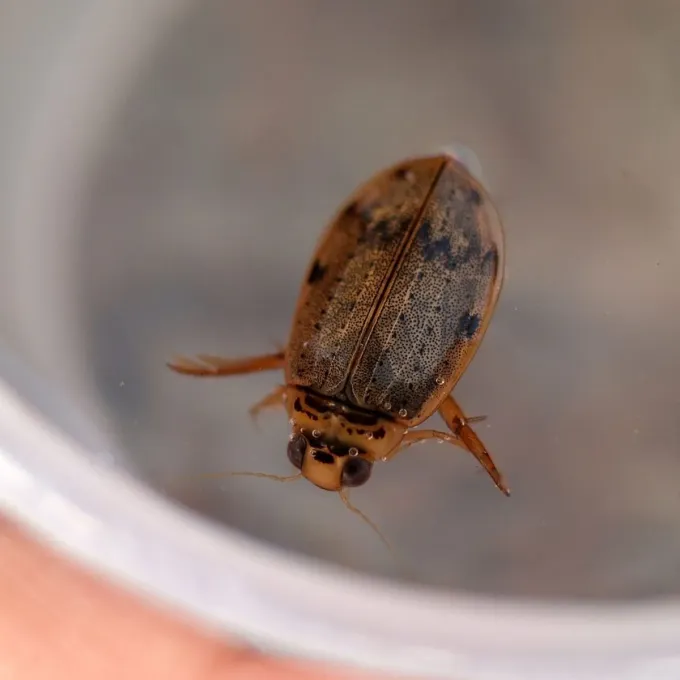
The Eretes beetle (Eretes sticticus) is a member of the Dytiscidae family, commonly known as predaceous diving beetles. These insects are well-adapted for an aquatic lifestyle, possessing a streamlined, oval-shaped body and flattened hind legs designed for swimming.
Adult beetles typically exhibit a yellowish-brown coloration with distinctive dark spotting on the elytra. The larvae are elongated, highly active predators with formidable mandibles used to capture their prey.
This species is highly mobile and capable of flight, which allows adults to colonize new aquatic environments, including flooded agricultural fields and rice paddies, with remarkable speed.
The life cycle is entirely water-dependent, progressing from egg to larva, pupa, and adult. They prefer shallow, stagnant, or slow-moving water bodies, which are ideal for their rapid population growth.
Unlike some other aquatic insects, the Eretes beetle is notable for its ability to thrive in temporary, human-made water structures, making it a persistent concern for farmers in rice-growing regions.
What it damages
The primary concern regarding this beetle is the damage caused to rice crops, particularly during the seedling and early establishment phases of growth in flooded paddies.
Both adults and larvae are carnivorous; however, in the absence of their usual prey, they can cause mechanical damage to tender rice shoots, leading to stunted growth or total seedling loss.
By feeding on the tissues of young seedlings, these beetles weaken the plants, making them significantly more susceptible to secondary infections by waterborne fungi and bacteria.
High population densities can cause severe gaps in crop stands, leading to poor uniformity and reduced yields, requiring expensive replanting measures in affected areas.
The damage is most severe in nurseries where high densities of young, delicate rice plants are concentrated, providing an ample food source for the beetle populations.
When it appears
The infestation period begins in the spring, coinciding with the flooding of rice fields. As water temperatures rise, the metabolic rate of the beetles increases, accelerating their reproductive cycle.
Under favorable warm conditions, multiple generations can emerge within a single growing season, which can make control difficult if early infestations are not managed effectively.
As autumn approaches and temperatures drop, the adult beetles move to deeper water bodies or burrow into the mud to overwinter, significantly reducing their active presence in fields.
The critical risk period for agricultural impact is limited to the first few weeks after sowing, when the rice plants lack the structural strength to withstand larval feeding.
Environmental factors, such as unusually warm and humid springs, can trigger earlier outbreaks, requiring producers to remain vigilant during the initial planting stages.
Signs of infestation
An initial sign of infestation is the appearance of shredded or floating rice seedlings on the surface of the flooded field, indicating that the plant tissue has been compromised.
Visible patches of thinning or completely absent plants in the rows are a clear indicator of localized feeding damage caused by high concentrations of larvae.
Using a standard sweep net, farmers can monitor the water for the presence of larvae, which are easily identified by their aggressive behavior and distinctive body structure.
Water turbidity may increase in infested zones, and adults can often be spotted on the surface at night, as they frequently rise to breathe or prepare for nocturnal flight.
Another sign is the presence of hollowed-out seeds, where larvae have successfully consumed the starch content of the grain before the sprout could establish roots.
Control measures
Cultural control is the most effective management strategy, starting with careful water management, such as briefly draining the paddies to desiccate larvae and disrupt their life cycle.
Field sanitation is essential; cleaning irrigation ditches and reducing emergent weeds helps limit the refuge areas where adult beetles can congregate before flooding.
Biological control methods involve protecting and encouraging natural aquatic predators, such as specific fish species or dragonfly nymphs, which can naturally suppress beetle populations.
Chemical control should be viewed as a last resort and must involve products that are environmentally certified for use in aquatic systems to prevent negative impacts on the rice ecosystem.
Integrated Pest Management (IPM) practices, including regular field monitoring and the use of light traps to track adult beetle activity, are recommended for long-term sustainable protection.
Taxonomy
- Latin name
- Eretes
- Order
- Coleoptera (beetles)
- Family
- Dytiscidae
- EPPO code
- ERTSSP
Discussion
No discussions yet — be the first.