
Great diving beetle
Dytiscus latissimus
Description
How to identify
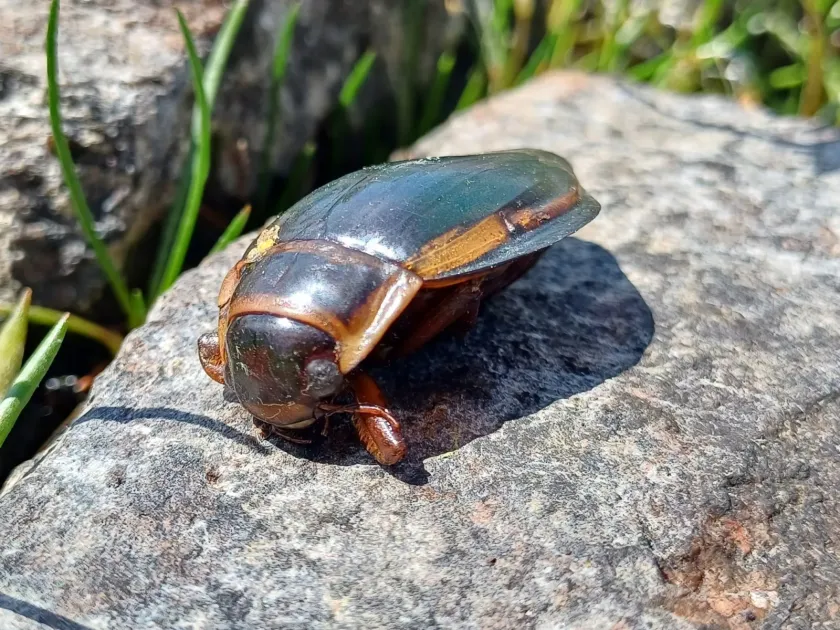
The Great diving beetle (Dytiscus latissimus) is a large aquatic predatory beetle belonging to the Dytiscidae family within the Coleoptera order. Adults can reach lengths of up to 45 mm, characterized by their wide, oval, and flattened bodies with distinct yellow edges.
The larvae of this species are notorious aquatic predators, often referred to as water tigers due to their aggressive behavior. They possess a long, segmented body and powerful sickle-shaped mandibles used to capture and kill prey.
The insect undergoes a complete metamorphosis, including egg, larval, pupal, and adult stages. Adult beetles are capable of flight, which facilitates their colonisation of new ponds and aquatic habitats.
These beetles prefer stagnant or slow-moving water bodies rich in vegetation, which provides essential camouflage and hunting grounds for both larvae and adults.
Overwintering typically occurs within the water body itself, where the beetles remain dormant in the mud or stay active if the water temperature does not drop below freezing.
What it damages
The primary concern regarding this species is in aquaculture and fish hatcheries, where both adults and larvae prey on fish fry and eggs, causing significant economic losses.
Larvae employ extra-intestinal digestion, injecting enzymes into the prey to liquefy tissues before consumption. This method allows them to kill fish much larger than themselves.
High populations of the beetle in breeding ponds can result in mass mortality of fingerlings, severely impacting the efficiency of commercial fish farming operations.
Beyond direct fish predation, these beetles compete with other aquatic organisms for food, disrupting the natural biological balance of managed pond systems.
The severity of damage is generally higher in ponds with dense vegetation, as these conditions favor the survival and reproduction rates of the predator.
Control measures
Effective management begins with proper pond maintenance, including complete drainage and drying of pond bottoms between cycles to eliminate eggs and larvae.
Regular removal of submerged and emergent vegetation is a critical step, as it removes the hiding places necessary for the beetle larvae to ambush their prey effectively.
For high-value fish species, using fine-mesh nets or enclosures is an efficient physical barrier to protect young fish from predation by adult beetles and larvae.
Mechanical trapping during the beetle's active season can significantly reduce the adult population in smaller ponds without harming the water environment.
Chemical control is generally avoided in aquaculture due to the potential toxicity to fish and the long-term ecological risks associated with the use of pesticides in aquatic settings.
Taxonomy
- Latin name
- Dytiscus latissimus
- Order
- Coleoptera (beetles)
- Family
- Dytiscidae
- EPPO code
- DTSCLT
Discussion
No discussions yet — be the first.