
Lappland diving beetle
Dytiscus lapponicus
Description
How to identify
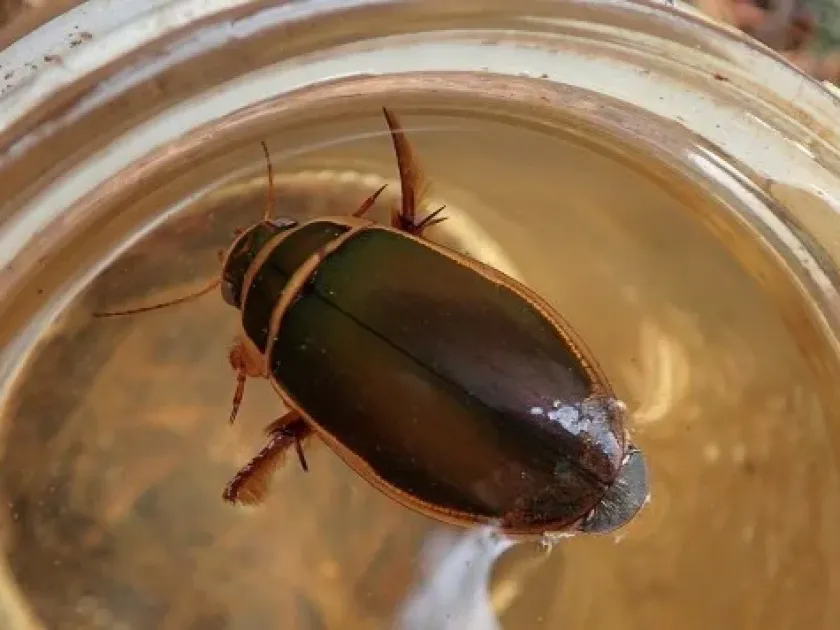
The Lappland diving beetle (Dytiscus lapponicus) belongs to the order Coleoptera and the family Dytiscidae. It is a large aquatic predator, reaching 25–30 mm in length during its adult stage.
The beetle possesses a streamlined, oval body characteristic of all members of the diving beetle family. Its coloration is typically dark, olive-black with a yellowish border around the pronotum and elytra, providing camouflage in the water.
The larvae of Dytiscus lapponicus have elongated bodies, powerful sickle-shaped jaws, and well-developed swimming legs. They are active predators that move through both open water and dense aquatic vegetation.
This species prefers standing or slow-moving water bodies with cool temperatures, including mountain lakes and peat bogs. Unlike other family members, it shows high adaptation to northern climates.
Adults are excellent flyers, allowing them to easily colonize new water bodies in search of rich food resources by flying across significant distances during the night.
What it damages
The primary economic damage caused by the Lappland diving beetle occurs in specialized fish farms breeding fry. As an aggressive predator, it consumes young carp, salmonids, and other valuable fish species.
Adult beetles and larvae attack prey larger than themselves, causing mechanical injuries. Larval bites inject enzymes that cause intoxication and subsequent death of the fry, leading to severe economic losses.
The presence of this pest in pond facilities causes stress in growing fish, which slows down growth rates and reduces the overall survival rate of populations during the early post-embryonic period.
While playing a role in regulating the population of aquatic organisms in natural ecosystems, its presence in artificial fish ponds becomes a critical threat that necessitates active intervention.
The damage is most acute during the spring and summer periods, when mass hatching of fry occurs, making them vulnerable targets for the voracious larvae and adult beetles.
When it appears
The active phase of the life cycle begins with the warming of water in spring. At this time, overwintered adult beetles begin reproduction and active foraging in water bodies.
The breeding season occurs in spring and early summer, when females lay eggs within the tissues of aquatic plants, ensuring the larvae have protection and access to food immediately upon hatching.
Larvae develop throughout the summer, feeding intensively. By the end of summer, they pupate in the soil on the banks of the water body, and the new generation of adults emerges in the autumn.
Adults have the capability for prolonged hibernation, burying themselves in bottom silt or hiding in coastal vegetation, which makes control difficult during the cold season.
Consequently, the main risk to fish farming operations occurs from May through August, when the peak activity of all developmental stages of this insect is observed.
Signs of infestation
A primary sign of water body infestation is a sudden decline in the fry population, even when no other visible causes, such as disease or oxygen deficiency, are detected.
Visual inspection of the shoreline or using nets in the water can reveal the presence of adult beetles or larvae, which are frequently found suspended near the surface.
Bite marks on the bodies of dead fry serve as direct evidence of predatory larval activity, characterized by a powerful mouthpart apparatus adapted for piercing tissues.
Damage to aquatic vegetation in egg-laying areas can also serve as an indirect indicator of high pest density in a specific pond, requiring immediate management action.
Experts recommend regular monitoring of beetle populations using traps to assess the threat level to fish stocks well before the mass hatching of the fry begins.
Control measures
The most effective control method is the mechanical removal of beetles using fine-mesh nets and hand-nets during the pond preparation period prior to stocking.
Timely clearing of excessive aquatic vegetation deprives females of egg-laying sites, which contributes to a natural decrease in the pest population density.
Draining and thorough disinfection of pond bottoms before the season help eliminate overwintering stages and larvae hiding in bottom sediments, serving as a radical protective measure.
- Using light traps at night to catch adult beetles.
- Creating biological barriers through isolated nursery ponds.
- Encouraging natural predators of the beetle, such as certain species of waterfowl.
The application of chemical insecticides in fish ponds is highly restricted due to the toxicity to the fish themselves and the potential to disrupt the ecosystem balance.
Taxonomy
- Latin name
- Dytiscus lapponicus
- Order
- Coleoptera (beetles)
- Family
- Dytiscidae
- EPPO code
- DTSCLA
Discussion
No discussions yet — be the first.