
Dytiscus dimidiatus
Dytiscus dimidiatus
Description
How to identify
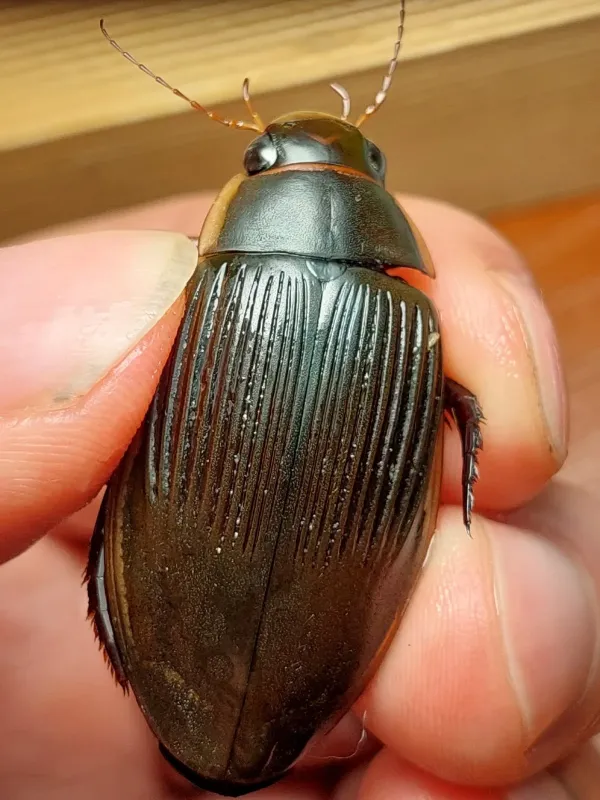
Dytiscus dimidiatus is a large aquatic beetle belonging to the Dytiscidae family. It typically reaches a size of 30–35 mm, possessing a flat, streamlined body.
The coloration of this beetle is dark brown or olive, distinguished by a pale yellow margin surrounding the elytra and the pronotum, which makes it easily recognizable.
Its larvae are formidable predators characterized by an elongated body, a large head, and sickle-shaped mandibles used for piercing their prey.
Adult beetles have fully functional wings, allowing them to migrate between water bodies by flying, often during the night towards artificial light sources.
They prefer standing or slow-moving waters enriched with submerged aquatic vegetation, which provides essential cover for both larvae and adults.
What it damages
The primary economic damage caused by Dytiscus dimidiatus occurs in commercial fish farms and hatcheries, where the beetle poses a significant threat to fry.
Both adults and larvae are aggressive predators. The larvae inject digestive enzymes into their prey, liquefying internal organs before consuming them.
A single larva can destroy numerous fish fry in a very short period, causing substantial losses in hatchling survival rates within nurseries.
Adult beetles may also attack larger, weaker fish, inflicting wounds on their skin or fins, which often serve as entry points for secondary pathogens.
In smaller closed-system ponds, a high density of these beetles can lead to nearly complete mortality of young fish populations if left unmonitored.
When it appears
The active life cycle of the beetle begins in early spring when water temperatures rise, triggering mating and the subsequent egg-laying process.
Larval development peaks during mid-summer, as the warm water creates optimal conditions for rapid growth and high metabolic activity of the predators.
Pupation occurs in the damp soil along the banks of the water body, where larvae crawl out of the water in late summer to undergo metamorphosis.
Adult beetles are active throughout the warmer months and are known to fly between ponds, particularly when searching for new habitats or mating partners.
Winter is spent in a dormant state, with beetles burying themselves deep into the substrate at the bottom of the pond or hiding in debris.
Control measures
The most effective strategy to manage Dytiscus dimidiatus in aquaculture is draining the ponds periodically to eliminate eggs and larvae from the soil.
Maintaining clean pond margins by removing excess aquatic plants significantly reduces the suitable hiding spots for larvae and egg-laying sites for adults.
Installing fine-mesh screens on water inlet pipes is a preventative measure that stops adult beetles from entering specialized fish-rearing ponds.
Manual collection using nets during the early spring is recommended to reduce the breeding population before they lay eggs for the season.
- Regular pond substrate cleaning.
- Screening inlets to block migratory beetles.
- Manual removal of adults and larvae.
- Strategic water level management.
Taxonomy
- Latin name
- Dytiscus dimidiatus
- Order
- Coleoptera (beetles)
- Family
- Dytiscidae
- EPPO code
- DTSCDI
Discussion
No discussions yet — be the first.