
Great diving beetle
Dytiscus circumcinctus
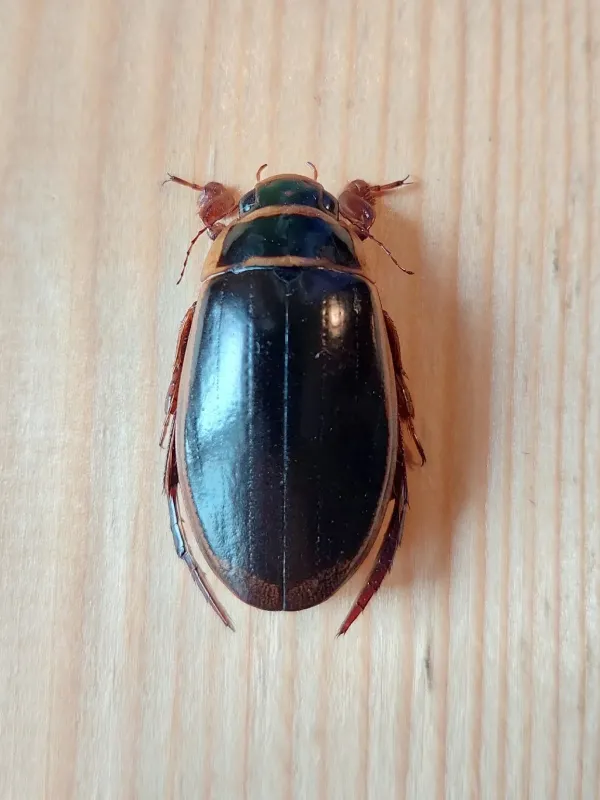
Description
How to identify
The Great diving beetle belongs to the order Coleoptera and the family Dytiscidae. It is a large aquatic beetle, typically reaching 30–35 mm in length with a streamlined, oval body.
The adult beetle is dark brown to black in color, featuring a characteristic yellow margin around the pronotum and elytra, which serves as a key identification marker.
Larvae of this species are formidable aquatic predators equipped with sharp, sickle-shaped mandibles used for grasping and consuming their prey.
These insects breathe atmospheric air, necessitating frequent trips to the water surface where they expose the tip of their abdomen to replenish their air supply.
Adult beetles are capable of flight, which allows them to migrate effectively between various water bodies in search of food or suitable breeding sites.
What it damages
The primary economic impact of the Great diving beetle occurs in aquaculture facilities, specifically in hatcheries and ponds used for rearing juvenile fish.
Both larvae and adults are aggressive predators that feed on fish fry, tadpoles, and other small aquatic organisms, leading to significant losses in stock.
In high-density fish ponds, a population of diving beetle larvae can decimate a large portion of the fish fry population in a very short period.
Beyond direct consumption, the predatory nature of these beetles stresses the fish population, negatively impacting the growth rates and overall health of the stock.
Beetles also compete with fish for natural food sources, such as zooplankton and small invertebrates, which further reduces the pond's productivity.
When it appears
Activity typically begins in early spring, as soon as ice melts, when adults emerge from hibernation to feed and begin the mating process.
Summer is the most critical period, as the larvae are highly active and voracious during these warmer months, posing the greatest threat to juvenile fish.
As autumn approaches, activity wanes as larvae pupate and new adults prepare for overwintering in the bottom substrate or near the pond banks.
Migration events often occur on warm spring and summer nights, when adults fly in search of new environments or breeding partners.
During the winter, these beetles enter a state of dormancy, remaining buried in the pond mud until the return of favorable spring conditions.
Signs of infestation
The presence of these beetles can be detected by visual observation of the pond surface, where adults periodically surface for air replenishment.
Larval infestation is usually confirmed by using a fine-mesh aquatic net to sweep through the submerged vegetation near the shoreline.
Sudden declines in fish fry numbers without signs of disease often point to predation by insects such as the Great diving beetle.
Wounds or bite marks on dead or struggling fish fry are clear indications of predatory activity by the larvae within the pond environment.
Discovery of chitinous remains or partially consumed fish carcasses at the bottom of the pond confirms the presence of these predatory insects.
Control measures
Draining and lime-treating the pond bottom during the off-season is the most effective way to eliminate overwintering larvae and eggs.
Installing fine screens at water intake points prevents adult beetles from migrating into production ponds from external natural habitats.
Maintaining clear pond margins and reducing dense submerged vegetation limits the availability of hunting grounds for the predatory larvae.
Using light traps during night hours can help capture adult beetles during their migration flights, reducing the population pressure on the pond.
- Conducting routine population density monitoring.
- Removing overgrown aquatic weeds annually.
- Introducing biological controls if feasible for the specific fish species.
Taxonomy
- Latin name
- Dytiscus circumcinctus
- Order
- Coleoptera (beetles)
- Family
- Dytiscidae
- EPPO code
- DTSCCC
Discussion
No discussions yet — be the first.