
Great diving beetle
Dytiscus
Description
How to identify
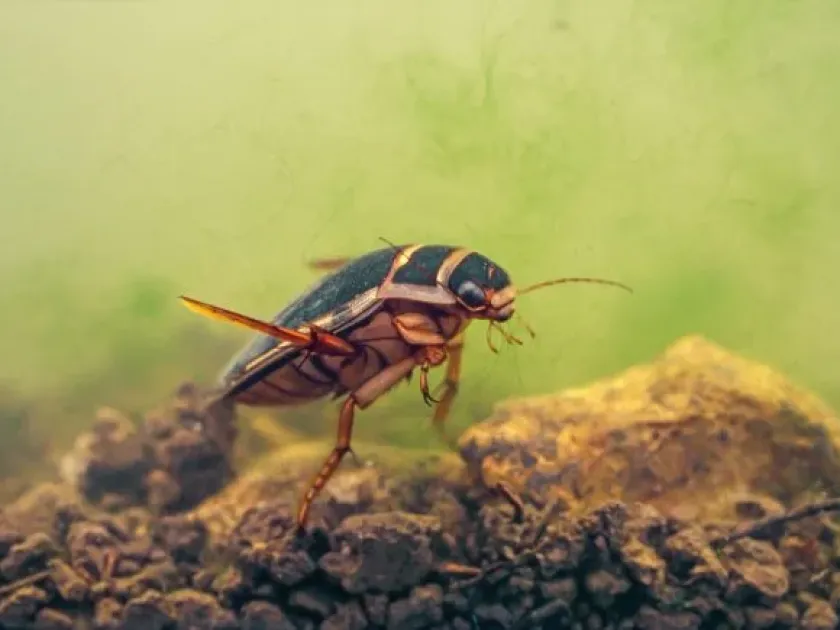
The Great diving beetle (Dytiscus marginalis) is a member of the Dytiscidae family, order Coleoptera. It is a large predatory water beetle, measuring up to 35 mm, characterized by its sleek, oval body and distinct yellow margins.
The larvae, often referred to as "water tigers," are formidable predators. They possess long, sickle-shaped mandibles and can grow up to 60 mm in length, making them highly efficient hunters in freshwater environments.
Adult beetles are capable of flight, which allows them to colonize new bodies of water, including commercial fish ponds and nursery tanks, with great ease.
The life cycle includes four stages: egg, larva, pupa, and adult. Eggs are laid in plant tissues, and the pupal stage typically occurs in the soil along the banks of the water body.
They are active throughout the warmer months. The larval stage, which coincides with the hatching season of many fish species, is when they pose the most significant risk to aquatic stocks.
What it damages
In aquaculture, the Great diving beetle is considered a serious pest because both adults and larvae prey on fish fry. They inject digestive enzymes into the prey, liquefying their tissues.
Even small populations can decimate fish populations in nursery ponds. A single larva can consume numerous fry during its development, causing substantial economic losses for fish farmers.
Beyond predation, their attacks cause physical injuries to surviving fish. These wounds are prone to secondary fungal or bacterial infections, which can lead to further mortality rates.
The presence of these beetles disrupts the growth of fish fry due to increased stress levels and competition for the available space and natural food resources within the pond.
While these beetles are essential components of natural wetland ecosystems, their presence in artificial aquaculture systems is viewed strictly as a biological hazard.
Control measures
Preventative management is key. Draining and drying out nursery ponds during the off-season effectively destroys egg clusters, overwintering larvae, and pupae in the soil.
Regular maintenance of the pond environment, specifically the removal of excessive aquatic vegetation, significantly reduces suitable egg-laying sites for the female beetles.
Installing fine-mesh screens on water supply inlets acts as a physical barrier, preventing adult beetles from entering controlled aquaculture environments.
Biological control methods include the strategic use of predators that feed on beetle larvae, helping to keep their population density below the damage threshold.
Chemical control is rarely viable in fish farming because most insecticides are lethal to the fish stocks themselves, making manual and environmental control the preferred choice.
Taxonomy
- Latin name
- Dytiscus
- Order
- Coleoptera (beetles)
- Family
- Dytiscidae
- EPPO code
- DTSCSP
Discussion
No discussions yet — be the first.