
Deronectes latus
Deronectes latus
Description
How to identify
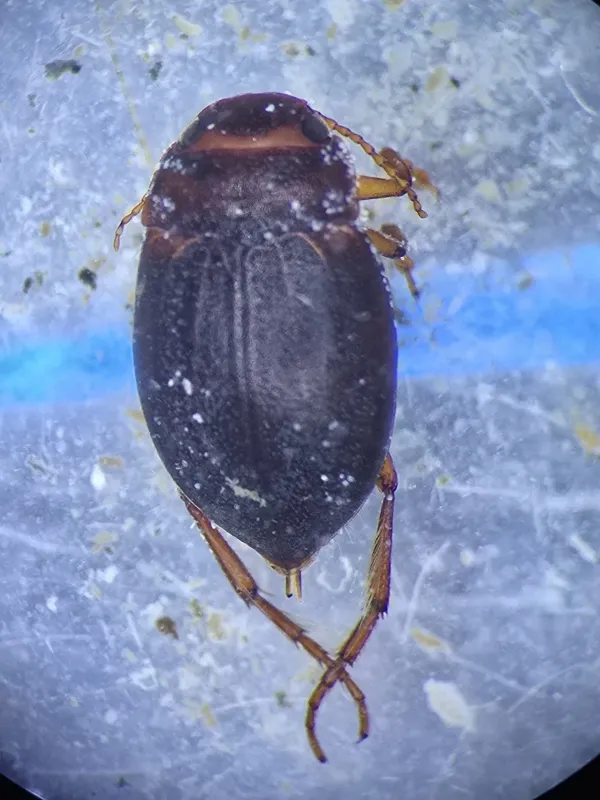
Deronectes latus is an aquatic beetle species belonging to the Dytiscidae family. These insects are perfectly adapted to life in water, featuring a streamlined, oval-shaped body that minimizes resistance while swimming.
The coloration of these beetles is typically dark brown or black, providing camouflage against the substrate of riverbeds and ponds. Their legs are equipped with swimming hairs, enabling agile movement in aquatic environments.
The larvae are specialized predators with elongated bodies and formidable mandibles, designed to capture prey in both running and stagnant water bodies.
In terms of habitat, this species prefers clear, flowing water, which is a common characteristic of many Deronectes species found in clean ecosystems.
Accurate identification requires examination of specific morphological traits, as members of this genus often share a high degree of phenotypic similarity.
What it damages
Deronectes latus does not feed on agricultural crops, and therefore causes no direct damage to plant tissues. Its presence is primarily an issue for water management and irrigation systems.
Large populations of these beetles in irrigation canals can clog intake filters, leading to reduced water flow and increased operational maintenance costs for farmers.
In aquaculture environments, particularly in fish nurseries, the predatory larvae may consume small fry, causing economic losses for fish farming operations.
The presence of these beetles can also necessitate frequent cleaning of irrigation infrastructure to remove debris accumulated around the beetles' breeding grounds.
Overall, while they are not a threat to fields, they are considered a technical nuisance in large-scale agricultural water supply networks.
When it appears
The life cycle of the beetle is dictated by water temperatures. Activity increases during the spring and summer months, which coincide with the mating and egg-laying period.
Larval development occurs rapidly during the warm season when food sources, such as small aquatic invertebrates, are abundant in the water.
As water temperatures drop in the autumn, the beetles enter a state of dormancy, overwintering under rocks or in the silt at the bottom of the water body.
The species follows a complete metamorphosis life cycle, consisting of egg, larval, pupal, and adult stages, ensuring the survival of the population through changing seasons.
Migratory behavior, including flight, may occur during the summer if a specific water body dries up or becomes unsuitable for survival.
Control measures
Direct chemical control for Deronectes latus is rarely justified, as they are not pests of crops and maintain ecological roles in aquatic systems.
The primary control method involves physical exclusion, specifically the installation of fine-mesh screens on irrigation pumps and water intake pipes.
Maintaining the integrity and cleanliness of canals, including the periodic removal of excessive aquatic vegetation, significantly reduces the beetle's potential habitat.
Integrated management practices, focusing on hydraulic efficiency, are the most cost-effective way to mitigate any issues caused by these aquatic insects.
- Fine-mesh filtration at water intakes
- Periodic mechanical cleaning of canals
- Management of aquatic vegetation
Taxonomy
- Latin name
- Deronectes latus
- Order
- Coleoptera (beetles)
- Family
- Dytiscidae
- EPPO code
- DERNLA
Discussion
No discussions yet — be the first.