
Deronectes
Deronectes
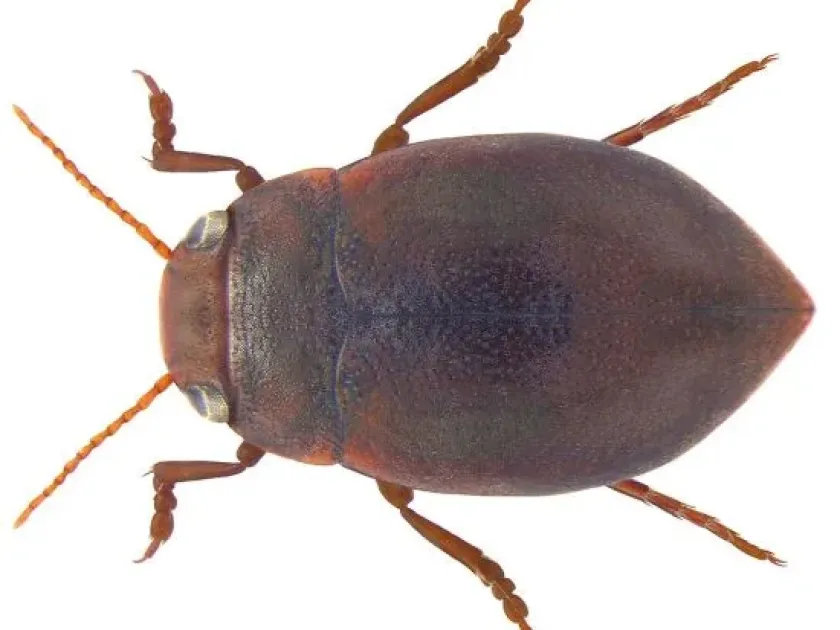
Description
How to identify
The genus Deronectes belongs to the family Dytiscidae, within the order Coleoptera. These are specialized aquatic insects known for their streamlined bodies designed for efficient swimming.
Adults typically measure between 5 and 8 millimeters in length. Their coloration ranges from dark brown to black, often featuring metallic reflections or yellowish markings on the elytra.
The larvae are predatory by nature, characterized by elongated bodies and robust mandibles adapted for catching small prey in aquatic environments.
The genus exhibits significant diversity, with identification primarily relying on microscopic examination of male genitalia and specific puncture patterns on the wing covers.
They inhabit clear, standing, or slow-moving water bodies, making them a common sight in irrigation channels and managed ponds.
What it damages
While not a primary pest for terrestrial crops, Deronectes can cause significant economic losses in aquaculture. The larvae are notorious predators of fish eggs and fry.
In fish nurseries, a high density of these beetles leads to a direct reduction in the survival rate of young fish, impacting the overall yield of the farm.
Furthermore, they compete for food resources, specifically zooplankton, which is essential for the growth and development of healthy fish fingerlings.
In rare instances involving irrigation systems for specific aquatic crops, larvae may damage young shoots if their natural predatory diet is unavailable.
The overall degree of damage is directly proportional to the population density in the water body and the availability of vulnerable fish stock.
When it appears
Adult Deronectes emerge from hibernation early in the spring as water temperatures rise, initiating the breeding season and egg-laying processes.
Larval activity peaks during the summer months, specifically June and July, when temperatures accelerate their development and appetite for fish fry.
As autumn approaches, adult beetles seek shelter for overwintering, burying themselves in silt or moving into deeper, more stable sections of the pond.
The entire life cycle is strictly dependent on the hydrological and thermal stability of the environment. Rapid water fluctuations can lead to dispersal.
Effective monitoring must align with the pond filling schedule, as this is the primary window when these beetles re-colonize managed water systems.
Signs of infestation
Identification is best achieved through standard aquatic sampling methods, such as using a dip net to collect water samples from vegetated edges.
A sudden, unexplained decrease in fish fry populations, in the absence of disease symptoms, is a strong indicator of predatory insect activity.
Larvae are frequently found in areas with dense submerged vegetation, where they remain concealed while waiting for prey to pass nearby.
Visible surface activity of adults, who must frequently return to the water surface for atmospheric oxygen, makes them relatively easy to detect.
Expert identification via morphological analysis is recommended if a formal assessment of the population structure is required for management purposes.
Control measures
Biological control remains the most sustainable approach. Introducing larger predatory fish can significantly suppress Deronectes populations.
Mechanical maintenance, including the clearing of excessive aquatic vegetation and algae, is essential to remove hiding spots for larvae.
Draining and drying ponds between production cycles, combined with liming the bottom soil, is a highly effective way to eliminate overwintering populations.
The use of chemical insecticides is generally discouraged or prohibited in aquaculture settings due to the high toxicity to fish and the surrounding ecosystem.
- Stocking ponds with predatory fish species.
- Clearing submerged aquatic vegetation regularly.
- Implementing drying and liming cycles for pond beds.
Taxonomy
- Latin name
- Deronectes
- Order
- Coleoptera (beetles)
- Family
- Dytiscidae
- EPPO code
- DERNSP
Discussion
No discussions yet — be the first.