
Cybister tripunctatus
Cybister tripunctatus
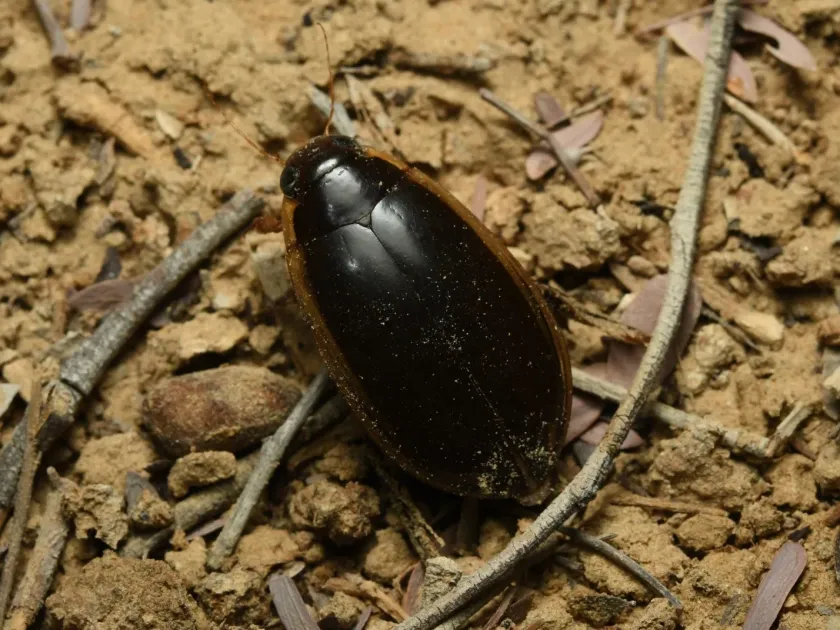
Description
How to identify
Cybister tripunctatus is a large predatory water beetle belonging to the Dytiscidae family. Adult specimens typically grow up to 35 millimeters in length, featuring an oval, hydrodynamic body shape optimized for swimming.
The beetle’s coloration ranges from deep olive to black, providing camouflage against the dark substrate of ponds. The "three-pointed" name refers to specific pale markings on the pronotum, which serve as a reliable diagnostic feature for species identification.
Larvae are fearsome predators, characterized by elongated bodies and sickle-shaped mandibles. They are highly active and possess a voracious appetite, capable of tackling prey that is relatively large compared to their own size.
The hind legs of the adults are modified into oar-like structures fringed with hairs, allowing for rapid propulsion and maneuverability. This physical adaptation makes them formidable hunters in aquatic environments.
As air-breathers, these beetles must periodically ascend to the water surface. They store a bubble of oxygen under their elytra (hardened wing covers) to sustain their activity while submerged for extended periods.
What it damages
The primary concern regarding Cybister tripunctatus is its impact on aquaculture operations, specifically those involved in breeding juvenile fish. Both adults and larvae are aggressive predators of fish fry.
Larvae pierce the skin of young fish using their specialized mandibles, injecting digestive enzymes that paralyze the prey. This often results in mass mortality of the stocked fingerlings in nurseries.
In intensive fish farming systems, the presence of these beetles can significantly reduce the overall stock density and hamper the economic success of the production cycle.
In addition to direct consumption, the beetles may cause stress to the fish population and potential wound infections, leading to further losses beyond the initial predation.
While they naturally prey on other aquatic invertebrates, their transition into managed artificial ponds creates a significant pest status due to the high density of accessible fish prey.
When it appears
The life cycle of Cybister tripunctatus is highly dependent on ambient temperatures. Mating and oviposition typically commence in the spring when water temperatures rise, providing warmth for egg development.
The summer months are characterized by the peak growth phase of larvae. During this time, they exhibit maximum feeding intensity, which corresponds with the most damaging period for young fish populations.
Adult beetles are capable of flight, allowing them to migrate between bodies of water. This dispersal usually occurs during warm summer nights as they search for new habitats or breeding grounds.
As temperatures drop in the autumn, adults move toward the bottom of the pond to enter a period of hibernation within the mud, where they remain dormant throughout the winter.
The duration of the developmental stages is strictly governed by climate, with warmer regions potentially allowing for more rapid life cycles or continuous activity throughout the year.
Control measures
Effective management in fish farms relies on habitat modification. Draining ponds regularly to dry out the bottom effectively eliminates both larvae and overwintering adults from the environment.
Maintaining clean shorelines by removing aquatic weeds reduces the surface area available for egg-laying, thereby lowering the next generation's population density.
Installing fine-mesh screens on water inlet pipes is a crucial preventative measure to stop adult beetles from migrating into fish rearing ponds from surrounding natural sources.
In small-scale operations, mechanical traps can be deployed to reduce beetle counts, though this is labour-intensive and generally unsuitable for large aquaculture facilities.
Biological strategies, such as encouraging local bird populations or managing the pond's overall ecosystem, can help keep beetle numbers at a tolerable level without the use of harmful pesticides.
Taxonomy
- Latin name
- Cybister tripunctatus
- Order
- Coleoptera (beetles)
- Family
- Dytiscidae
- EPPO code
- CYBITR
Discussion
No discussions yet — be the first.