
Diving beetle (Cybister)
Cybister
Description
How to identify
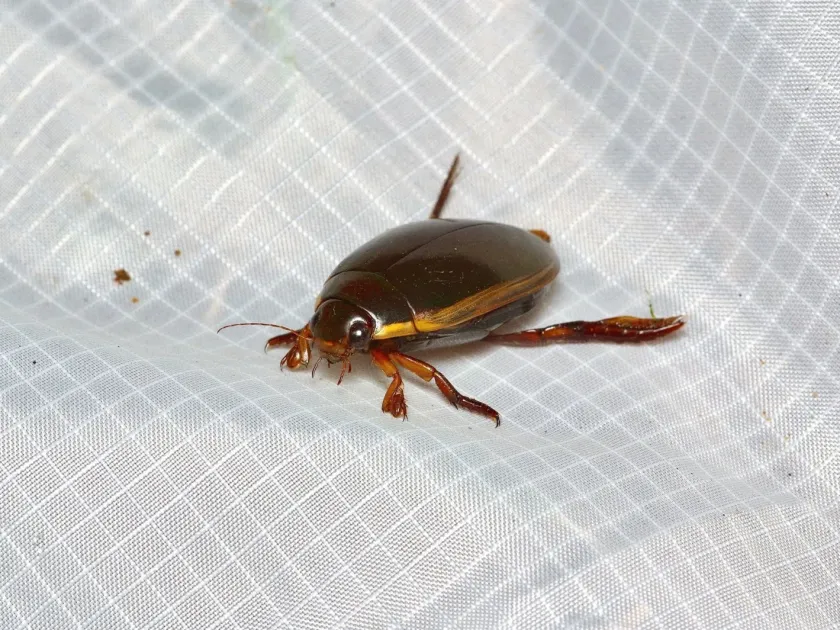
The Cybister diving beetle (lat. Cybister lateralimarginalis) belongs to the Dytiscidae family within the Coleoptera order. It is a large, streamlined aquatic beetle, typically measuring 35–37 mm, characterized by an olive-black color with distinct yellow side margins.
Adult beetles possess powerful mandibles adapted for capturing and tearing prey. Their hind legs are modified into swimming appendages covered in dense hairs, allowing for rapid and precise movement throughout the water column.
The larvae, often called water tigers, are voracious predators. They feature an elongated body and sharp, sickle-shaped jaws used to pierce prey and inject digestive fluids, making them highly dangerous in aquatic environments.
Females deposit eggs into the stems of aquatic plants using an ovipositor. The lifecycle consists of complete metamorphosis: egg, larva, pupa (located in the soil near the shore), and the adult beetle (imago).
They prefer standing or slow-moving water bodies with abundant vegetation. In aquaculture settings, these beetles find optimal conditions to thrive and prey upon fish fry.
What it damages
This beetle is a significant pest in fish farming, especially in nurseries where it targets vulnerable fry of carp and other commercially valuable fish species. The larvae are particularly destructive due to their high predatory rate.
Larvae feed by injecting digestive enzymes into the prey and consuming the liquefied internal tissues, leaving only the empty carcass. This leads to massive losses in fish stocking density.
Adult beetles also inflict mechanical damage to fry using their mandibles. These wounds often act as entry points for secondary bacterial or fungal infections, affecting the survival rate of the entire school.
A heavy infestation in nursing ponds can result in a 20–30% loss of the juvenile population. This impact significantly reduces the productivity and economic output of the fish farm.
Beyond direct predation, the presence of these beetles forces fish to compete for space and resources, increasing stress levels and negatively affecting the overall health of the aquatic environment.
When it appears
The activity cycle of the Cybister beetle begins in early spring as water temperatures rise above 8–10 degrees Celsius. Overwintered adults emerge from dormancy to begin feeding and searching for mates.
The peak reproductive period occurs in May and June. The emergence of larvae during this window often coincides with the hatching of fish fry, creating a highly vulnerable situation for young fish populations.
During the summer, larvae grow rapidly through several instars before moving to the shore to pupate in the soil. A new generation of adults emerges by late summer, actively feeding before the onset of autumn.
As water temperatures drop in autumn, the beetles' metabolism slows down. They retreat to the depths or burrow into the bottom silt to survive the winter in a state of diapause.
Understanding these phenological phases enables farm managers to schedule water management and disinfection operations during periods of minimal activity or before the breeding season to protect juvenile fish.
Signs of infestation
A primary indicator of infestation is the discovery of injured or partially consumed fish fry in ponds. Finding fish with characteristic lacerations is a strong sign of predatory beetle activity.
Adult beetles can be visually observed surfacing periodically to collect air, especially in clear or calm water conditions, due to their relatively large size and distinctive swimming pattern.
The presence of larvae can be confirmed by sampling with a fine-mesh net. Discovering larvae with elongated bodies and prominent sickle-shaped jaws confirms a risk to the fish nursery.
Small, specific incisions on aquatic plant stems indicate where females have deposited eggs, serving as a sign of imminent larval activity in the area.
An unexplained, rapid decline in fish fry populations, in the absence of obvious disease symptoms, is a reliable indirect indicator that Cybister beetles are active within the pond ecosystem.
Control measures
Draining and liming pond beds during the autumn or winter is one of the most effective methods to eliminate overwintering adults and larvae while sanitizing the environment.
Routine removal of excess aquatic vegetation is crucial. Reducing cover limits the hunting efficiency of the beetles and provides fry with better refuge, thereby reducing mortality rates.
Installing fine-mesh protective barriers around nursery sections can physically exclude adult beetles from entering areas where young fish are being raised.
Light traps are used at night to attract and capture adult beetles, as many Dytiscidae species are positively phototactic and will move toward light sources, helping to reduce their population density.
Chemical control is generally avoided due to the toxicity risks to fish populations, making biological and agrotechnical management the preferred strategy for maintaining control over this pest.
Taxonomy
- Latin name
- Cybister
- Order
- Coleoptera (beetles)
- Family
- Dytiscidae
- EPPO code
- CYBISP
Discussion
No discussions yet — be the first.