
Boreonectes multilineatus
Boreonectes multilineatus
Description
How to identify
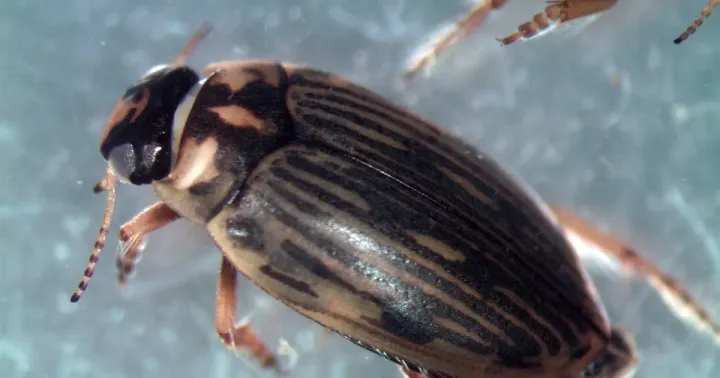
Boreonectes multilineatus is a species of predatory water beetle belonging to the family Dytiscidae, order Coleoptera. It is a medium-sized aquatic insect known for its streamlined body shape, which is highly adapted to life in an aquatic environment.
The adult beetles are typically dark brown to yellowish-brown in color, featuring distinctive longitudinal lines on the elytra. Their hind legs are specialized for swimming, being elongated and fringed with dense hairs that function like oars for efficient propulsion.
The larvae of this species have a spindle-shaped body and powerful, sickle-shaped mandibles designed for grasping and holding onto prey. As active predators, they spend their entire developmental cycle within the water column.
These beetles prefer standing or slow-flowing water bodies rich in aquatic vegetation. Adults are capable of flying between different water bodies, which facilitates their rapid colonization of new habitats when environmental conditions are favorable.
Adult beetles breathe atmospheric air by surfacing and exposing the tip of their abdomen. Larvae, conversely, obtain oxygen directly from the water through their integument or via specialized tracheal structures.
##damage##The primary economic impact of Boreonectes multilineatus occurs within the aquaculture industry, particularly in fish farms and hatcheries. Both adult beetles and their larvae are ravenous predators that feed on fish fry.
Damage is characterized by the direct consumption of young fry from valuable fish species, including carp and salmonids. This intense predatory pressure leads to a significant decrease in stocking density within nursery ponds.
In addition to direct predation, these insects can inflict injuries on larger fish, creating open wounds. These lesions often serve as entry points for various secondary fungal and bacterial infections that can spread rapidly throughout the pond.
High beetle populations can lead to massive losses in farms dedicated to ornamental or food fish production. In some infested ponds, larvae can consume up to half of the total fry population within the first few weeks of life.
Within agricultural systems, this species is viewed primarily as a significant biological constraint on the productivity of fishery operations located in surrounding areas.
When it appears
The active life cycle of Boreonectes multilineatus begins in early spring as soon as ice melts and water temperatures rise. This timing marks the emergence of adults from their overwintering sites.
The breeding season occurs during the spring and early summer, when females deposit eggs within the tissues of aquatic plants or onto suitable substrates. Larval activity peaks in mid-summer due to optimal water temperatures.
By late summer or early autumn, larvae complete their development and pupate in the riparian zone, often in soil or damp substrate. New generation adults remain active in the water until late autumn.
Overwintering takes place in the mud or under organic debris at the bottom of ponds, where adults enter a state of diapause. These beetles are highly resilient and can withstand partial freezing of the bottom sediment.
Population dynamics are highly dependent on the availability of prey; abundant fish fry in ponds directly stimulates reproduction and ensures high survival rates for the predatory larvae.
Control measures
The foundation of effective management involves the mechanical removal of excessive aquatic vegetation, which serves as a vital substrate for egg-laying. Regular mowing of the shoreline significantly reduces available breeding habitats.
Deploying fine-mesh nets to capture adult beetles during the spring period helps drastically reduce the population before the fish breeding season. Light traps used at night have also proven effective in curbing beetle numbers.
- Draining ponds during the off-season to destroy overwintering populations.
- Encouraging natural predators within the pond ecosystem.
- Implementing barriers to prevent beetle migration into sensitive nursery basins.
In professional aquaculture, liming the ponds is a common practice that alters water chemistry, creating harsh conditions for the development of beetle larvae.
Chemical control measures are generally discouraged due to the high toxicity of insecticides to fish and the long-term ecological impact on pond biodiversity. Management focuses on integrated ecological strategies.
Taxonomy
- Latin name
- Boreonectes multilineatus
- Order
- Coleoptera (beetles)
- Family
- Dytiscidae
- EPPO code
- BONCMU
Discussion
No discussions yet — be the first.