
Minute diving beetle
Bidessus minutissimus
Description
How to identify
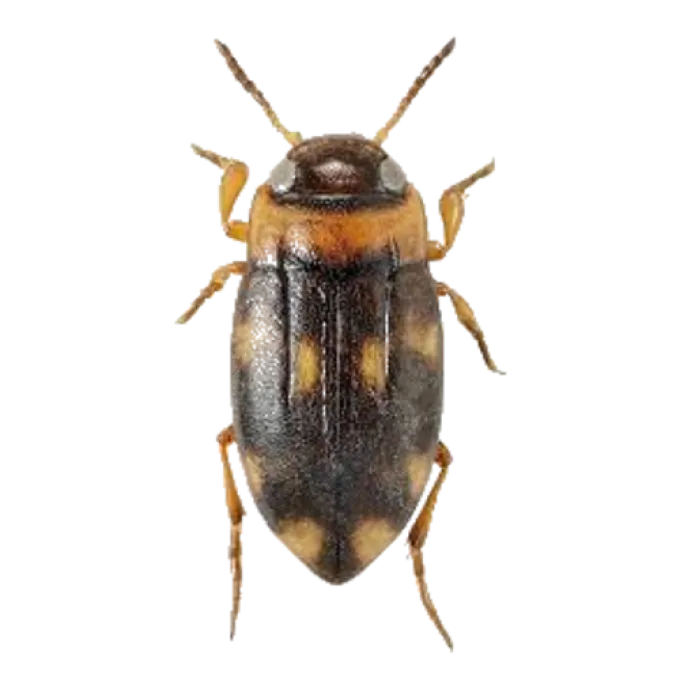
The minute diving beetle (Bidessus minutissimus) is a member of the Noteridae family. These tiny aquatic insects rarely exceed 2 millimeters in length, making them easy to overlook in field environments.
Their body shape is oval and streamlined, specifically adapted for rapid movement through water. The coloration is typically brownish with mottled patterns that provide camouflage against mud and aquatic plants.
They possess specialized swimming legs equipped with hairs that act as oars. Their larvae, which also develop in aquatic environments, are slender and adapted for hunting other small organisms.
These beetles prefer stagnant or slow-moving water sources, such as irrigation canals, flooded fields, or deep drainage pools where organic matter accumulates.
The insect undergoes a complete metamorphosis, transitioning from an aquatic egg-laying stage to an active larval phase and finally into the adult stage.
What it damages
This beetle is primarily considered a pest in rice cultivation and hydroponic systems where plants are partially or fully submerged during early growth stages.
Adults and larvae consume the soft tissues of young stems and root tips. This feeding activity causes immediate physiological stress to the seedlings.
Severe infestations can result in stunted growth, leading to reduced plant density in the affected areas of the field or nursery.
Damaged roots are more susceptible to secondary infections by soil-borne pathogens, which can exacerbate the loss of plant vigor and lead to further crop decline.
In hydroponic setups, their presence can disrupt nutrient absorption, as root damage prevents the plant from maintaining proper water and mineral uptake.
When it appears
The activity of these beetles typically begins in early spring as water temperatures rise, triggering the emergence of overwintering adults.
Mid-summer provides the most favorable conditions for population growth due to warmer water, which accelerates the life cycle of the beetle.
As autumn approaches and temperatures drop, adults seek refuge in the substrate or among dense vegetation to survive the winter dormant period.
The duration and intensity of the pest's life cycle depend heavily on local climate conditions and the thermal stability of the water body.
In greenhouse hydroponic facilities, where water temperatures are maintained at stable levels, the beetle can potentially reproduce year-round.
Signs of infestation
Field signs include localized areas where rice seedlings appear yellowed, withered, or are completely absent, indicating early seedling mortality.
Direct observation of the pest can be achieved by using a fine-mesh net to sample water from irrigation inlets or suspected areas of the field.
Visible feeding damage on the submerged portions of the stem, such as small ragged patches or eroded tissue, is a strong indicator of larval presence.
Sudden drops in plant vigor without evidence of fungal or bacterial diseases often suggest damage caused by these aquatic pests.
Scouting for the presence of these beetles should be prioritized during the establishment phase of the crop, when seedlings are most vulnerable.
Control measures
Integrated pest management strategies are essential for controlling the minute diving beetle, focusing on environmental and biological controls.
Water management is the most effective tool; periodically draining fields or irrigation systems disrupts the larval habitat and significantly reduces population levels.
- Mechanical cleaning of irrigation channels to remove debris
- Utilizing biological control agents that prey on aquatic larvae
- Applying targeted insecticides approved for aquatic environment use
When chemical applications are necessary, it is critical to select products that minimize impact on non-target species and ensure compliance with environmental regulations.
For hydroponic producers, strict sanitation of reservoirs and the use of filtration systems effectively exclude these beetles from the root zone.
Taxonomy
- Latin name
- Bidessus minutissimus
- Order
- Coleoptera (beetles)
- Family
- Dytiscidae
- EPPO code
- BIDEMI
Discussion
No discussions yet — be the first.