
Bidessus
Bidessus
Description
How to identify
The genus Bidessus belongs to the family Dytiscidae, representing small aquatic diving beetles within the order Coleoptera.
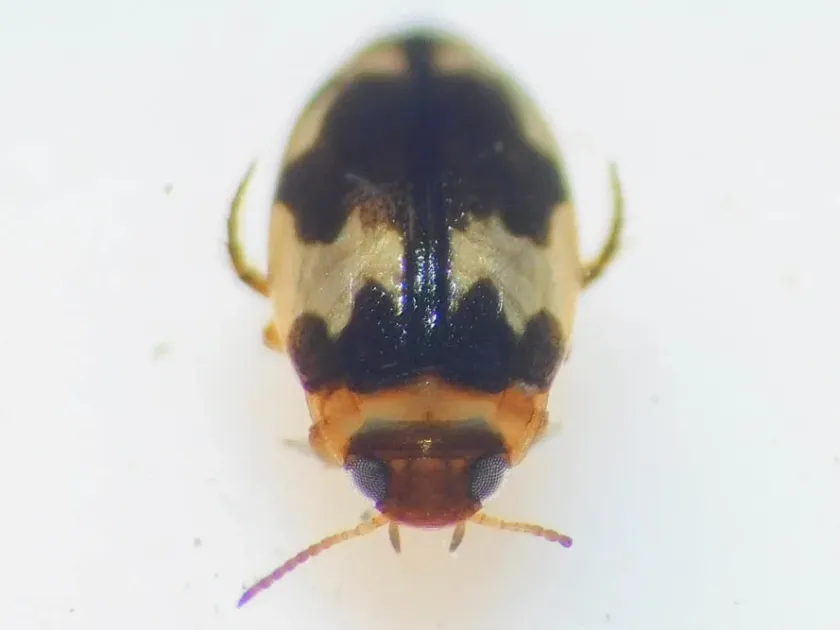
These insects are characterized by a compact, streamlined body shape, usually measuring between 2 to 3 mm in length.
Their coloration typically ranges from yellowish-brown to dark brown, often featuring subtle patterns that provide effective camouflage against the substrate.
They possess specialized hind legs with swimming hairs, enabling agile movement and rapid diving within the water column.
The larval stage is predatory, featuring well-developed mandibles designed for capturing small aquatic organisms.
What it damages
While not primary pests for most crops, Bidessus can be problematic in flooded environments such as rice paddies.
Damage occurs primarily through the accidental or opportunistic feeding of larvae on young plant roots and tender stems.
Root system injury can result in stunted growth and provide entry points for secondary soil-borne pathogens or fungi.
Their presence can disrupt the aquatic micro-fauna that is essential for maintaining the balance within the paddy ecosystem.
In high concentrations, these beetles may contribute to uneven stand establishment and reduced vigor in newly emerged rice seedlings.
When it appears
The activity of Bidessus is closely tied to the water temperature and the presence of standing water in agricultural systems.
Adult beetles overwinter in the mud or sediment at the bottom of irrigation channels or dormant fields, becoming active as spring temperatures rise.
The peak breeding season coincides with the main vegetative stage of crops when water levels are managed to support plant growth.
The life cycle involves an egg stage, multiple larval instars, pupation, and the emergence of the adult beetle.
Generations overlap throughout the warmer months, ensuring that larvae and adults are present concurrently in the field.
Signs of infestation
Detecting Bidessus requires active monitoring using fine-mesh water samplers or standardized aquatic nets.
Signs of infestation include the presence of numerous small beetles near the water surface during quiet periods of the day.
Direct inspection of seedling roots may reveal minor mechanical damage that cannot be attributed to typical soil insects or chemical burns.
Stunted, yellowing plants in certain patches of the field without obvious signs of diseases often warrant checking for aquatic beetle activity.
The disappearance of beneficial aquatic crustaceans in the paddy can serve as a biological indicator of significant beetle pressure.
Control measures
Management of Bidessus is largely achieved through effective water management and cultural practices in flooded fields.
Controlled drainage of paddies at specific stages of rice development is the most effective way to disrupt the beetle's life cycle.
Maintaining clean irrigation channels and reducing excessive aquatic weed growth helps eliminate breeding habitats for the insects.
Integrated pest management strategies should focus on fostering natural predators such as fish or dragonflies that prey on small beetles.
- Implement periodic field drying to reduce larval survival.
- Remove vegetation from irrigation supply ditches.
- Monitor population density before considering any intervention.
- Enhance plant vigor through balanced fertilization.
Taxonomy
- Latin name
- Bidessus
- Order
- Coleoptera (beetles)
- Family
- Dytiscidae
- EPPO code
- BIDESP
Discussion
No discussions yet — be the first.