
Agabus nebulosus
Agabus nebulosus
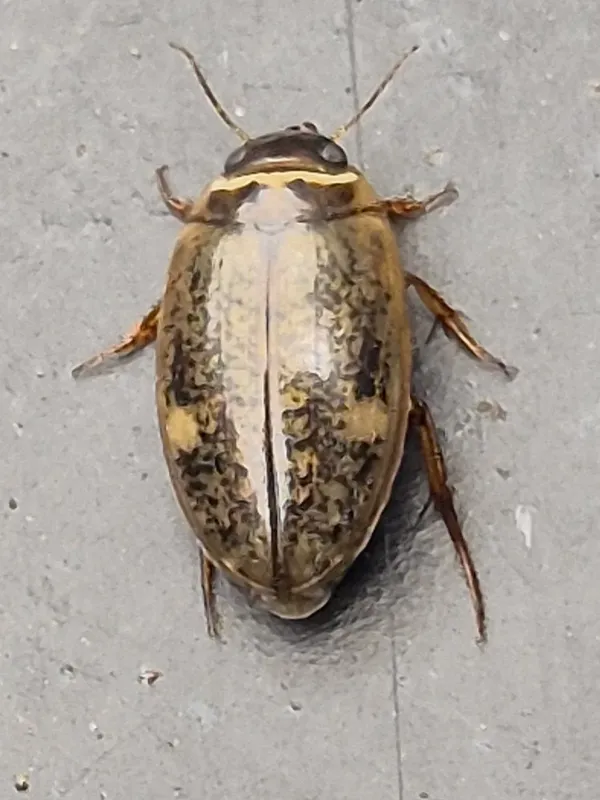
Description
How to identify
Agabus nebulosus is a species of predatory diving beetle belonging to the family Dytiscidae, order Coleoptera, commonly found in freshwater habitats.
The adult beetle has a streamlined, oval-shaped body, which allows it to swim efficiently in various water conditions, from ponds to irrigation canals.
Its coloration, often mottled with dark, cloudy patterns, provides excellent camouflage against muddy bottoms and decaying organic material in the water.
Larvae are elongated and possess specialized, sickle-like mandibles designed to pierce prey and inject digestive enzymes for external digestion.
These beetles are highly adaptable and can survive in shallow, stagnant water bodies where other species might struggle to find sufficient oxygen.
What it damages
The primary concern regarding Agabus nebulosus is its negative impact on aquaculture, specifically in hatcheries and nursery ponds for fish fry.
The larvae are opportunistic predators that attack fish larvae, leading to direct mortality rates and physical damage to surviving young fish populations.
By consuming beneficial macroinvertebrates, these beetles disrupt the natural food chain within artificial ponds, reducing the overall productivity of the water body.
In hydroponic systems or greenhouse ponds, the beetles may unintentionally damage plant root systems or interfere with water filtration mechanisms.
Economic losses arise not only from the loss of fish stock but also from the increased cost of pond maintenance and pest management measures.
When it appears
Active life cycle stages typically begin in early spring, as water temperatures rise and dormant beetles emerge from the sediment to feed and mate.
Peak breeding activity and egg-laying occur during the late spring months when water plants provide optimal attachment surfaces for the eggs.
Summer is the period of maximum larval growth and voracity, which often coincides with the most sensitive growth phases of cultured fish species.
As water temperatures drop during autumn, the beetles transition to their overwintering phase, burrowing into the substrate to survive the winter.
The duration of the larval stage is highly dependent on ambient water temperature and the availability of abundant prey items throughout the season.
Signs of infestation
Presence of physical damage, such as missing fins or skin lesions on young fish, often indicates the activity of predatory diving beetle larvae.
Direct sightings of fast-moving, oval-shaped beetles in the water column are clear indicators of a established population within the pond.
The discovery of larval exuviae on aquatic vegetation serves as proof of recent metamorphosis and successful population recruitment.
A sudden decline in the numbers of smaller zooplankton and non-predatory aquatic insects may suggest the presence of a robust predator population.
Monitoring using specialized funnel traps or netting in the evening hours can confirm the presence of Agabus nebulosus in aquaculture facilities.
Control measures
The most effective strategy involves the periodic draining and cleaning of ponds to eliminate breeding grounds, larvae, and eggs located in the substrate.
Installation of fine-mesh screens on inlet and outlet pipes is a critical physical barrier to prevent the migration of adult beetles between ponds.
Maintaining clear pond margins and removing excessive aquatic vegetation limits the habitats available for the beetles to lay eggs or ambush prey.
- Mechanical removal using fine-mesh nets or scoops.
- Strategic use of light traps during nocturnal activity periods.
- Ensuring proper fish density to minimize larval success rates.
Biological control through the encouragement of natural predators or competitors can also help in managing the beetle population in an eco-friendly manner.
Taxonomy
- Latin name
- Agabus nebulosus
- Order
- Coleoptera (beetles)
- Family
- Dytiscidae
- EPPO code
- AGABNE
Discussion
No discussions yet — be the first.