
Agabus bipustulatus
Agabus bipustulatus
Description
How to identify
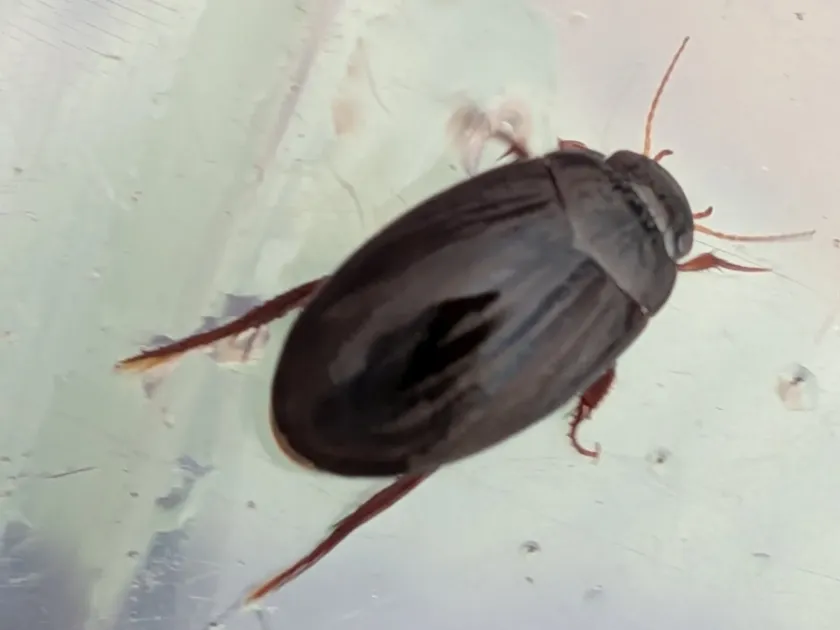
Agabus bipustulatus is a member of the Dytiscidae family, commonly known as a diving beetle. These beetles are typically 8–10 mm long with a smooth, dark, streamlined body.
The pronotum and head often feature distinct yellowish or reddish markings, which serve as a reliable visual key for identification in the field.
Their hind legs are modified into flattened, oar-like structures fringed with hairs, allowing for rapid swimming in aquatic environments.
Larvae are predatory, possessing elongated bodies and sickle-shaped mandibles designed to pierce and consume their prey efficiently.
The species is highly adaptable, frequently found in ponds, drainage ditches, and small agricultural water reservoirs across various climates.
What it damages
The primary economic impact of Agabus bipustulatus occurs within the aquaculture sector, specifically affecting fish hatcheries and nurseries.
Both larvae and adults are opportunistic predators, feeding on fish eggs, fry, and small aquatic invertebrates that provide essential food for fish stocks.
In irrigation systems or water-intensive crops, they may feed on tender plant tissues, although this is secondary compared to their impact on aquatic fauna.
High densities of these beetles can disrupt the ecological balance in enclosed aquaculture systems, leading to a significant reduction in fish productivity.
Their ability to fly allows them to colonize isolated ponds rapidly, making them a persistent challenge for managers of freshwater facilities.
When it appears
Adult beetles typically emerge from overwintering sites in early spring, as soon as water temperatures rise and ice melts from the reservoirs.
The reproductive peak occurs during the late spring and early summer months when females deposit eggs within aquatic vegetation or muddy substrates.
Larval development proceeds throughout the summer, with the duration of the cycle highly dependent on the ambient water temperature.
By autumn, adults transition into a dormant state, seeking shelter in damp soil or deep mud at the bottom of ponds to survive the winter.
Occasional dispersal flights occur throughout the warmer months, allowing beetles to colonize new feeding grounds or suitable breeding habitats.
Signs of infestation
Presence can be confirmed by sampling water with a fine-mesh net, which often reveals active larvae or adults swimming near the surface or along the edges.
Fish farmers may notice an unexplained decline in fry populations, often accompanied by visible signs of predation on surviving smaller individuals.
The discovery of larval exit holes in the muddy banks near the water's edge indicates that the population has completed its life cycle and is pupating.
Beetles are attracted to artificial light sources near ponds during the night, providing a simple way to monitor their presence in the area.
Disturbed fish behavior in nursery ponds, particularly during dawn and dusk, can often signal the presence of these active aquatic predators.
Control measures
Draining and cleaning ponds at the end of the production cycle is the most effective way to eliminate overwintering populations of the beetle.
Installing fine-mesh screens on water inlets and irrigation channels helps to physically exclude adult beetles from entering production ponds.
Encouraging the presence of natural predators, such as waterfowl, can assist in naturally suppressing beetle numbers within large reservoirs.
Maintaining clear, vegetation-free margins around ponds reduces suitable habitats for larvae and limits their success in reaching the pupation stage.
Chemical control is generally avoided due to the high sensitivity of fish to insecticides, favoring integrated management and preventive physical measures.
Taxonomy
- Latin name
- Agabus bipustulatus
- Order
- Coleoptera (beetles)
- Family
- Dytiscidae
- EPPO code
- AGABBI
Discussion
No discussions yet — be the first.