
Agabus biguttatus
Agabus biguttatus
Description
How to identify
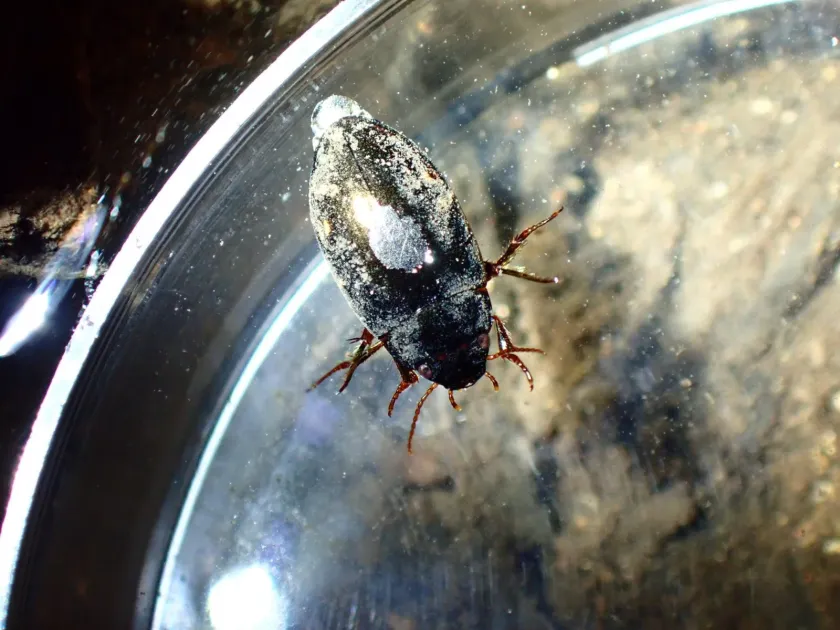
Agabus biguttatus is a species of diving beetle belonging to the family Dytiscidae. Adult beetles typically measure between 7 and 9 millimeters in length and possess a dark, oval-shaped, and slightly convex body.
The species is easily identified by two distinct yellowish spots located on the pronotum. Their legs are well-developed for swimming, equipped with dense fringes of hair that facilitate efficient movement through the water.
The larvae are active aquatic predators with elongated bodies and formidable sickle-shaped mandibles. They are well-adapted to life in both flowing streams and stagnant ponds, where they hunt for small prey.
The life cycle follows complete metamorphosis, including egg, larval, pupal, and adult stages. This biological adaptation allows the species to thrive in various freshwater ecosystems.
While often found in nature, these beetles can become a management concern when their population reaches high densities in artificial environments like aquaculture ponds.
What it damages
The primary concern regarding Agabus biguttatus in agricultural settings is its impact on aquaculture, specifically during the nursery phase for fish fry. Both adults and larvae are predatory and pose a significant threat to young fish.
Predation by larvae can cause direct mortality of fish fry, leading to reduced stock density and significant economic losses. The larvae often attack fish that are unable to defend themselves effectively.
Beyond direct consumption, the injuries inflicted by the larvae's mandibles can lead to secondary infections, such as fungal or bacterial outbreaks, affecting the overall health and quality of the fish population.
These beetles also compete with fish for natural food sources, such as zooplankton and small aquatic invertebrates, thereby hindering the optimal growth rates of the fish stock.
Heavy infestations in confined fish-rearing tanks or nurseries disrupt the balance of the ecosystem, necessitating immediate intervention to prevent further stock deterioration.
When it appears
The seasonal activity of Agabus biguttatus begins in early spring, once water temperatures rise sufficiently. The overwintering adults emerge from the mud or vegetation to begin feeding and reproductive activities.
Larval emergence typically peaks in late spring and early summer, which often coincides with the stocking of nursery ponds with fish fry. This period represents the highest risk of damage to the fish stock.
Pupation usually occurs in the late summer, often taking place in the damp soil along the pond banks. The new generation of adults typically appears by late summer or early autumn.
As water temperatures drop in the autumn, the activity levels decrease, and the beetles seek out refuges in the substrate for hibernation, remaining dormant throughout the winter months.
Monitoring the temperature and seasonal cycles is crucial for pond managers to time their control efforts appropriately, especially before the introduction of vulnerable fish larvae.
Signs of infestation
Signs of infestation include the physical presence of adult beetles near the water surface or in pond samples taken with a net. Larvae are often observed amongst dense aquatic vegetation.
A key indicator of their impact is the sudden unexplained decrease in fish fry populations, often accompanied by visible tissue damage on surviving fish. Reduced availability of natural plankton can also signal a predator issue.
- Presence of beetles when sampling pond water.
- Observation of larvae with sickle-shaped mandibles in pond substrate.
- Visible bite marks or injuries on fish fry.
- Unusual disturbance or agitation in the water column.
- Decrease in the overall density of zooplankton.
Control measures
Effective control strategies start with proper pond maintenance, including thorough cleaning and drying of the pond bed during the off-season. This disrupts the life cycle and removes overwintering sites.
Mechanical removal of excessive aquatic vegetation reduces the hiding places for larvae, making the environment less suitable for the beetles to thrive. Implementing fine-mesh filters on water inlets helps prevent the ingress of new beetles.
Light traps can be utilized in some environments to capture adult beetles at night, helping to reduce the overall population pressure in smaller ponds or indoor nursery facilities.
Maintaining optimal water quality and ecological balance is essential, as healthy fish populations are generally better equipped to survive. Avoiding the introduction of infested water from wild sources is a critical preventative measure.
In cases of severe infestation, professional consultation is required to choose control measures that effectively reduce beetle numbers without impacting the health and development of the fish.
Taxonomy
- Latin name
- Agabus biguttatus
- Order
- Coleoptera (beetles)
- Family
- Dytiscidae
- EPPO code
- AGABBG
Discussion
No discussions yet — be the first.