
Acilius Diving Beetle
Acilius
Description
How to identify
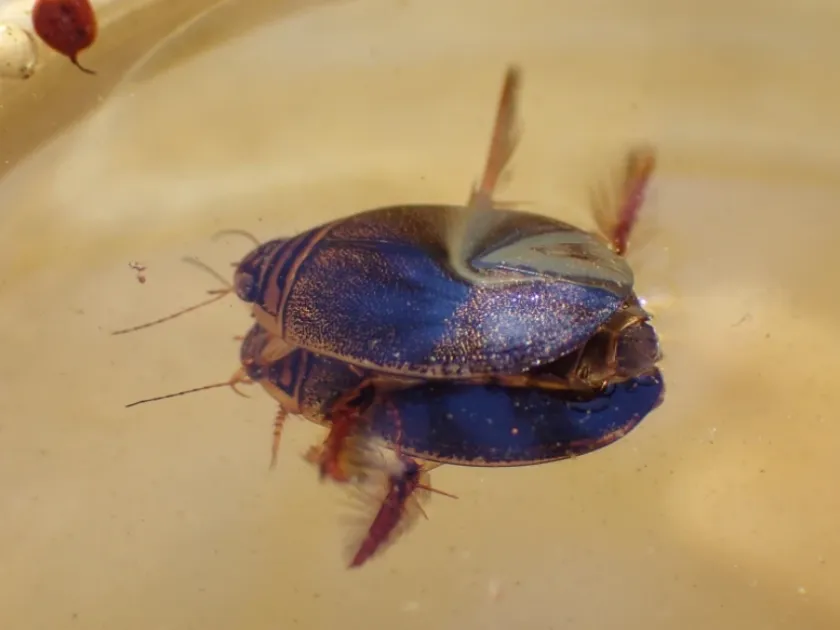
Acilius is a genus of predatory diving beetles belonging to the family Dytiscidae. These insects are perfectly adapted for an aquatic life, featuring a streamlined, oval body that allows for rapid movement in water.
Adult beetles typically measure between 15 and 18 millimeters in length. They are easily recognized by the yellowish-brown coloration and a distinctive W-shaped pattern on the pronotum, as well as specific markings on the elytra.
The larvae of the Acilius beetle are aggressive predators. They possess sharp, sickle-shaped mandibles used to capture prey and inject digestive enzymes, liquefying the tissues of their victims.
These beetles prefer stagnant or slow-moving water bodies rich in aquatic vegetation, which provides both cover for the adults and hunting grounds for the larvae.
As strong fliers, Acilius beetles can colonize new habitats, including artificial ponds and fish hatcheries, making them a recurring challenge for water management professionals.
What it damages
The primary concern regarding the Acilius diving beetle in an agricultural context is its impact on aquaculture, specifically in nursery ponds where juvenile fish are raised.
The larvae are highly voracious and pose a significant threat to fry. By attacking and killing young fish, they can substantially reduce the survival rate of the stock, leading to economic losses.
Adult beetles are also predatory and compete with fish for food resources, further stressing the aquatic ecosystem and negatively affecting the overall health of the fish population.
In addition to direct losses, the presence of these beetles can disrupt the balance of the pond ecosystem, requiring chemical or mechanical intervention to restore productivity.
While they are not traditional crop pests, their presence in irrigation reservoirs or aquaculture systems requires proactive management to protect the valuable biological assets within the water.
When it appears
The life cycle of the Acilius genus begins in early spring, once the water warms up and the beetles emerge from their winter dormancy at the bottom of the pond.
Mating and egg-laying occur throughout the spring and early summer. The larval stage is most active during June and July, coinciding with the peak period for fish stocking and fry development.
Pupation takes place on land. After reaching maturity, the larvae leave the water to burrow into the damp soil of the pond bank, where they undergo metamorphosis.
A second generation of beetles may emerge later in the summer, continuing their activity until the temperatures drop in autumn, signaling the onset of wintering.
Winter is spent as adults, buried in the mud or hiding among submersed vegetation at the pond floor, waiting for the return of favorable conditions in the next year.
Signs of infestation
A significant drop in the number of juvenile fish in a pond, despite no evidence of disease or water quality issues, is a primary indicator of Acilius infestation.
Direct observation of the pond surface often reveals the beetles rising to the water's edge to breathe, as they need to replenish their air supply periodically.
Using a standard pond net for sampling can confirm the presence of larvae in the shallow margins or near thick aquatic plants, where they tend to wait for prey.
Fish showing signs of stress, such as erratic swimming or hiding under vegetation, suggest the presence of predators actively hunting in the immediate vicinity.
Discovery of damaged or partially consumed fish remains is a definitive sign of predation by these beetles within the managed aquatic environment.
Control measures
Complete draining and drying of ponds during the off-season is the most effective method for eradicating Acilius populations, as it destroys both the larvae and the pupae in the soil.
Applying lime to the pond bottom after draining can further help in neutralizing any remaining stages of the beetle's life cycle that might be hiding in the sediment.
Managing aquatic vegetation is crucial, as thinning out excessive weeds reduces the natural cover available for the beetles to hunt and lay their eggs.
- Installation of fine-mesh screens on water inlets to prevent colonization.
- Use of light traps at night to attract and catch adult beetles before they reproduce.
- Maintaining healthy, high-density fish stocks to minimize the impact of individual predator losses.
Regular monitoring of the pond ecosystem throughout the growing season is essential for timely intervention and minimizing damage to the aquatic harvest.
Taxonomy
- Latin name
- Acilius
- Order
- Coleoptera (beetles)
- Family
- Dytiscidae
- EPPO code
- ACILSP
Discussion
No discussions yet — be the first.