
Capuchin beetle
Xylopsocus capucinus
Description
How to identify
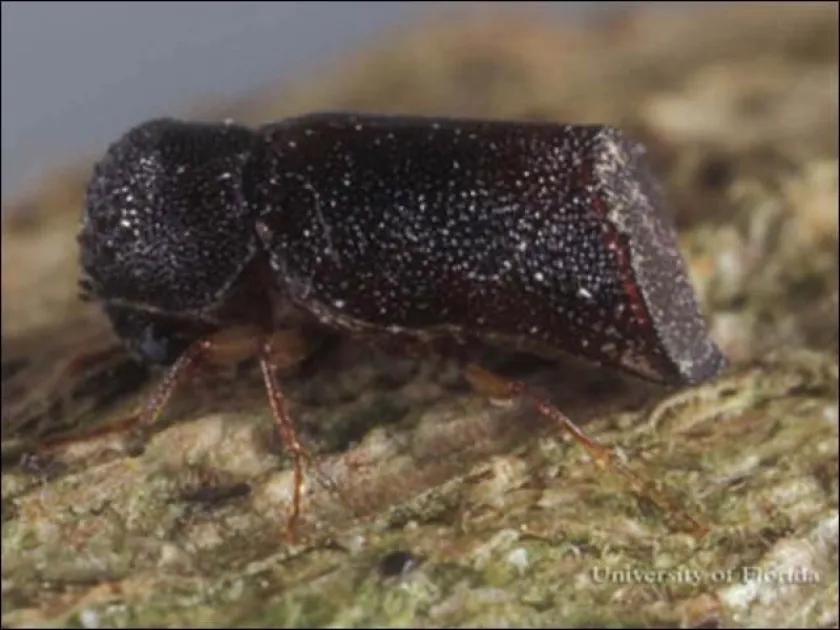
The Capuchin beetle (Xylopsocus capucinus) is a member of the Bostrichidae family, often referred to as auger beetles or false powderpost beetles due to their wood-boring nature.
The name stems from the shape of the pronotum, which is extended forward and covers the head like a hood, resembling the attire of a Capuchin monk. The beetles are typically dark brown or black.
Larvae are white, curved, and possess strong mandibles capable of pulverizing tough woody tissues. They reside deep within the wood, which makes them difficult to target during the early stages of the life cycle.
Taxonomically, they belong to the order Coleoptera. Their specialized physiological traits allow them to thrive in varied woody environments, ranging from healthy standing trees to seasoned timber.
Adult beetles are highly mobile and are primarily responsible for locating suitable hosts to initiate new infestations, often targeting already stressed or weakened plant tissues.
What it damages
This pest affects a wide range of hosts, including fruit trees like mango, coffee, and citrus, as well as various legumes and timber species used in the construction and furniture industries.
The damage is caused primarily by the larvae, which tunnel through the interior of branches and trunks. These galleries interrupt the xylem and phloem, leading to nutrient blockage and tree decline.
In stored timber, the beetles create vast networks of holes, significantly reducing the structural integrity and market value of the wood, rendering it useless for commercial purposes.
Large-scale infestations in plantations can lead to the death of young trees and significantly reduce the lifespan and productivity of mature orchards if left unmanaged.
Secondary colonization by pathogens and fungi is a common consequence of beetle activity, as the exit holes and internal tunnels provide easy entry points for various plant diseases.
Signs of infestation
The most visible sign of an infestation is the presence of perfectly round, small emergence holes on the bark surface, usually accompanied by fine, dust-like frass.
Sawdust or wood powder accumulating at the base of the tree or around branch junctures is a clear indication that beetles are actively boring into the wood tissues.
Wilting, dieback of branches, and premature leaf drop are common systemic symptoms, indicating that the larvae have compromised the plant's ability to transport water and nutrients effectively.
In cross-sections of infested wood, deep, dark-colored galleries filled with waste material can be observed, which confirms the long-term presence of the insect colony within the host.
Early monitoring is essential, as once the exit holes become numerous, the internal structural damage to the tree is often irreversible, and the infestation is likely well-established.
Control measures
The primary control strategy is rigorous sanitation: infested wood must be destroyed promptly to eliminate potential breeding sites and prevent the spread to healthy trees.
Proper orchard hygiene, including the removal of dead or dying branches and the avoidance of stacking unseasoned wood in plantation areas, is crucial for minimizing the beetle's attraction.
Chemical control using systemic or contact insecticides can be applied during the adult flight period to prevent colonization, although this should be integrated with cultural practices.
Maintaining optimal tree vigor through balanced fertilization and adequate irrigation is a key preventive measure, as healthy trees are significantly more resistant to beetle attack.
For international trade of timber, heat treatment or fumigation protocols are standard requirements to ensure that wood products are free from Xylopsocus capucinus and other invasive pests.
Taxonomy
- Latin name
- Xylopsocus capucinus
- Order
- Coleoptera (beetles)
- Family
- Bostrichidae
- EPPO code
- XYPSCA
Discussion
No discussions yet — be the first.