
Xylopsocus
Xylopsocus
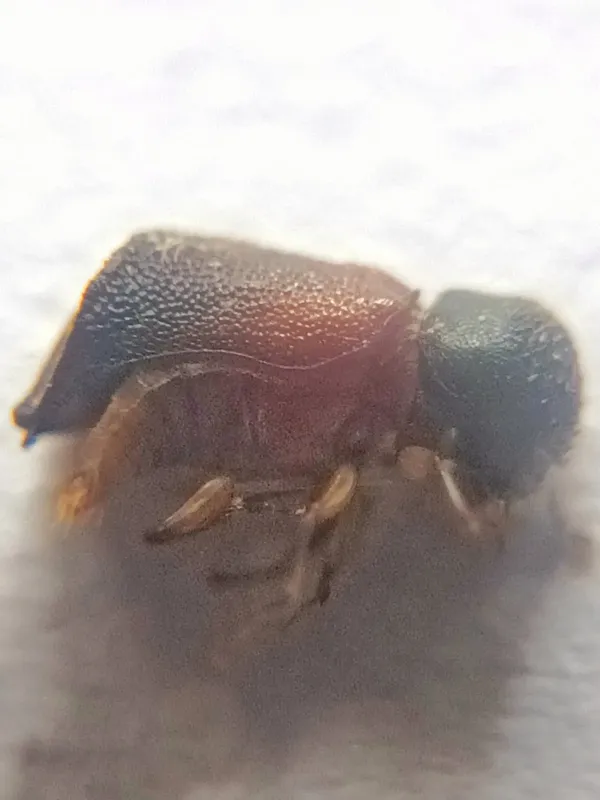
Description
How to identify
Xylopsocus is a genus of wood-boring beetles belonging to the family Bostrichidae, commonly known as auger beetles. These insects are specialized in attacking woody tissues and are well-adapted to life inside stems and branches.
Adult beetles are typically small, cylindrical, and dark in color, ranging from reddish-brown to black. Their head is often obscured by a hood-like pronotum, which is a characteristic feature of this family.
The larvae are white, C-shaped, and legless. They spend their entire developmental phase feeding within the wood, creating extensive galleries that can significantly weaken the structural integrity of the host plant.
Morphologically, they possess hardened structures on their bodies and elytra that facilitate movement within the tunnels. Correct identification usually requires examination under magnification due to the diversity of similar species.
These beetles are capable flyers, allowing them to disperse effectively within orchards or forested areas, targeting stressed trees that produce volatile compounds attractive to them.
What it damages
Xylopsocus species primarily attack woody plants, including various fruit trees and ornamental shrubs. While they prefer weakened or dying wood, heavy infestations can extend to healthy tissues.
In agricultural settings, they are known to damage tropical and subtropical crops, including citrus and nut-bearing trees. Their boring activity compromises the vascular system of the host.
Beyond live plants, these beetles are notorious for damaging timber and stored wood products. They can infest wooden structures, poles, and agricultural equipment, often leading to rapid material degradation.
The tunneling activity of the larvae disrupts water and nutrient transport, which often leads to the dieback of branches and, in severe cases, the death of the entire tree or shrub.
Furthermore, the exit holes and internal tunnels created by Xylopsocus serve as entry points for secondary pathogens, such as fungi and bacteria, which can accelerate tree decline.
Signs of infestation
The most distinctive sign of a Xylopsocus infestation is the presence of perfectly round exit holes on the surface of branches or stems, created by emerging adults.
Accumulation of fine, powdery wood dust, known as frass, is typically visible near the entrance holes or at the base of the infested tree. This indicates active tunneling by larvae.
Wilting and premature drying of leaves, especially on specific branches, serve as external warnings that the internal structural integrity of the plant has been compromised.
Upon removing a section of bark, one can observe complex networks of tunnels packed with fine sawdust and excrement. These galleries often run parallel to the growth rings of the wood.
In cases of chronic infestation, the bark may become loose or brittle. Persistent presence of beetles can eventually result in branch breakage and significant canopy thinning.
Control measures
The primary control strategy involves rigorous sanitation. Infested branches must be pruned and destroyed immediately to prevent the emergence and spread of the next generation of beetles.
Avoid leaving pruned wood or debris in the vicinity of healthy trees, as these materials are highly attractive to adult beetles seeking a site for egg deposition.
Chemical control can be implemented during peak adult flight periods. Systemic insecticides may offer protection, although their efficacy depends on the timing of application and the severity of the infestation.
Protecting wooden structures and agricultural posts requires the application of wood preservatives or insecticidal treatments that prevent larvae from successfully establishing themselves in the timber.
Maintaining overall tree vigor through proper irrigation, fertilization, and general care is the best preventative measure, as healthy trees possess better natural defense mechanisms against borers.
Taxonomy
- Latin name
- Xylopsocus
- Order
- Coleoptera (beetles)
- Family
- Bostrichidae
- EPPO code
- XYPSSP
Discussion
No discussions yet — be the first.