
Xylopertha retusa
Xylopertha retusa
Description
How to identify
Xylopertha retusa is a beetle species belonging to the family Bostrichidae, known commonly as the auger beetle or false powderpost beetle. It is a significant pest of woody plants.
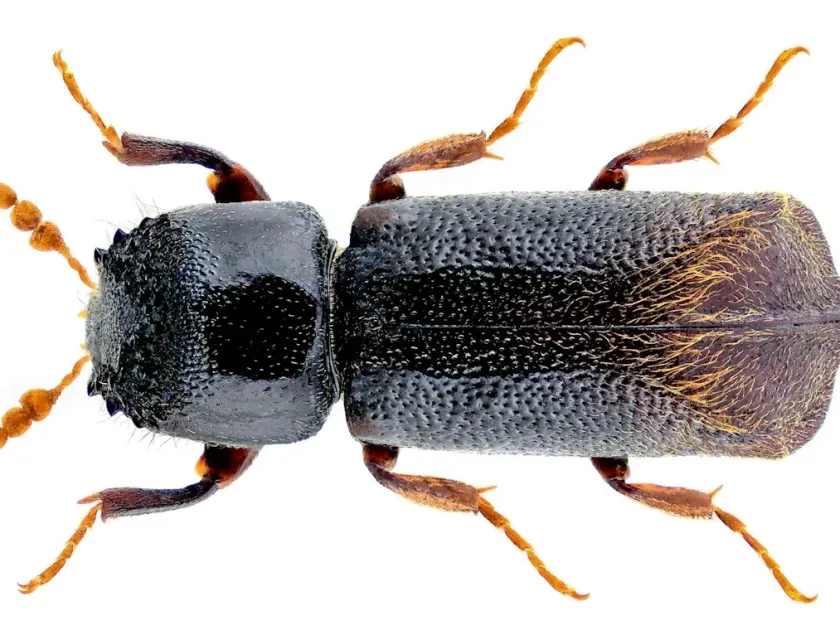
The adult beetle is cylindrical, typically measuring 5–8 mm in length. Its body color ranges from reddish-brown to black, with a robust and compact structure typical of this family.
The pronotum is particularly distinctive, featuring a hooded appearance with small teeth or tubercles along the anterior margin, which helps in identifying the species.
The larvae are white, C-shaped, and possess strong mandibles adapted for burrowing through wood. They are rarely seen outside their galleries until they reach the adult stage.
These beetles are primarily nocturnal and often go unnoticed until significant damage has already been inflicted upon the host tree's vascular system.
What it damages
Both adults and larvae contribute to damage. Adults bore into twigs and branches to feed and create galleries, which disrupts the flow of water and nutrients.
Common hosts include fruit trees such as apple, pear, apricot, and walnut, as well as grapevines. They preferentially attack stressed, weakened, or injured trees.
The galleries created by the larvae are filled with frass, which can structurally weaken small branches, leading to breakages during wind or heavy fruit loads.
In addition to physical damage, the boring holes serve as entry points for secondary pathogens, including fungi and bacteria, which can lead to rapid decline or decay.
Severe infestations can result in the dieback of entire canopy sections, significantly reducing crop yields and potentially killing the host if the infestation is persistent.
When it appears
The adult beetles typically emerge in spring when temperatures become favorable, usually starting from late April through the summer months, depending on the climate.
The life cycle can span several months. Eggs are laid in crevices in the bark or near damaged areas, where the emerging larvae immediately begin boring into the wood.
Peak activity often occurs in mid-summer when the beetles are most active in dispersing and establishing new colonies in neighboring trees.
Pupation occurs within the wood galleries. The new generation of adults may remain inside the wood for a period before boring out to continue the cycle.
As autumn arrives, the insects prepare for dormancy. They typically overwinter as adults or larvae within the protective environment of their wood tunnels.
Signs of infestation
The most reliable sign of an infestation is the appearance of small, round exit holes on the bark, approximately 2–3 mm in diameter.
Piles of fine wood dust, known as frass, appearing on the bark, in branch forks, or at the base of the tree indicate active boring activity within the branches.
Foliage wilting and yellowing on specific branches is a primary visual symptom of disrupted sap flow caused by the beetle’s gallery construction.
In heavily infested areas, the bark may become loose or brittle. Peeling it back reveals the intricate, tunnel-filled interior of the wood branch.
- Round boring holes in bark
- Presence of wood dust/frass
- Premature leaf wilting
- Dieback of terminal branches
- Bark cracks and loose patches
Control measures
Sanitation is the cornerstone of control. All branches showing signs of infestation or dieback must be pruned and burned immediately to prevent population spread.
Maintaining tree vigor through proper irrigation, fertilization, and site management makes trees less susceptible to attacks by these wood-boring pests.
During peak flight periods, application of contact or systemic insecticides can help manage adult beetle populations and protect healthy trees from colonization.
Sealing pruning wounds with protective paste is essential, as the scent of fresh sap can attract adult beetles to the site, facilitating new infestations.
Utilizing pheromone traps for monitoring is recommended to determine the optimal timing for chemical interventions, ensuring maximum efficacy while reducing unnecessary spraying.
Taxonomy
- Latin name
- Xylopertha retusa
- Order
- Coleoptera (beetles)
- Family
- Bostrichidae
- EPPO code
- XLPRRE
Discussion
No discussions yet — be the first.