
Xylobiops basilaris
Xylobiops basilaris
Description
How to identify
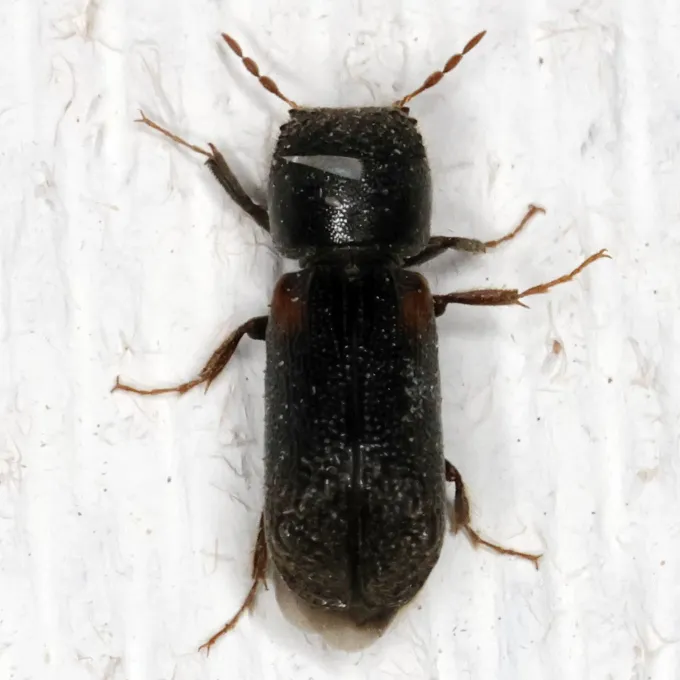
Xylobiops basilaris, commonly known as a type of bostrichid powderpost beetle, is a wood-boring insect belonging to the family Bostrichidae. The adult beetle is small, typically measuring between 4 to 6 millimeters in length, with a cylindrical, robust body shape.
Its coloration is generally dark brown to black. A key diagnostic feature is the pronotum, which is strongly humped and densely covered with small, rasp-like tubercles, giving it a rough texture that is distinctive to this family.
The elytra (wing covers) possess rows of distinct punctures, which provide a visible pattern under magnification. These structural features allow them to be easily distinguished from other similar bark-dwelling beetles.
The larvae are typically white or cream-colored, C-shaped, and possess well-developed, strong mandibles specifically adapted for tunneling through wood. They live entirely within the sapwood and heartwood of the host plant.
As members of the Bostrichidae family, these beetles are known for their ability to thrive in dry or stressed wood, making them a significant concern for managed fruit tree orchards.
What it damages
This beetle primarily affects fruit-bearing trees, including members of the Rosaceae family such as apple, pear, cherry, and occasionally peach or plum trees. They are especially attracted to stressed or weakened individuals.
Healthy trees with vigorous sap flow are generally capable of resisting initial colonization. However, trees suffering from drought, frost damage, or poor soil conditions become primary targets for infestation.
The damage is caused by both adults and larvae. Adults bore small circular holes into the bark to establish brood chambers, while the developing larvae create extensive, winding galleries that disrupt the tree's vascular system.
When the vascular system is interrupted by the larval tunnels, the tree experiences a loss of nutrient and water transport to the upper canopy, leading to wilting, branch dieback, and potentially tree mortality.
In addition to structural damage, the boreholes serve as entry points for secondary fungal infections and pathogens, which can accelerate the decline and death of the host tree.
Signs of infestation
The most prominent sign of an infestation is the presence of small, perfectly circular entry holes on the bark of branches or the main trunk. These are often accompanied by fine, wood-colored frass or sawdust on the bark surface.
During the growing season, a key indicator is the premature yellowing or wilting of leaves on individual branches. Eventually, these branches become brittle and dry out completely, failing to produce new growth.
If the bark is peeled back from suspect areas, one can often find intricate galleries filled with wood dust and fecal matter. These tunnels indicate that the larvae have been feeding for an extended period.
In stone fruits, the exudation of gum from the bark is a defensive response to the beetles' boring activity. While this can sometimes successfully push out the beetle, it is a clear sign that the tree is under attack.
A persistent decline in annual growth and a lack of fruit production are also signals that the tree's internal vascular system may be compromised by a hidden wood-boring pest population.
Control measures
Effective management begins with rigorous orchard hygiene. Any branch that shows signs of infestation or dieback should be pruned immediately, removed from the orchard, and burned to prevent the emergence of adult beetles.
Maintaining tree vigor is the best preventive measure. Ensuring that trees are well-watered, properly fertilized, and protected from environmental stress factors significantly increases their natural resistance to colonization.
During the flight period of the adult beetles, preventative spraying with authorized contact insecticides can help reduce the population. Applications should be timed carefully to cover the canopy before egg-laying occurs.
In cases of localized infestation, it is possible to inject insecticide solutions directly into the entry holes using a syringe. Following the injection, the hole should be sealed with wound sealant to aid recovery.
Monitoring is crucial. Gardeners should conduct regular inspections of trunks and scaffold branches throughout the season, paying close attention to any small holes or signs of bark distress to catch infestations early.
Taxonomy
- Latin name
- Xylobiops basilaris
- Order
- Coleoptera (beetles)
- Family
- Bostrichidae
- EPPO code
- XYLPBA
Discussion
No discussions yet — be the first.