
Xylobiops
Xylobiops
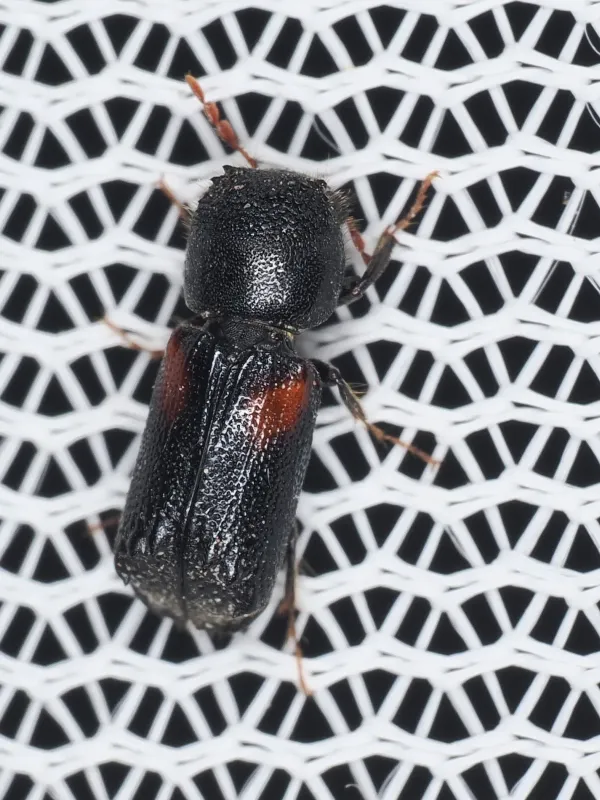
Description
How to identify
Xylobiops is a genus of wood-boring beetles belonging to the family Bostrichidae, often referred to as auger beetles or false powderpost beetles due to their distinct appearance.
Adult beetles are characterized by their cylindrical shape, usually dark brown or black. The pronotum is typically enlarged and hood-like, covering the head and often featuring small, rasp-like tubercles.
The larvae are C-shaped, fleshy, and white, equipped with powerful mandibles capable of boring through wood. They spend their entire developmental period hidden inside the host plant.
Life cycle stages involve mating, egg-laying in bark crevices or weakened wood, larval tunneling, and pupation, which occurs within the wood galleries created by the larvae.
These insects are primarily attracted to stressed, dying, or damaged woody plants, where they can quickly colonize the sapwood and heartwood of susceptible tree species.
What it damages
Xylobiops species target a wide array of deciduous trees and woody crops, with significant economic impact on stone fruits like apricots, peaches, and plums, as well as vineyards.
The adults damage the plant by boring entry holes into twigs and branches to access tissue for feeding, which can cause the death of the distal parts of the branches.
Larval feeding causes the most severe damage as they tunnel through the inner bark and sapwood, disrupting the vascular system and preventing the flow of nutrients.
Repeated or mass infestations lead to extensive wood degradation, causing branch dieback, crown thinning, and in many cases, the eventual death of the entire tree.
Because the larvae are deep within the wood, the damage is often irreversible by the time it becomes visible, making prevention a priority for orchard management.
Signs of infestation
The most visible sign of infestation is the presence of small, perfectly circular "shot holes" on the bark surface, usually 1 to 2 millimeters in diameter.
Accumulation of fine, powdery wood dust, known as frass, is often found around the entrance holes or at the base of the infested branch or trunk.
Infected trees often exhibit chlorosis, premature wilting of the foliage, and dieback of specific limbs, which may be mistaken for drought stress or fungal diseases.
If the bark is carefully removed, internal galleries filled with sawdust and excrement can be observed, revealing the extent of the larval tunneling activity.
Branches that have been significantly infested become brittle and weak, often snapping under the weight of fruit or during strong winds, signaling structural failure.
Control measures
Effective management begins with maintaining high tree vigor through proper irrigation, fertilization, and site-specific cultivation practices to make trees less attractive to borers.
Sanitation is critical; all dead, dying, or heavily infested branches must be pruned and immediately destroyed by burning to prevent the spread of the next beetle generation.
Applying trunk washes or whitewash combined with registered insecticides can provide a physical and chemical barrier that discourages adult females from laying eggs.
Chemical control involving systemic insecticides may be applied during the adult flight period to intercept the beetles before they bore into the plant tissue.
Monitoring using pheromone traps is highly recommended to track population levels and identify the precise timing for protective treatments to maximize chemical efficacy.
Taxonomy
- Latin name
- Xylobiops
- Order
- Coleoptera (beetles)
- Family
- Bostrichidae
- EPPO code
- XYLPSP
Discussion
No discussions yet — be the first.