
Tetrapriocera longicornis
Tetrapriocera longicornis
Description
How to identify
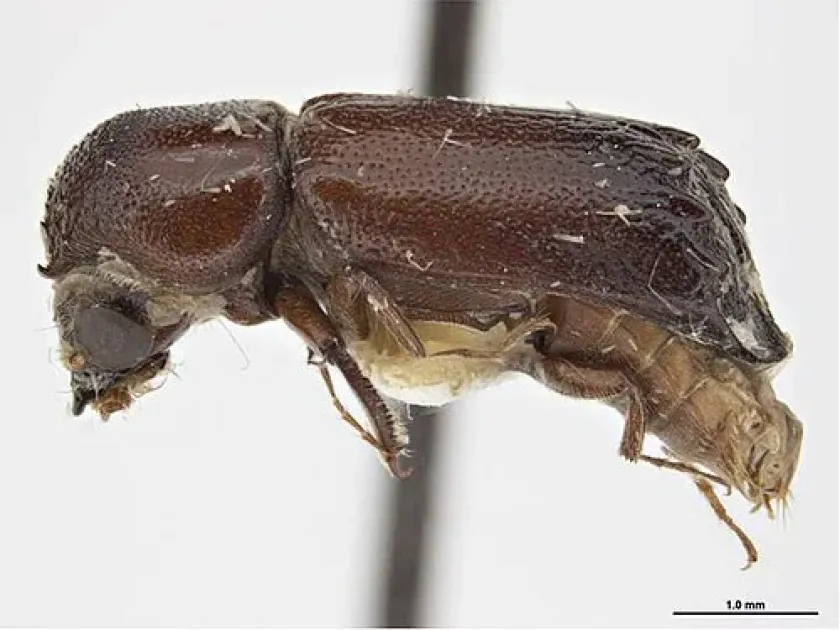
Tetrapriocera longicornis belongs to the Bostrichidae family, commonly known as auger beetles or false powderpost beetles. The adult beetles are typically cylindrical, ranging from 4 to 7 mm in length.
Their coloration is generally dark brown or black, providing effective camouflage against dark tree bark. The pronotum is distinct, hooded, and typically features tooth-like structures on the anterior edge.
The antennae have a characteristic three-segmented club at the tips. The wing covers (elytra) feature longitudinal rows of punctures, which are a defining morphological trait of this species.
Larvae are C-shaped, fleshy, and white, equipped with strong, specialized mandibles that allow them to bore through dense wood fibers with significant efficiency.
The life cycle is temperature-dependent. In tropical and subtropical climates, breeding can occur throughout the year, leading to overlapping generations and continuous damage.
What it damages
The primary damage is caused by the larval stage, which constructs complex tunnel networks deep inside the host material, effectively turning solid wood into dust.
In forest and orchard environments, the beetle targets weakened, drought-stressed, or decaying trees. By boring into the cambium and heartwood, they accelerate tree death.
The species is a significant threat to timber yards and wood-processing facilities, where it can cause structural damage to stored lumber, plywood, and furniture components.
Because the larvae live deep within the wood, they often go unnoticed until external exit holes appear, by which time the internal damage is usually quite extensive.
Their ability to survive in dried wood makes them a major quarantine concern, as they are frequently transported globally in shipping pallets and wooden crates.
Signs of infestation
The most visible sign of an infestation is the presence of small, perfectly circular exit holes (approximately 1.5–2 mm in diameter) on the surface of the wood.
Frass, or fine wood powder, often accumulates below these holes. This powder is a byproduct of the larvae tunneling and is a key indicator of active infestation.
In standing trees, infestation may be signaled by patches of dead bark, yellowing foliage, or sap bleeding, which are symptoms of the tree's inability to transport nutrients effectively.
In quiet environments, one might hear subtle clicking or chewing sounds emanating from the wood, which is caused by the larvae feeding inside the dense wooden structure.
Adult beetles can occasionally be spotted on the surface of the wood during their mating period, especially when attracted to artificial lights at night.
Control measures
Strict phytosanitary inspections are the first line of defense. All wood products imported from endemic regions must be certified as pest-free, typically through heat treatment.
In orchard management, removing and burning infested branches is crucial. Maintaining tree health through proper fertilization and irrigation reduces the risk of beetle attacks.
Preventative chemical treatments, such as applying residual insecticides to the trunks of susceptible trees, can deter adult beetles from laying eggs during the flight season.
For stored timber, fumigation with phosphine or other approved gases is the most effective way to eliminate all life stages, including larvae embedded deep within the wood.
Standardized wood treatments, such as those mandated by ISPM 15, are essential for preventing the international spread of this species via wooden packaging materials.
Taxonomy
- Latin name
- Tetrapriocera longicornis
- Order
- Coleoptera (beetles)
- Family
- Bostrichidae
- EPPO code
- TEAPLO
Discussion
No discussions yet — be the first.