
Stephanopachys
Stephanopachys
Description
How to identify
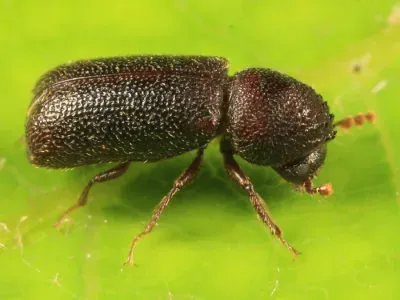
Stephanopachys is a genus of beetles belonging to the family Bostrichidae, commonly known as auger beetles. These insects are characterized by their cylindrical bodies and a distinctively shaped pronotum that conceals the head like a hood.
Adult beetles are generally dark brown to black in color, with a hard, often pitted exoskeleton. This morphology is perfectly adapted for their life inside the bark and wood of coniferous trees.
They are primarily nocturnal or crepuscular, meaning they are most active during dusk and dawn, which makes them difficult to observe directly in the forest environment.
The larvae are typically C-shaped, creamy white, and possess strong mandibles capable of breaking down lignified plant tissues. They spend their entire developmental period within the wood or bark.
The genus includes several species, all of which occupy similar ecological niches as wood borers. They are recognized by specialists based on the specific structure of their antennae and the sculpture of their elytra.
What it damages
These beetles primarily target coniferous species such as spruce, pine, and fir. They are essentially opportunistic, preferring weakened, stressed, or recently felled timber to healthy, vigorous trees.
The damage caused by larvae consists of extensive tunneling within the phloem and the outer sapwood layers. This disruption of the vascular system leads to the rapid decline and death of the host tree.
In the timber industry, Stephanopachys is considered a significant pest because its tunnels reduce the structural integrity and aesthetic quality of wood products, making them unsuitable for high-grade carpentry.
Severe infestations often occur following natural disasters like windthrows or forest fires, where the abundance of deadwood allows for exponential population growth of the beetle.
While their primary role is as decomposers of dead wood, high population densities can lead to attacks on living, stressed trees, effectively accelerating their mortality in compromised forest ecosystems.
Signs of infestation
The most reliable sign of an infestation is the presence of fine, sawdust-like bore dust (frass) accumulating in bark crevices or at the base of the tree. This is the result of larvae feeding activities.
Visual inspection of the trunk reveals small, circular exit holes. These are created by emerging adults once they have successfully completed their metamorphosis inside the wood.
Peeling back the bark exposes complex, irregular galleries packed with frass. These tunnels often cross each other, creating a dense network that compromises the tree's health.
Yellowing or premature needle drop in coniferous trees, combined with a lack of clear root disease symptoms, often suggests that the stem is infested by wood-boring insects.
Increased bird activity, specifically woodpeckers foraging on a tree, is a strong indicator that larvae are present beneath the bark, as the birds detect the sounds and vibrations of feeding larvae.
Control measures
The primary management strategy is the timely removal and sanitation of infested logs and trees from the forest before the adult beetles emerge to infest new hosts.
For stored timber, debarking is the most effective preventative measure, as the larvae require the bark as an initial food source and protective habitat during their early development.
In cases of high-value timber storage, prophylactic chemical treatments with registered insecticides can be used to prevent beetle colonization during the peak flight season.
Maintaining forest hygiene is crucial; this involves minimizing the accumulation of logging slash and debris, which provides breeding sites for various wood-boring species, including Stephanopachys.
Integrated pest management programs often utilize pheromone lures or light traps to monitor population levels and determine the precise timing for intervention if outbreaks occur.
Taxonomy
- Latin name
- Stephanopachys
- Order
- Coleoptera (beetles)
- Family
- Bostrichidae
- EPPO code
- STPPSP
Discussion
No discussions yet — be the first.