
Shothole borer
Sinoxylon crassum
Description
How to identify
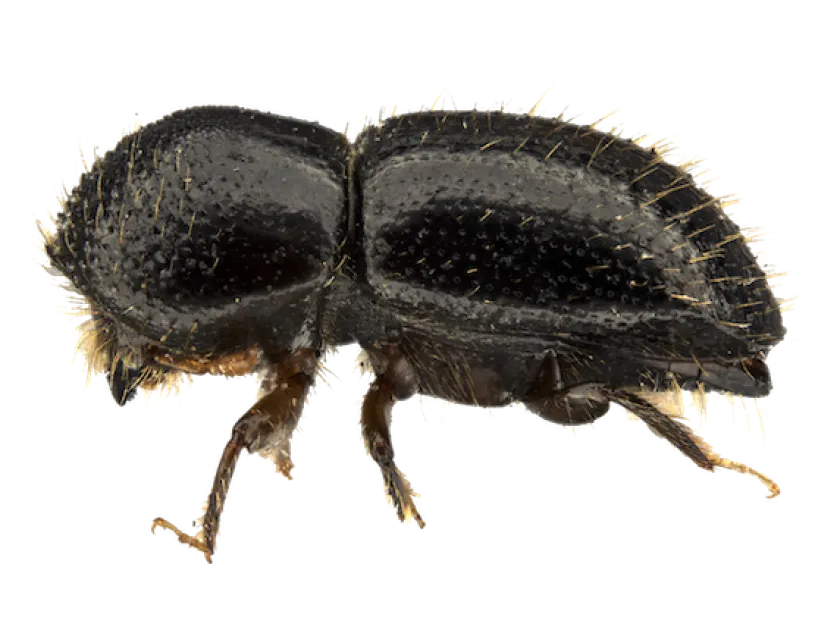
Sinoxylon crassum, commonly known as a type of shothole borer or powderpost beetle, belongs to the family Bostrichidae within the order Coleoptera. Adult beetles are typically 4–6 mm long with a cylindrical, robust, and dark-colored body.
The pronotum of the adult is highly sculptured with small teeth on the anterior margin, giving it a hood-like appearance. The elytra are truncated at the posterior end and possess distinct tubercles, which are key characteristics for identifying this specific species.
The larvae are white, C-shaped, and legless, perfectly adapted to live and feed within wood. They possess strong mandibles capable of boring through dense woody tissue, which is the primary source of their nutrition throughout the development phase.
The lifecycle includes complete metamorphosis: egg, larva, pupa, and adult. The beetles are primarily nocturnal or crepuscular, spending most of their adult life hidden within the galleries they create in branches or trunks, making early detection challenging.
In favorable warm climates, this species can complete multiple generations per year. This high reproductive rate allows populations to explode quickly, leading to rapid deterioration of infested host plants if not managed appropriately.
What it damages
This pest affects a wide range of deciduous fruit and nut trees, including apricot, peach, plum, cherry, apple, and walnut. It particularly targets trees that are stressed, weakened by drought, or already suffering from other health issues.
Adult beetles damage trees by boring into small branches, often at the base of buds or leaves, which disrupts the transport of water and nutrients. This results in the sudden wilting and death of young twigs and smaller branches.
The primary damage is caused by the larvae, which tunnel deep into the sapwood and heartwood. These extensive galleries sever the vascular system of the tree, leading to severe canopy dieback and, in extreme cases, the death of the entire tree.
Heavily infested trees show reduced vigor, sparse foliage, and poor fruit production. Over time, the internal damage weakens the structural integrity of branches, causing them to snap easily under the weight of fruit or during strong winds.
Beyond direct structural damage, the galleries created by the beetles provide entry points for secondary pathogens, such as fungi and bacteria, which cause cankers and wood rot, further accelerating the decline of the host tree.
Signs of infestation
The most prominent sign of an infestation is the presence of numerous small, perfectly round exit holes on the surface of the bark. These holes are created by emerging adult beetles and are often the first indicator of their presence.
Fine, powdery frass (a mixture of wood dust and excrement) is often found at the base of the tree or on leaf axils. This is pushed out of the galleries by the larvae as they continue to feed and expand their tunnels inside the wood.
Visible decline of the canopy is another indicator, characterized by premature yellowing of leaves and the death of individual branches. In stone fruit trees, excessive gumming or resin flow at the site of entry is a common symptom of the attack.
If an infested branch is cut, the interior reveals a network of galleries packed with fine, sawdust-like material. The wood inside becomes brittle and loses its density, turning into a hollowed-out or fragile structure.
In advanced cases, the bark may show cracks or small depressions where the beetles have entered. If the bark is peeled away, one can clearly see the intricate patterns of larval tunnels underneath the surface.
Control measures
Sanitation is the cornerstone of control. Regularly prune and remove all dead, dying, or heavily infested branches. It is crucial to burn or destroy the removed wood promptly to eliminate the breeding reservoir and prevent the spread of adults.
Maintain tree health through optimal irrigation and fertilization. A vigorous, well-hydrated tree is better equipped to resist beetle attacks compared to a tree suffering from water stress or nutrient deficiencies.
Chemical control involves the application of registered insecticides during the adult flight period. Because adults are cryptic, timing applications based on trap monitoring is essential to ensure that the chemical reaches the target at the right time.
Pheromone traps are highly recommended for monitoring. By identifying the exact timing of adult emergence, growers can optimize their spray schedules and minimize unnecessary pesticide use in the orchard.
- Prompt disposal of pruning debris and orchard wood.
- Painting trunks with protective mixtures to deter boring.
- Monitoring with lure-based traps during the growing season.
- Protecting and encouraging local natural predators.
Taxonomy
- Latin name
- Sinoxylon crassum
- Order
- Coleoptera (beetles)
- Family
- Bostrichidae
- EPPO code
- SINOCR
Discussion
No discussions yet — be the first.